
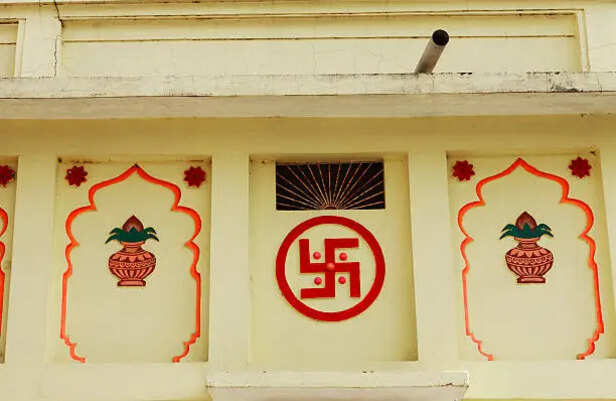
In many Indian homes, you’ll notice a small red or yellow symbol drawn carefully near the entrance. For some, it’s just a normal daily routine or tradition. For others, it carries deep emotional and spiritual meaning. The Swastika placed at the main door is not about decoration. It is about intention, protection, and welcoming positive energy into their homes.

A Symbol Older Than History Books
The Swastika is one of the oldest symbols in the world. Much before it was wrongly used in Europe during the 20th century, it was respected in ancient India as a sacred sign of good luck, peace, and prosperity.The word “Swastika” comes from Sanskrit su meaning good, and asti meaning existence. Together, it translates to “may there be well-being.”
In Hindu households, the symbol is commonly drawn during festivals like Diwali, weddings, housewarmings, and new beginnings. It represents auspiciousness and divine blessings.
Why It Is Placed at the Entrance
The entrance of a home is considered the point where energies enter and exit. In traditional Vastu beliefs, the main door is not just a physical structure but a gateway of vibrations.
Placing a Swastika at the entrance is believed to:
- Invite prosperity and abundance
- Protect the home from negative influences
- Create a sense of spiritual balance
- Mark the house as a sacred and positive space
For many families, drawing the Swastika is also an act of mindfulness. It’s a quiet prayer without words, a way of saying, “May this home be filled with peace and positivity.”
The Four Arms and Their Meaning
The four arms of the Swastika are not random. They symbolize the four directions north, south, east, and west. It represents balance, growth and success of life.
Spiritually, they are also said to represent:
- Dharma (righteousness)
- Artha (prosperity)
- Kama (desire)
- Moksha (liberation)
In Hindu philosophy, these four values are seen as the base of a well-balanced and meaningful life.
A Personal Connection to Faith
For many families, the Swastika is not just a symbol, it is a memory. It reminds them of grandparents drawing it with kumkum or haldi before festivals, or of marking a new home with hope and prayers.When made with faith, it is more than a design on the wall. It becomes a small daily reminder to stay positive, grateful, and hopeful.
Placing a Swastika at the door is about hope. It reflects that people wish for peace, prosperity and love in their home. Some follow Vastu, others follow family traditions but for many,it is a simple way of comfortness for them. In today's modern day to day life this tradition is a simple way to connect us from our cultural roots. These simple activities remind us how we can make a house our home. Sometimes, one small symbol quietly says, “Only good vibes are welcome here.”
Explore the latest trends and tips in Health & Fitness, Spiritual, Travel, Life Hacks, Trending, Fashion & Beauty, and Relationships at Times Life!