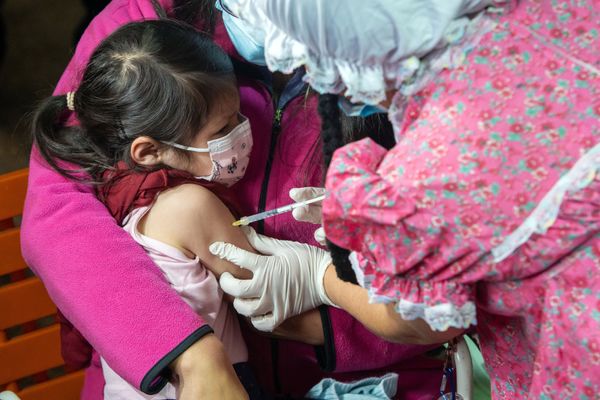

Karen Topa Pila looks around the windowless reception area in the small health care station of Hoja Blanca, Ecuador, its pale yellow walls stained with patches of mold. "When did the electricity go out last night?" Topa Pila, a doctor in this remote corner of the country, asks. Her co-workers shrug, throwing worried glances at a small container filled with ice packs. It's only 8:30 a.m. one morning in December 2021, but outside it's already over 70 degrees.
Topa Pila closes a cooler containing 52 Covid-19 nasal swabs. "Those tests need to be refrigerated and we only have one fridge, which is exclusively for vaccines," she says. Her team has nowhere to store the tests, she adds, and so to avoid getting them spoiled in the jungle heat, the clinic wants to use up all of them on the same day. The very next morning, a health care worker is going to take them to the laboratory in the district hospital.