
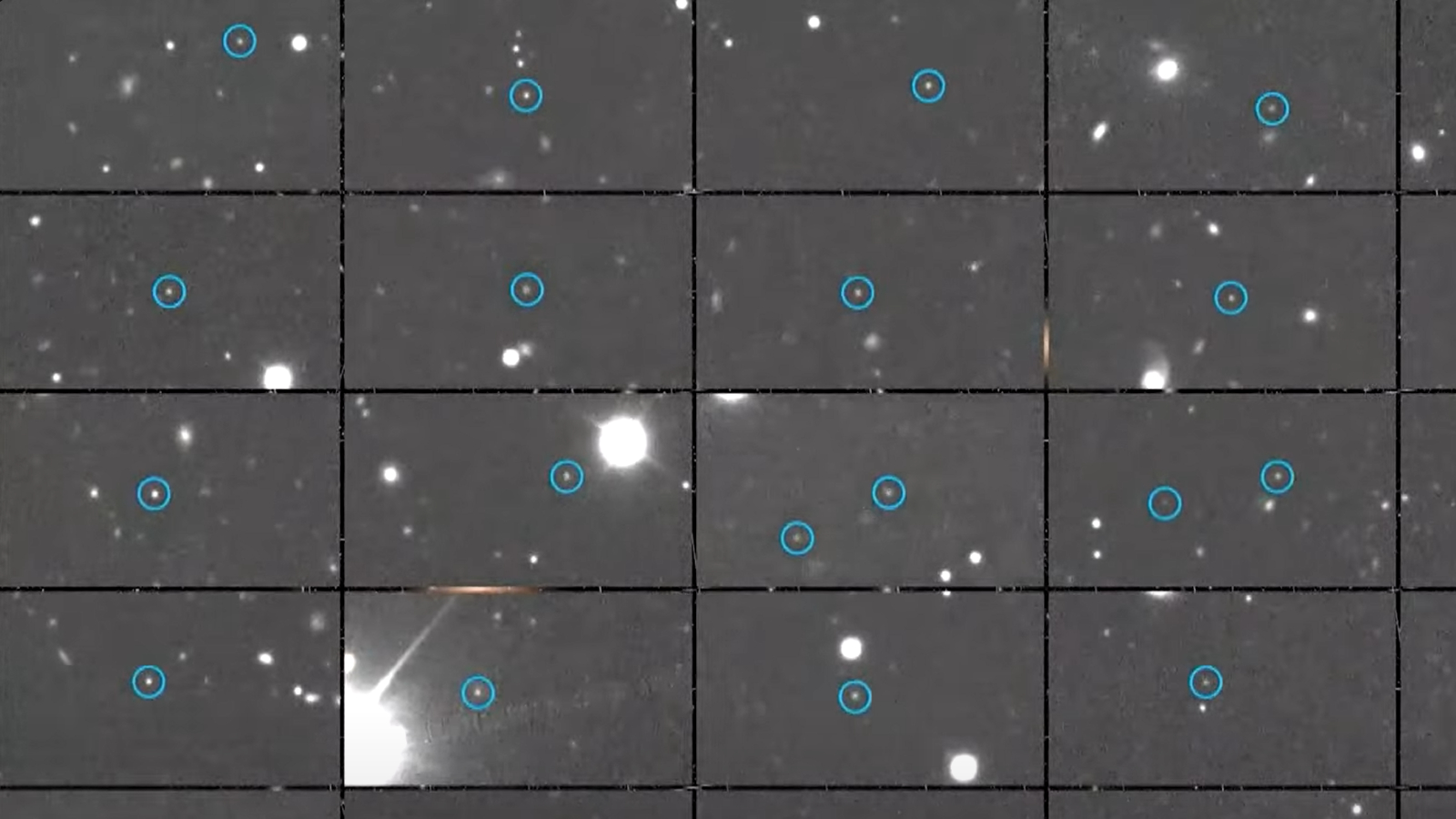
It was weirdly emotional on Monday (June 23) as several grainy white specks streaked across my computer screen while ambient rhythms buzzed in the background. Those specks were part of a film that played during the Vera C. Rubin Observatory's highly anticipated first image release conference — and they each represented an asteroid that had just been discovered. It felt like witnessing something hugely profound, and there are two reasons why.
First of all, to put it simply, with just a few nights of data, the Rubin Observatory team was able to identify 2,104 never-before-seen asteroids in our solar system — seven of which are categorized as near-Earth objects. (No, none are expected to strike our planet. Don't worry). For context, there are approximately a million known asteroids in our cosmic neighborhood; over the next few years, Rubin could very well hike that figure up to five million.