
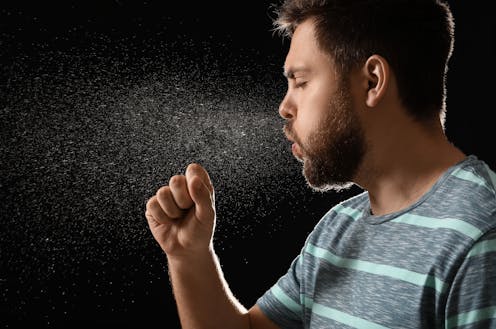
We’ve long known that environmental factors – from humidity and temperature to trace chemical vapours – can influence how pathogens, such as viruses, bacteria and fungi, behave once released into the air. These tiny droplets of respiratory fluid, or aerosols, carry viruses and bacteria and can float for minutes or even hours. But while we’ve been busy focusing on physical distancing and surface cleaning, a quieter factor may have been playing a much bigger role in airborne disease transmission all along: carbon dioxide (CO₂).
During the pandemic, we studied what happens to a virus when it travels through the air in tiny droplets from our breath – known as aerosols. In earlier research, we found that the droplet’s pH (how alkaline it is) can affect how quickly the virus loses its ability to infect people. Our more recent research, though, suggests that CO₂ levels in indoor air may significantly affect how long viruses survive once airborne – and the implications are profound.














