
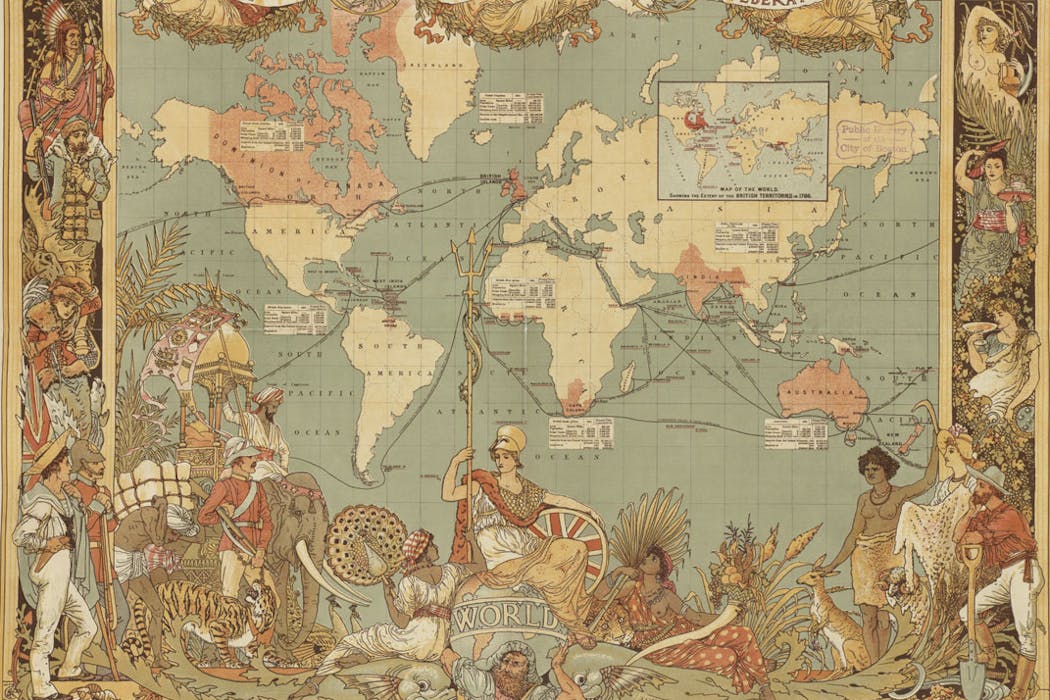
For nearly four centuries, the world economy has been on a path of ever-greater integration that even two world wars could not totally derail. This long march of globalisation was powered by rapidly increasing levels of international trade and investment, coupled with vast movements of people across national borders and dramatic changes in transportation and communication technology.
According to economic historian J. Bradford DeLong, the value of the world economy (measured at fixed 1990 prices) rose from US$81.7 billion (£61.5 billion) in 1650, when this story begins, to US$70.3 trillion (£53 trillion) in 2020 – an 860-fold increase. The most intensive periods of growth corresponded to the two periods when global trade was rising fastest: first during the “long 19th century” between the end of the French revolution and start of the first world war, and then as trade liberalisation expanded after the second world war, from the 1950s up to the 2008 global financial crisis.














