Throughout his lifetime, celebrated chef and author Anthony Bourdain was unequivocal in his belief that the restaurant industry in the US could not function without immigrant labor. These indispensable workers, Bourdain argued, were not only willing to do the jobs that most US-born citizens would look down upon, but also they did them better and faster.
“People have differing opinions on what we should do about immigration in the future,” Bourdain told the Houston Press in 2007. “But let’s be honest, at least, about who is cooking in America now. Who we rely on – have relied on – for decades. The bald fact is that the entire restaurant industry in America would close down overnight, would never recover, if current immigration laws were enforced quickly and thoroughly across the board.”
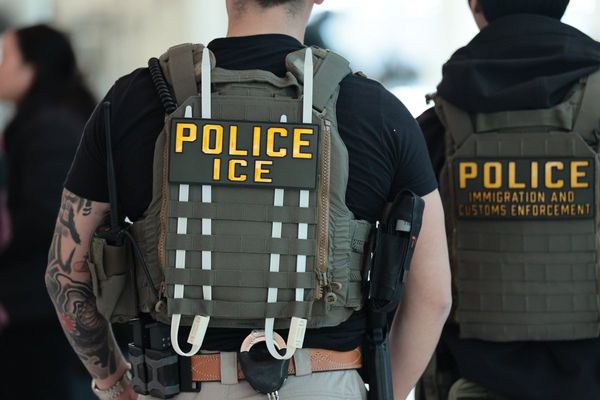
Today, the US restaurant industry employs millions of immigrant workers, both documented and undocumented, who now find themselves caught in the crosshairs of military-grade immigration policing that threatens their very existence. Marc Meyer’s new book Voices from the Kitchen, a compendium of 27 gut-wrenching transcribed interviews with current and former employees of his restaurant group, gives a human face to these workers at a time when immigrants are being systematically dehumanized by nativist policies.
In 1999, Meyer co-founded the Bowery Group, which includes popular New York City restaurants such as Cookshop, Shuka, Shukette and Vic’s. After working in professional kitchens for more than 40 years, he acutely understands how vital immigrants are to the restaurant workforce, both in the US and abroad. Inspired by oral historians Studs Terkel and Svetlana Alexievich, Meyer began conducting informal interviews with staff three years ago, stealing moments in prep kitchens and empty dining rooms, and transcribing the responses for archival purposes. A chance visit to Mexico and the encouragement of personal friends there convinced him to compile the stories into a full-length volume published in November by Beacon Press.
The book is not intended as a political statement. Meyer had been approached in the past to write cookbooks but never felt comfortable authoring a book that would omit the individuals behind the scenes – farmers, dishwashers, porters, bussers, and line cooks – without whom his restaurants would not be possible.
“I have an extensive number of recipes, but something just wasn’t sitting right with me,” said Meyer. “We wouldn’t have these beautiful ingredients. We wouldn’t have the staff to produce the food. We wouldn’t have people to build restaurants. We wouldn’t have the guy who cleans the restaurant overnight and goes to a second job in the morning. These are the stories that make it work. That kept bouncing around in my mind.”
According to a report by the National Restaurant Association this year, 22% of restaurant and food service employees in the US are born outside of the country. In some states – especially those with a higher concentration of independent establishments such as California, New York and Texas – this percentage exceeds 30%.
The subjects in Voices from the Kitchen come from all over the world – Bangladesh, Bosnia, Burkina Faso, Ecuador, Ireland and other countries – which Meyer said illustrates the diversity of the restaurant community, something he considers to be one of its greatest strengths. “I was shocked by how some people’s lives were threatened in their home countries or what they went through to get here,” he said.
Many of his staff work multiple jobs to survive and have been estranged from their families and their homelands for decades. The book includes the harrowing stories of immigrants like Jakeline, a former nun from Lima, Peru, who started as a prep cook and became a morning shift supervisor at Shuka. Back home, she was robbed of $30,000 in borrowed funds at gunpoint while running a makeshift clothing business and illegal currency exchange. Jenny, a line cook from Bogotá, Colombia, was stabbed by her abusive former spouse, puncturing one of her lungs and nearly killing her. Mohammed, a dishwasher from Gambia, went 23 years without seeing his parents. Jairo, a busser and food runner, learned that his grandfather had been kidnapped and murdered in his hometown near Puebla, Mexico, even after his family had paid his captors ransom.
“There is no single explanation as to what has moved countless people to seek jobs in the restaurants in New York,” Meyer wrote in the book’s preface. “All of us had something that we needed to leave behind – a need to hide, to escape, to break the patterns of the past.”
Some of Meyer’s subjects have risen to the most senior positions in his company. Anna Marie McCullagh, an Irish immigrant who overstayed her J-1 visa after finishing college 35 years ago, is currently director of operations and a partner (she’s since been granted legal status). Carlha Azcona, a Dominican immigrant who put herself through culinary school and worked her way up from line cook to chef de cuisine, now runs the kitchen at Shuka, the Bowery Group’s Middle Eastern and Mediterranean-inspired restaurant in downtown.
Their stories illustrate how the restaurant business has been a consistent and reliable source of opportunity for immigrants. But many of these workers are often overqualified for the entry-level jobs they’re offered. “A lot of us come from backgrounds where we had jobs that we were proud of doing,” said Fatou Ouattara, the chef and co-owner of Akâdi in Portland, Oregon, who immigrated to the US from Côte d’Ivoire in 2009 to escape political unrest. “Back home, I worked for my dad in finance, and I never thought when I moved here that I would be washing dishes and cleaning toilets to get started. But that’s the story for a lot of us.”
Ángel Vásquez, a former server at Shukette, was a lawyer and activist before he defected from Venezuela in 2016 to avoid political persecution. Despite his previous career, he came to the US speaking little English and took a job as a dishwasher. Today, he manages an Italian restaurant on weekends to supplement his income as a patient navigator in a medical office. “I’ve been learning to do different things during my time here,” said Vásquez, “which I think has helped me grow as a person.”
But even though Vásquez is earning more money than he could back home, he feels increasingly anxious about the rising threat of immigration raids across the country. He said he almost never goes out anymore, despite having proper documentation, to avoid the risk of detention.
Restaurant owners are feeling anxious, too. “If I lose even a couple of key players on my kitchen team, my restaurants couldn’t function,” said Jamie Kenyon, executive chef and co-owner of Bottino and ‘ino in New York City. Kenyon, himself an immigrant who came to the US with his family from Manchester, England, when he was 14 years old, is familiar with the challenges of proving yourself in a new country, having earned his stripes in such acclaimed restaurants as Daniel and Bar Boulud. “My kitchen staff understands the DNA of my business, which is irreplaceable. They feel pride in the restaurant.”
Rosa Maria Sanchez has worked with the Bowery Group in various roles for more than 15 years. Although most guests who dine at Rosie’s in the East Village would never know it, the casual Mexican restaurant is named for the soft-spoken server from El Salvador, who was part of its opening team in 2015. Her journey to this country has had many tragic twists and turns – she was sexually abused by her father as a young child and her caravan was viciously attacked while attempting to gain passage to the US. But Sanchez hopes that sharing her story of resilience will remind people that immigrants are hardworking people who deserve to be treated with dignity and respect.
“It was like therapy,” she said. “But I hope my story shows people that there is always a light at the end of a dark tunnel, and we always need to look for that light.”