Get all your news in one place.
100’s of premium titles.
One app.
Start reading
The Times of India
The Times of India
World
TOI World Desk

The Punjabi immigrant’s son who challenged President Trump: The story of Indian-origin lawyer Neal Katyal

On February 20, 2026, the Us Supreme Court handed Indian-origin attorney and former Acting US Solicitor General Neal Katyal a decisive victory. In a 6–3 decision, the Court struck down President Donald Trump’s sweeping tariffs, ruling that the administration had exceeded its authority under the International Emergency Economic Powers Act (IEEPA).

Katyal represented small businesses challenging the tariffs, including manufacturers directly affected by the levies. His argument was not framed as an economic critique. It was structural: the Constitution assigns taxation powers to Congress, not the President.
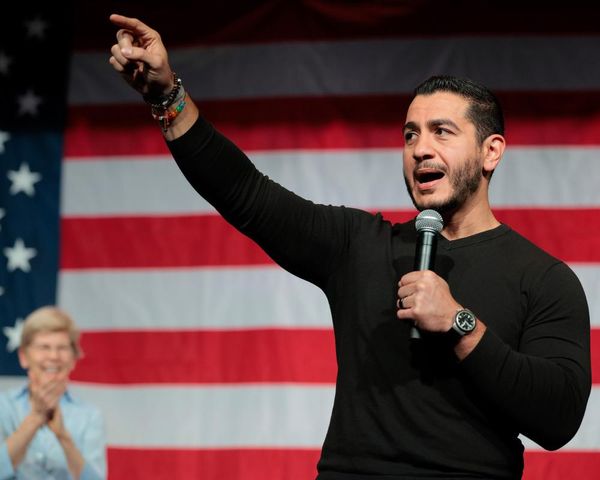
In a statement after the verdict, Katyal said, “Presidents are powerful, but our Constitution is more powerful still.” He stressed that the case was about process, not politics, and about preventing any president from wielding what he described as a “blank check” to tax Americans.

The administration had defended the tariffs as a lawful exercise of emergency authority. The Court disagreed. Two justices appointed by Trump joined the majority, underscoring that the ruling was grounded in institutional limits rather than partisan alignment.

After the White House invoked Section 122 of the Trade Act of 1974, Katyal wrote on X:

“Seems hard for the President to rely on the 15 percent statute (sec 122) when his DOJ in our case told the Court the opposite: ‘Nor does [122] have any obvious application here, where the concerns the President identified in declaring an emergency arise from trade deficits, which are conceptually distinct from balance-of-payments deficits.’

If he wants sweeping tariffs, he should do the American thing and go to Congress. If his tariffs are such a good idea, he should have no problem persuading Congress. That’s what our Constitution requires.”

Oral arguments extended beyond the typical timeframe, reflecting the economic stakes and the broader implications for executive authority. The February 20 ruling now stands as one of the clearest recent reassertions of congressional control over trade policy.

A career built on testing executive power

The tariff case fits into a larger arc.

Katyal previously challenged the Trump administration’s 2017 travel ban, widely referred to as the “Muslim ban.” Long before that, he argued and won Hamdan v. Rumsfeld before the Supreme Court, a landmark decision that struck down the Bush administration’s military commissions at Guantanamo Bay.

He later played a key role in Moore v. Harper, the case rejecting the “independent state legislature” theory in election law. In 2021, he served as a special prosecutor in the murder case of George Floyd, helping secure the conviction of former Minneapolis Police Department officer Derek Chauvin.

These cases differ in subject, war powers, election law, policing, trade, but share a common thread: the limits of power.

Educated at Loyola Academy, Dartmouth College and Yale Law School, Katyal clerked for Judge Guido Calabresi and Justice Stephen Breyer before entering academia and private practice. He later served as Acting US Solicitor General under President Barack Obama, arguing more than 50 cases before the Supreme Court.

He is currently a partner at Milbank LLP and serves as the Paul and Patricia Saunders Professor of Law at Georgetown University Law Center.

Katyal was named to Forbes’ Top 200 Lawyers list in both 2024 and 2025. He authored Impeach: The Case Against Donald Trump in 2019. He has appeared as himself in House of Cards and Billions, and has been a guest on The Late Show with Stephen Colbert.

Public visibility, however, has never been detached from constitutional argument. His media presence follows his legal fights, not the other way around.

Roots, ritual and the immigrant frame

Katyal was born on March 12, 1970, in Chicago to Indian immigrants from Punjab. His mother, Pratibha, is a paediatrician. His late father, Surender, was an engineer who arrived in the United States shortly before Katyal’s birth.

However their life was never easy. By Katyal's own admission, his parents juggled 3 jobs to make ends meet. In an X post he wrote, "Every time I think of my parents, who braved so much, gave up so much, all for their children. Working 3 jobs to make ends meet, suffering some of the hardest things in life. And yet who love this country like no other and who went through their own naturalization ceremonies."

During the tariff litigation, he posted a photograph of his kada, the Sikh steel bracelet, resting atop, case files. “Thinking of my father first and foremost, who came to this land of freedom… May the Constitution win,” he wrote.

The gesture was quiet but deliberate. The kada, one of the five articles of faith in Sikhism, symbolises discipline and moral accountability. Katyal has often described the “Punjabi spirit”, grit and fearlessness, as formative.

“As the son of immigrants,” he has said, “there is something profoundly American about standing in court and telling the President that the law does not allow this.”

For diaspora communities, his courtroom presence carries layered meaning: a child of immigrants arguing about the boundaries of presidential authority before the highest court in the United States.

Much quieter private life

Beyond the courtroom, Katyal’s life is deliberately grounded.

He lives in Chevy Chase, Maryland, with his wife, physician Joanna Rosen, a graduate of Yale School of Medicine. The couple have three children and keeps their family life largely private.

He has spoken about explaining Supreme Court cases to his children at the dinner table, distilling complex constitutional questions into terms they can grasp. Law, in his household, is not abstract.

His sister, Sonia Katyal, is a law professor at UC Berkeley School of Law. His brother-in-law, Jeffrey Rosen, is CEO Emeritus of the National Constitution Centre. Constitutional discourse runs through the extended family.

That personal ecosystem, immigrant parents, academic siblings, legal debates at home, forms the backdrop to the public advocate.

Sign up to read this article
Read news from 100’s of titles, curated specifically for you.
Already a member? Sign in here
Related Stories
Top stories on inkl right now
One subscription that gives you access to news from hundreds of sites
Already a member? Sign in here
Our Picks
Fourteen days free
Download the app
One app. One membership.
100+ trusted global sources.