Get all your news in one place.
100's of premium titles.
One app.
Start reading
Tom’s Guide
Tom’s Guide
Technology
Tom Pritchard

The Pixel 11 is a swing-and-a-miss of a phone, but this one AI camera feature is genuinely useful

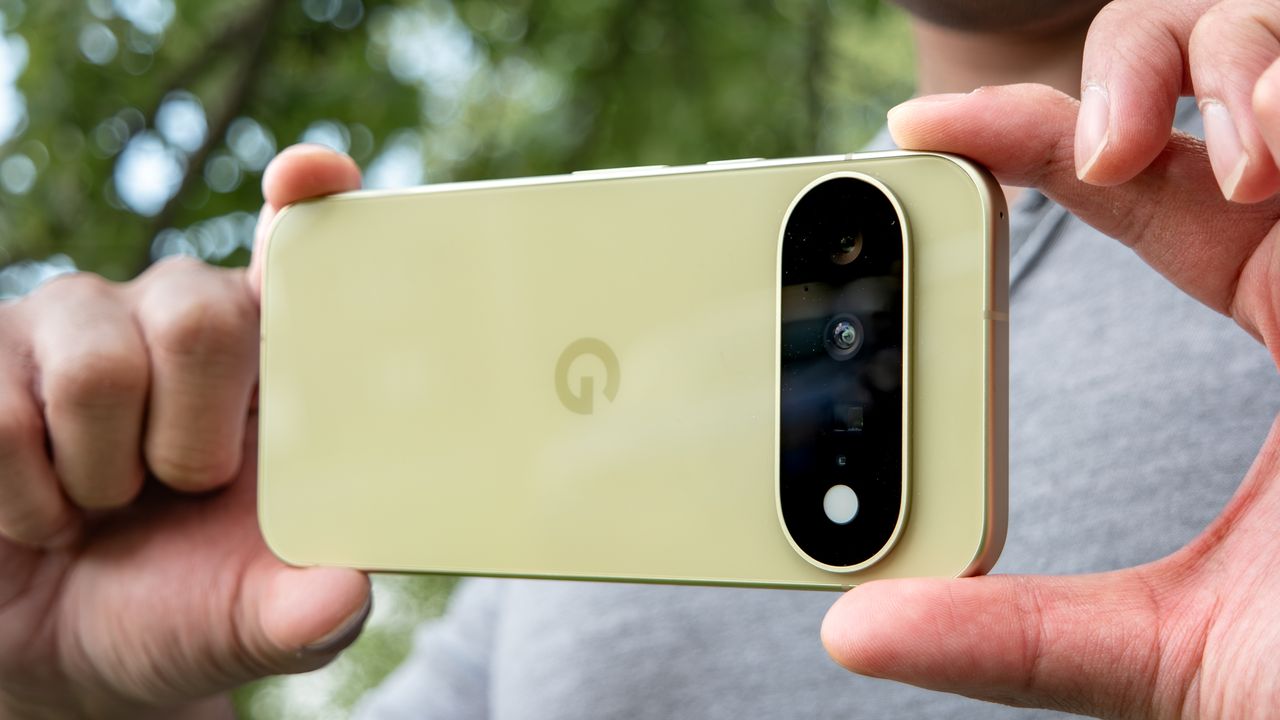
Google Pixel 11 review.

If you've ever tried to snap photos of an unpredictably moving target, you'll know that a smartphone is not the best tool for the job. There's no burst mode in a lot of default camera apps, and actually tapping the shutter button by hand isn't always fast enough. Google thinks it's figured out a solution, though.

In our Google Pixel 11 review, we weren't overly enthused by the phone as a whole, but its "Magic Capture" camera mode is something I've found truly useful. It works by recording a video clip, then uses AI to analyze each frame and pull out the most appropriate stills. It's not quite a dual-capture mode, but it's probably the closest thing Pixel phones actually have right now.
The question is, can Magic Capture actually do what Google has promised? HiLight has turned out to be a colossal disappointment, and the Pixel 11 is about as exciting as beige paint. So can Google recapture user enthusiasm through the camera? I tested it to find out.

How to use Magic Capture

(Image credit: Future)

In my experience, a lot of new AI features can be difficult to find, even if you know where to look. That's not the case with Magic Capture. Google has put it front and center in the Pixel 11's camera app. It is prominently displayed at the bottom of the screen, next to the Photo and Video toggles that have been around for years.

Tap it, and the camera interface suddenly gets a whole lot cleaner. Your only serious options are to tap the shutter button and control the level of zoom. There is a settings toggle that lets you control whether you have Video Boost switched on too, should you prefer things that way.

All you need to do is tap the shutter button and your phone will start recording. Once you've finished, the onboard AI will analyze the footage and figure out which frames are worthy of becoming photos. Those new photos then get added to your camera reel automatically.

It's surprisingly simple, and that's one of the things I really like about Magic Capture. You don't need to do a bunch of research to figure out how it works, or what you can gain from it. The button is positioned front-and-center, and it works just like every other video camera mode on your phone.

There are some restrictions on how it works

(Image credit: Future)

As simple as Magic Capture is to use, there are a few limitations. The first is that you can't actually capture more than two minutes of video at a time. If you start getting close, a warning message will pop up on screen counting down to the moment the video will stop.

In my experience, you are limited to five photos from each video. It doesn't matter whether it's 30 seconds long, or the full two minutes, Magic Capture seems to have imposed that hard limit.

Google hasn't explained why these limits are in place, but my guess is that it didn't want the AI analysis running indefinitely. A two minute and five photo limit ensures that Magic Capture doesn't try to keep running and eat up too much space on Google's AI servers. Because, yes, this feature does rely on the internet.

You can still film Magic Capture clips while offline, and the on-board AI will find you a single photo that's automatically added to your library. However, if you want the other four, you will need to connect to the internet. The good news is that your video will be effectively held in a pending queue, waiting to connect to either Wi-Fi or cellular data networks — at which point it will process and hand over the missing photos.

Overall, it's a great new feature

The time I've spent with Magic Capture has been, for the most part, very enjoyable. It's so easy to just click on the video, knowing that Google's AI will end up capturing some of the best stills and converting them into standalone photos.

If you are planning on using Magic Capture yourself, I'd suggest tempering your expectations on what it can do. It's not a miracle worker, and it won't suddenly be able to create amazing images out of the shortest and scrappiest video clip you can capture. Likewise, because these photos are being ripped from moving video, you may end up with some blurring and signs of motion in the final result.

The actual resolution and overall size of each photo varies as well, which is worth remembering if you're concerned about that sort of thing. Just remember that high resolution doesn't automatically equal good quality.

But, overall, this is a very handy feature to have. While the restriction on video length and the number of available images is kind of a drag, Magic Capture does make it a heck of a lot easier to grab some photos of awkward targets — like my insanely energetic labradors. It's all hands-off, and it sure as heck beats going frame-by-frame in a video or mass-deleting photos that were taken during an overzealous use of burst-mode photography.

More from Tom's Guide

Sign up to read this article
Read news from 100's of titles, curated specifically for you.
Already a member? Sign in here
Related Stories
Top stories on inkl right now
One subscription that gives you access to news from hundreds of sites
Already a member? Sign in here
Our Picks
Fourteen days free
Download the app
One app. One membership.
100+ trusted global sources.