Get all your news in one place.
100’s of premium titles.
One app.
Start reading
Tom’s Guide
Tom’s Guide
Technology
Mark Spoonauer

The ‘Oura for your emotions’ is here — new AI jewelry auto-journals your life and tells you which people are ‘draining your battery’ the most

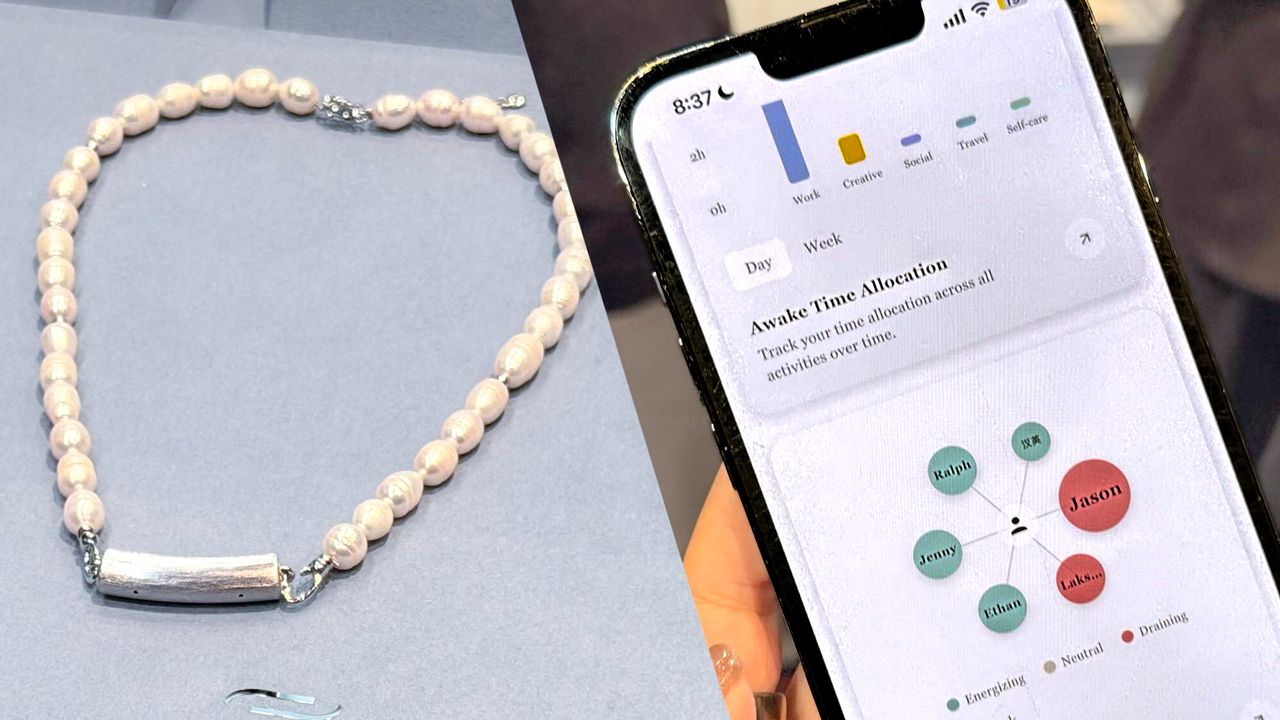
Nirva AI jewelry and app.

If there’s anyone who is going to make AI jewelry work, it’s Wei Lyu, the CEO of Nirva. Lyu is the former Meta Reality Labs product lead and was also head of product at Xreal, and as we spoke at CES 2026 I could tell how passionate she is about taking AI wearables to the next level.

She calls the new Nirva device the "Oura for your emotions," and I can understand why. The lightweight 10-gram device, which can we worn as a necklace or bracelet, records your day as you go, and the Nirva app automatically creates a journal for you, summarizing events.

But the real selling point is what Nirva describes as the ‘world’s first emotion tracker.’ Because the app learns your voice and studies your tone — and how much energy you have as you speak — it can help wearers learn about triggers that impact their mood. Based on our hands-on time we named the Nirva to our Tom's Guide Best of CES 2026 Awards list. Here's how it works.

Who is draining you the most?

(Image credit: Tom's Guide)

For example, Lyu showed me in the app an Awake Time Allocation screen with a circle of people that you might interact with in a given day. Each person is given a score denoted by color: Energizing, Neutral or Draining.

I asked Lyu what happens when people fake being energetic with particular people, such as clients or one’s boss, and she said that over time the AI is smart enough to determine your real sentiment.

(Image credit: Tom's Guide)

On another screen, I could see Wei’s current emotional scorecard at a glance with a summary up top. “Your evening has moved from concentrated effort into hopeful, appreciative momentum.”

That sounds a bit too AI-generated to me, but there was a scorecard with Energy, Mood and Stress levels. We’d have to test Nirva out for ourselves to see if these metrics match what we’re actually feeling in the moment.

According to the Nirva press release, users can text or call Nirva anytime for or personalized advice. Or you can just get proactive care; the app will "gently nudge the wearer with affirmations, tips and ideas."

How the device works, privacy and pricing

(Image credit: Tom's Guide)

The Nirva device itself has dual microphones for recording and an ALS (UV) sensor for lighting info, including sunlight exposure and time spent outdoors. Plus, there’s an IMU for motion sensing.

You get two days of battery life on a charge from the included jewelry box/charger, and it takes 90 minutes to fully recharge.

(Image credit: Tom's Guide)

So what about privacy? Lyu shared with me that there’s an indicator light so that those around the wearer know that it is sensing and recording their words.

Nirva will be available for pre-order in February, with the AI jewelry module itself costing $200. The necklace and bracelets cost an addition $30 to $50. And the app itself will cost $12 to $14 month.

Outlook

(Image credit: Tom's Guide)

That’s a lot of money for an AI wearable, especially the recurring fee. I think more people would be likely to try Nirva it if the cost was $5 a month or free for the first 6 months. But we’ll see what happens when Nirva ships in the first half of 2026.

Stay tuned for our full Nirva review.

Follow Tom's Guide on Google News and add us as a preferred source to get our up-to-date news, analysis, and reviews in your feeds.

More from Tom's Guide

Sign up to read this article
Read news from 100’s of titles, curated specifically for you.
Already a member? Sign in here
Related Stories
Top stories on inkl right now
Our Picks
Fourteen days free
Download the app
One app. One membership.
100+ trusted global sources.