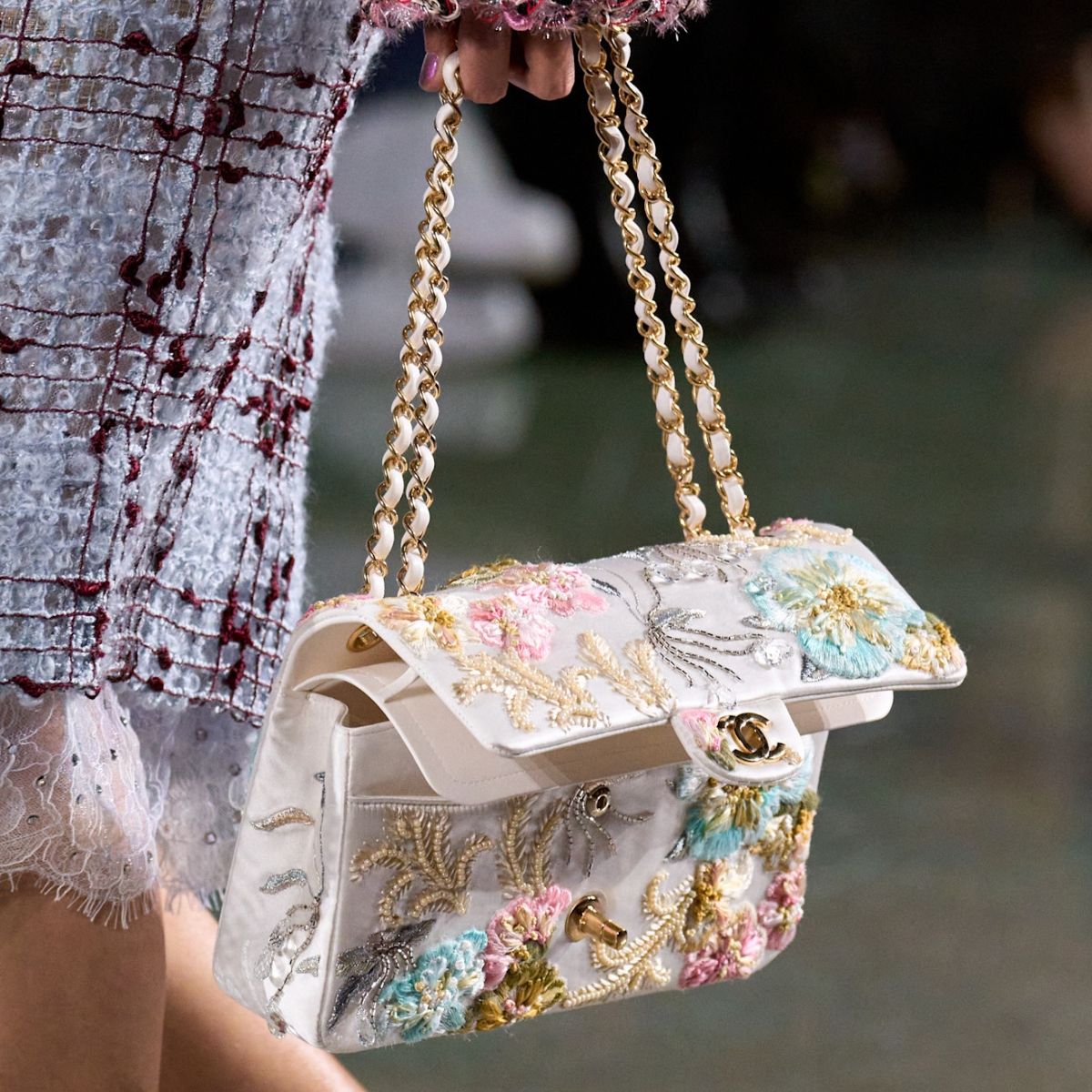
Recently, I invested in a crossbody phone strap. This came off the back of a spate of security-minded shopping after my luggage got lost on a recent flight, but really it was because my nervous system couldn't take the jolt every time a cyclist pedalled a little too closely.
This got me thinking: why, at a time when most women I know are clutching their phones for dear life, is another trend emerging—one that sees some of the world's most expensive bags carried wide open? I'm not talking about an unclipped clasp here or an errant zip there. I mean wide open, all your wares there for the taking.

A photo posted by on
I find this especially maddening after a friend and colleague recently had her bag snatched at King's Cross. One man barged into her from behind while another stole her bag, taking her laptop, work phone and—more depressingly—her personal phone.
I suppose you could argue that if this can happen despite taking every precaution, what difference does an open bag make? I'd argue the point isn't the risk—it's what the open bag communicates: that you're too rich, too removed and too insulated from the concerns of everyday life to care.
It's an odd proposition at a moment when many people have become almost reflexively defensive about their belongings. Personal anecdote aside, phone theft has become so prolific across the capital that the Met has launched specialist operations targeting organised gangs, with more than 117,000 phones reported stolen in 2024 alone.
Fashion's response? Leave your handbag open. At first glance, it feels like another deliciously impractical trend. But the open handbag isn't really about handbags; it's about what luxury looks like now.
An open and slouchy bag suggests the wearer isn't worried about protecting or losing their possessions. That, in itself, is a symbol of luxury.
Shakaila Forbes-Bell, fashion psychologist
For decades, wealth was communicated through accumulation. Logomania. "Bling" (yes, I shivered writing that, too). Bigger wardrobes, never outfit repeating. Then came quiet luxury, where status was murmured through deftly cut trousers, creamy cashmere and an absence of branding every bit as conspicuous as the logos that came before.
Today, even that feels a little try-hard. Fashion journalist Amy Odell recently reported that some high rollers who bought Birkins are now "embarrassed" by them. She writes: "They worry it signals a willingness to buy into the Hermès game. They fear being perceived as placing a premium on status symbols. And they feel like they're playing into the Birkin's sheer overexposure, which has made it feel less special in the social media age."
The new aspiration, it seems, isn't simply owning expensive things; it's appearing almost indifferent to them.
As fashion psychologist Shakaila Forbes-Bell tells me: "An open and slouchy bag suggests the wearer isn't worried about protecting or losing their possessions, which suggests they have enough resources to replenish anything lost. That, in itself, is a symbol of luxury."
Owning expensive things no longer communicates quite enough. Real status lies in looking as though those expensive things barely register. Or, as Forbes-Bell puts it, "Luxury is no longer perceived as solely being tangible; it's embodied."
That feels like the defining aesthetic of the past few years: Quiet Luxury, Old Money, Stealth Wealth, Soft Life, The Clean Girl—none of them are really about products; they're about projecting a life free from friction. A life where mornings unfold slowly, inboxes remain manageable, burnout is somebody else's problem and, apparently, handbags never get stolen.
Luxury has never simply been about owning more; it's about appearing untouched by ordinary concerns.
The open bag is simply the latest manifestation of that fantasy. Because if even fast-fashion giant PrettyLittleThing—a retailer once known for its day-glo bodycon clubwear—can rebrand around "heritage" and old-money aesthetics, what, exactly, are the truly rich supposed to do to separate themselves from the proletariat?
It all feels faintly... Versailles. Not because anyone carrying an open Birkin is especially Marie Antoinette-esque; the comparison is more about denial than decadence.
Hear me out, Versailles wasn't just aspirational because everyone wanted gold leaf and chandeliers. It was aspirational because everyday life appeared to evaporate behind palace walls. Labour and logistics disappeared because practicality was somebody else's responsibility. Luxury has never simply been about owning more; it's about appearing untouched by ordinary concerns.
Three centuries later, we've traded powdered wigs for "What's In My Bag?" videos, but the fantasy feels familiar. Vintage luxury reseller Evey Amery of Evey's Preloved has watched this happen in real time. "Rather than simply showing the exterior of a beautiful bag, people want to create a lifestyle around it by revealing what is inside," she says. "An open bag gives you a glimpse into someone's personality and lifestyle." Or at least, the version of their lifestyle they want you to see.
The inside of the handbag has become as carefully curated as the outside, says Amery. Where once, the status symbol was owning the bag, now it's owning the right notebook to casually leave poking out of it.
As Amery puts it: "Instead of simply saying, 'Look at the bag I've chosen to carry,' it says, 'Look at how this bag fits into my life.'"
This isn't just a street-style quirk, either; it's increasingly being designed into the bags themselves. At Fendi's spring/summer 2026 show, handbags were sent down the runway deliberately unfastened, their linings spilling out. Loewe, Chanel and Louis Vuitton have similarly embraced open, unzipped silhouettes. Of course, these bags can close securely—the open look is a styling choice rather than a design flaw. But the message is the same: the most fashionable way to carry a luxury handbag is to look as though you don't need to worry about losing what's inside.
Ironically, Amery says one of the biggest conversations she has with customers is about security. First-time luxury buyers routinely ask whether a bag zips closed, whether it's suitable for travelling and whether their belongings will feel secure. "Social media often presents handbags in an idealised setting," she says. "But my clients are thinking about real life."
Fashion has never concerned itself much with real life and its incumbent practicalities—how boring! But this trend intrigues me because it reveals what we're aspiring to against a backdrop of endless, frictionless consumption. If every metaphorical man and his dog can buy, if not a designer bag then a pretty convincing dupe, the next aspiration becomes the giddy idea of a life where you never have to think about losing your phone, getting locked out of all your accounts or checking over your shoulder.
I'd take that feeling over any It Bag. Unfortunately, I can't afford it.