The OnePlus 15R launched just a few weeks after the main flagship hit the shelves. It had one goal; make smart sacrifices that can squeeze its price point down and appeal to those after a more affordable upgrade. Has it succeeded? In some senses, yes. In others? Absolutely not.
If you're big on your photography, you'll cringe at the lack of telephoto lens in this model. If you're more invested in high-performance gaming, the lack of Snapdragon 8 Gen 5 Elite processor could raise those eyebrows.

The OnePlus 15R gets a lot right. It looks and feels fantastic. Its software runs beautifully, and there are plenty of extra tweaks and features to play with. The battery is also simply insane. It's a solid phone at the end of it all - it's just that there are others offering better value for more common use cases. RedMagic and Asus hold onto their crowns as the best gaming phones on the market, while the full-fat OnePlus 15 is still the better buy for the camera conscious.
Price |
$699.99 - $799.99 / £649 - £729 |
Display |
6.83-inch AMOLED, 1272 x 2800, 165Hz |
Processor |
Snapdragon 8 Gen 5 |
RAM |
12GB |
Storage |
256GB / 512GB |
OS |
Android 16 / OxygenOS 16 |
Cameras |
50MP main, 8MP ultrawide, 32MP front |
Battery |
7,400 mAh |
Water resistance |
IP68 / IP69K |
Dimensions |
163.4 x 77 x 8.1mm |
Weight |
213g |
Design

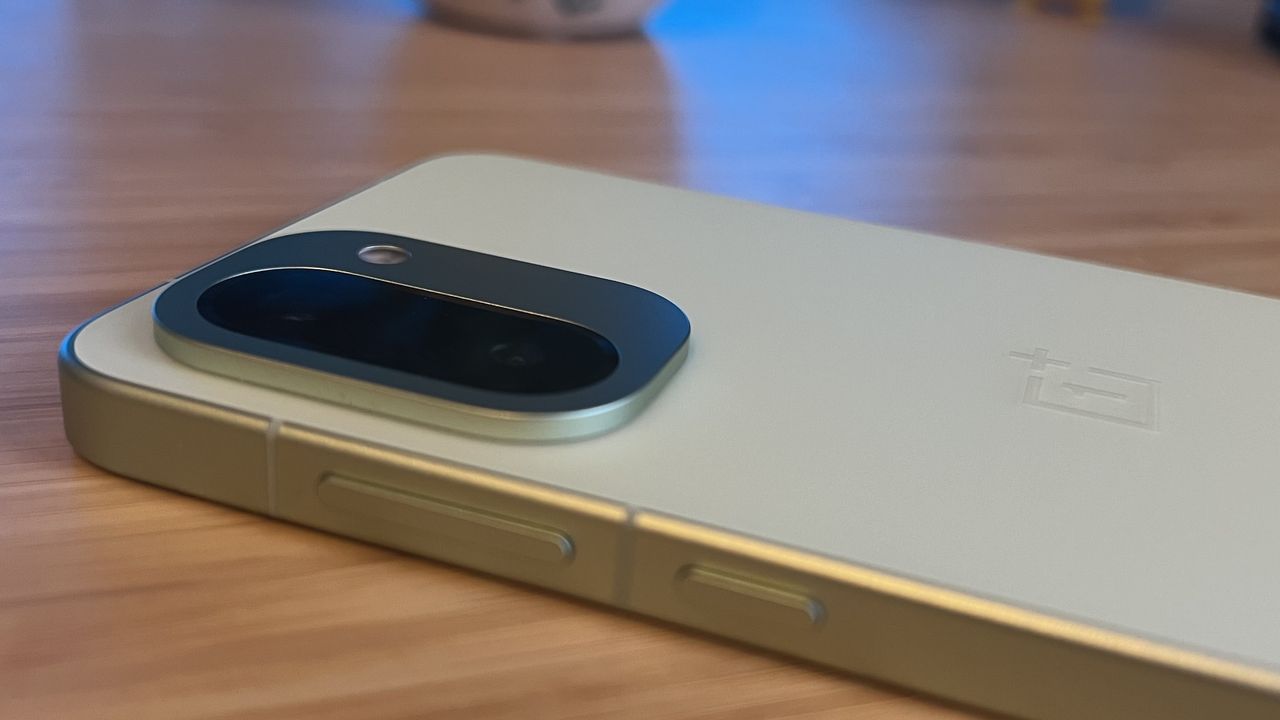
The OnePlus 15R looks fairly iPhone-ian at first glance, especially in the Mint Breeze colorway I've been testing. Rounded corners, a soft matte-finish backing, and flat sides are all within Apple's rulebook, though rather than continuing its side colors, OnePlus opts for a lighter, frosted effect on the back panel.
All that's to say, as an iPhone user day to day, the 15R is one of the more recognizable Android devices I've held in my hand. A slimline display bezel and streamlined 8.1mm thickness keeps things slick and suave, while IP68 and IP69 resistance ratings bode well for durability as well. That's not something you'll find in most gaming phones.
Compared to the gamerfied designs you'll find on models like the RedMagic 11 Pro and the exposed fans keeping those water resistances low, OnePlus's more mainstream position in the industry will certainly please those after a more subtle experience.
A centered USB-C charging port bodes well for future use with one of the best mobile controllers, while the left flank features your lock button and volume rocker. The other side holds your Plus Key, a multi-function button that can perform a range of different commands à la Apple's Action button. Everything is nicely reachable, without too many accidental presses as I got to grips with the device.
At 213g it's also a touch lighter than most dedicated gaming phones, the RedMagic 11 Pro hits 230g, while the Asus ROG Phone 9 Pro comes in at 225g.
Display

Onto that all-important screen.
OnePlus has outfitted its 15R with a 6.83-inch OLED panel, hitting 1272 x 2800 resolution for a 450ppi density with up to 165Hz maximum refresh rate. That's more screen space at a higher resolution than the Asus ROG Phone, and a higher refresh rate than the RedMagic, not too shabby. It's not quite as vibrant as the gorgeous OLED on the RedMagic 11 Pro, but at full brightness, it can still pack a punch, especially with that HDR10+ in action.
Both games and everyday scrolling are slick and smooth with no jagged edges, though it's worth noting that the refresh rate might stamp your battery a little harder than other devices. That's because this isn't an LTPO screen with the capacity to drop refresh rates under 60Hz automatically. Instead, you're either at 60Hz, 120Hz, or 165Hz - regardless of the amount of motion on your screen.
Still, as we'll find out later, I'm not too concerned about the OnePlus 15R losing juice halfway through the day.
Cameras
The OnePlus 15R features three cameras: a 50MP main and 8MP wide on the rear, and a 32MP selfie on the front. They're not going to win you any awards, but on a bright sunny day, they'll keep your Instagram feed topped up.
I took the 15R to the local park for a few test shots on a bright day and came away satisfied that the lens could keep up with ideal-scenario shots. Greens and blues punch through nicel,y and there's little noise unless the ultrawide is being used. Images look more natural than RedMagic's often overblown, hyper-vibrant shots, relying less on digital processes for upscaling color after the fact.
I was also impressed with the motion handling. My dog was in full trot when the image below was taken, and the OnePlus 15R managed to retain its clarity and focus remarkably well.

Details are lost when pulling out to use the ultra-wide, though, with a drop in sharpness and clarity overall.

That's on a sunny day. When the lighting drops, the quality of the 15R's cameras take a 1:1 hit. Colors lose their edge and there's a good degree of fuzz introduced in the image as a whole.
Then we get to the Telephoto problem. The OnePlus 15R drops the third lens from the OnePlus 15 and the previous generation OnePlus 13R. That means your zoom is all digital and comes with all the quality drops you'd expect. I also noticed it was particularly laggy when lining up a shot, even at 2x digital zoom.
Software

My iPhone comparisons didn't stop at the outer shell. OnePlus's OxygenOS 16 (running over Android 16) seems to have been designed with Apple in mind. From the floating island that sometimes pops up, to the app drawer, and glassy design language, I felt pretty at home here. That might not be what Android fans are looking for, though.
As it stands, everything runs smoothly, and I never noticed any juddering, awkward app closes, or unintuitive menu setups. Bloatware is there, but it's a standard affair with your usual pre-installed apps and a suite of OnePlus specific options.
There's also an AI lean, with Google Gemini running the brand's Mine Space software. This is a personal noticeboard for saving images, links, AI breakdowns of webpages, and voice notes. It's a glorified Notes app that can dig a little deeper into your saved content with Gemini's helping hand, but this is still gimmick-level rather than forming a fundamental part of my experience. I could save a trophy hunting website and check a quick auto-generated summary, but that's about all I used it for.
Gaming

The OnePlus 15R isn't a gaming phone first and foremost; it's not even a flagship mainstream device. That means you're not getting the sustained cooling reliability of a more sophisticated device or the Elite-level processor found among the top handsets.
As it stands, the 15R came in a considerable distance behind recent RedMagic and Asus devices in 3D Mark tests, with that Snapdragon 8 Gen 5 lagging behind the Elite version considerably. In action, games were still smooth, and I only experienced a few stutters with a full board state in MTG Arena, but we're not talking about the future-proofed power of the rest of the market.
The dedicated Game Assistant app organizes your apps in a similar manner to RedMagic's Game Space, while also opening you up to a performance-boosting power profile. This will run your battery a little faster, but opens your device up to full throttle. That's still not enough to take on more sophisticated gaming phones, though, and my 3D Mark performance remained the same.
Game Assistant also contains sliders for tap and swipe sensitivity as well as touch response times and precision. You've also got graphical controls over anti-aliasing, anisotropic filtering, and texture filtering.
Outside of synthetic benchmarks there's little to complain about here. You're getting solid performance from the majority of games, with that smooth 165Hz display coming into its own and thermals kept largely in check during regular thumb-tapping sessions. You won't get the same kind of long-term reliability in more demanding titles as you would a device with a more substantial cooling system, but Play Store dabblers have everything they need.
Battery
Battery is where the OnePlus 15R shoots for the moon. The 7,499mAh charge ran for just over two days when I first started using the device as I would any other. My iPhone reaches about 40% in the evening these days, I was still at 84% on the 15R.
That's a massive battery that can easily last days on end if you're not constantly glued to your phone. My casual usage (around an hour gaming, a few Spotify sessions, the odd TikTok scroll, and general messaging) saw me use a fraction of the full battery each day.
Where as OnePlus placed its sacrifice? Wireless charging. Just as the RedMagic 11 Pro introduced Qi power to the dedicated gaming phone market last year, the OnePlus 15R has stripped it from the more mainstream shelves. You'll be relying on a cable here, and those in the US should be wary of that 80W fast-charge claim. Only territories outside of the US will be able to make the most of that speed, those inside will instead receive a 55W adapter.
Should you buy the OnePlus 15R?

The OnePlus 15R is a cheaper alternative to the full-fat 15, yes, but it's not exactly better value. With downgrades in cameras, wireless charging, and processing power, the difference between the $699.99 R price and $899.99 15 rate is a little tricky to navigate. If you don't need a solid camera setup, rarely charge wirelessly, and play lighter games by default it's absolutely the better model, and $100 less than Apple's iPhone 17. However, if there are question marks over any of those sacrifices, the $200 upgrade to the main model will be worth its salt.
Then we have the gaming competition. If you're a Play Store power user looking to run or emulate console-level titles or more competitive experiences, you may well feel the drop in processing power more keenly. The RedMagic 11 Pro has served up some of the highest 3D Mark scores I've seen so far, and comes in at the exact same $699.99 MSRP as the OnePlus 15R. Yes, that's with a slightly slower screen (though very few games will make the most of that 165Hz refresh rate), and the same battery size.
How I tested the OnePlus 15R
I used the OnePlus 15R as my main device for a period of four weeks, swapping out my iPhone 13 Pro for the Android runner completely. In that time, I primarily played across MTG: Arena, Call of Duty Mobile, Best Fiends, and PUBG Mobile, while also stress testing in 3D Mark Wild Life Extreme and Solar Bay. For more information on how we make our recommendations, check out the full GamesRadar+ Hardware Policy.
I'm also hunting down all the best gaming tablets, or check out the best gaming earbuds and best gaming handhelds for more on-the-go play.