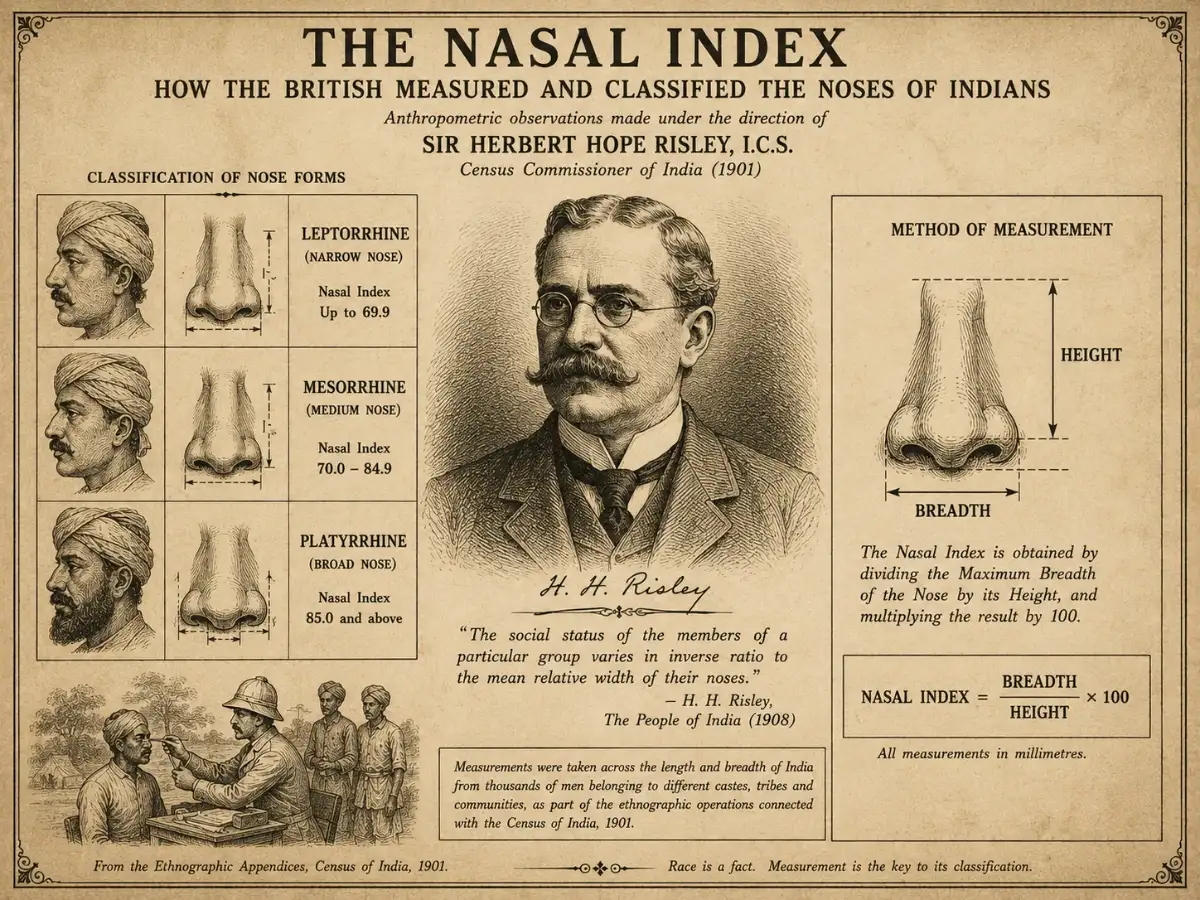
In the late nineteenth century, British officials in India embarked on one of the strangest exercises in the history of colonial rule. Armed with measuring rods, calipers and anthropometric tables, they set out to record the physical dimensions of Indian bodies. Their most famous measurement was the nose.
The project was led by Herbert Hope Risley, an Indian Civil Service officer who believed that the shape and width of a person's nose could reveal their racial origins and social status. What began as an exercise in colonial anthropology soon became intertwined with the census, caste classification and the British attempt to systematically categorize Indian society.