
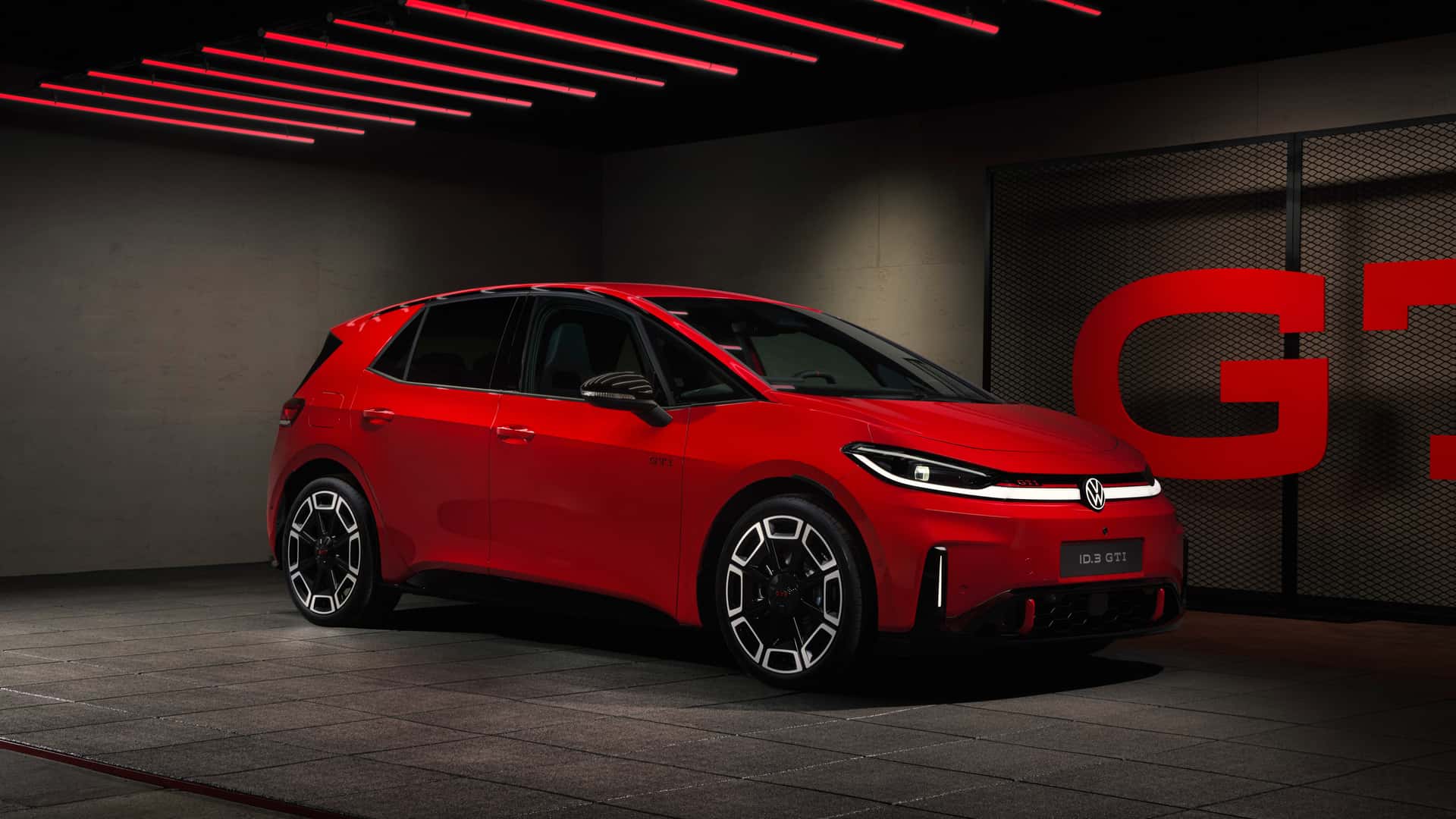
- The ID.3 GTI replaces the ID.3 GTX as Volkswagen’s second electric GTI model, following the ID. Polo GTI.
- Power carries over unchanged, with 322 hp and 402 lb-ft (545 Nm) of torque.
- VW's new electric RWD hot hatch hits 62 mph (100 km/h) in 5.6 seconds and tops out at a limited 124 mph (200 km/h).
It’s only been a little over two years since Volkswagen dipped its toes into the electric hot hatch segment with the ID.3 GTX. Well, that car is already dead, but for a good reason. With the supermini’s recent mid-cycle refresh, Wolfsburg is rebranding the spicy version as the ID.3 GTI. At the same time, it’s not the first EV to carry the famous suffix, since that role belongs to the smaller ID. Polo GTI. Nevertheless, it still has two headline-grabbing traits.

First, this is the most potent GTI that VW has ever developed. It still makes 322 hp, like the ID.3 GTX before it, but that’s enough to outpunch the Golf GTI Edition 50 by … one horsepower. As with the GTX it replaces, torque remains unchanged at 402 lb-ft (545 Nm). Since it doesn’t get more electric muscle, it’s not any faster either. It still takes 5.6 seconds to reach 62 mph (100 km/h) and tops out at an electronically capped 124 mph (200 km/h).
Second, this is the first time VW is slapping the GTI badge on a rear-wheel-drive car. Because the ID.3 GTI continues on the MEB platform, it retains the rear-mounted motor. By contrast, the ID. Polo GTI we mentioned earlier uses a front-wheel-drive MEB+ architecture, which aligns more with the GTI ethos. Well, minus the combustion engine.
Excellent (Estimated) Range
The electric motor draws its juice from a lithium-ion battery with a net energy content of 79 kWh. VW estimates that it will go 373 miles (601 kilometers) on a single charge in the WLTP cycle and take 29 minutes to DC charge at 183 kW from 10 to 80 percent. The projected range is up by six miles (10 km) compared to the ID.3 GTX.
Predictably, the subcompact hatchback inherits the styling updates introduced by the facelifted standard car, which will go by the name ID.3 Neo. It gets a more aggressive front end with the GTI’s signature red accents, along with glossy black accents and vertical LED daytime running lights you won’t find on the base model.
The profile reveals a GTI side badge on the front doors where it used to say GTX, along with freshly designed 20-inch wheels with 225 tires, upgradable to a wider 235 setup at an additional cost. At the back, the new GTI badge on the body-colored tailgate (it used to be black) reminds you this isn’t a GTX anymore, while shinier black plastics mark it as the king of the ID.3 lineup. Like the tailgate, the roof is now color-coordinated with the body.
Much Better Interior
VW’s updated performance supermini gets the same great tweaks inside as the donor car. It has more physical controls than the GTX it replaces, including proper steering-wheel buttons, a volume knob, and dedicated rear-window switches, like it should’ve had from the very beginning.
The tiny driver’s display is replaced with a much larger 10.25-inch digital instrument cluster, paired with the 12.9-inch infotainment screen. And because the center console now hosts a dedicated row of conventional controls, the hated touch slider beneath the touchscreen is gone. Being the GTI, it gets a pair of body-hugging front seats and red accents throughout the cabin.
With the facelift and rebranding, VW is adding a dedicated GTI mode that dials everything to the max and unlocks launch control. Additionally, it activates a fake engine sound to mimic the experience of a Golf GTI, which Wolfsburg thankfully plans to keep on sale for many years to come.
Following today’s reveal, the ID.3 GTI goes on sale in Europe in the spring of 2027.
2027 Volkswagen ID.3 GTI
Motor1's Take: The ID.3 GTI is an interesting experiment for Volkswagen. It’s one thing to put the famous badge on a small hatch, but it's a much bigger step to apply it to larger models. That raises an obvious question: Will VW dare to put the GTI badge on the ID.4 GTX and ID.7 GTX replacements?
The company has already shown that it’s willing to stretch the definition of GTI beyond combustion engines, and the ID. Polo GTI and ID.3 GTI arguably make more sense than the old GTX models from a branding perspective. Still, putting the badge on an electric SUV or a large liftback/wagon would take the GTI name even further from its hot-hatch roots.
I’d keep the GTX name for the hotter ID.4 (likely rebranded as ID. Tiguan), ID.7, and the ID. Buzz. To end with an obscure detail only diehard VW fans know, a Passat GTI prototype was built in 1977, but it never made it to series production.