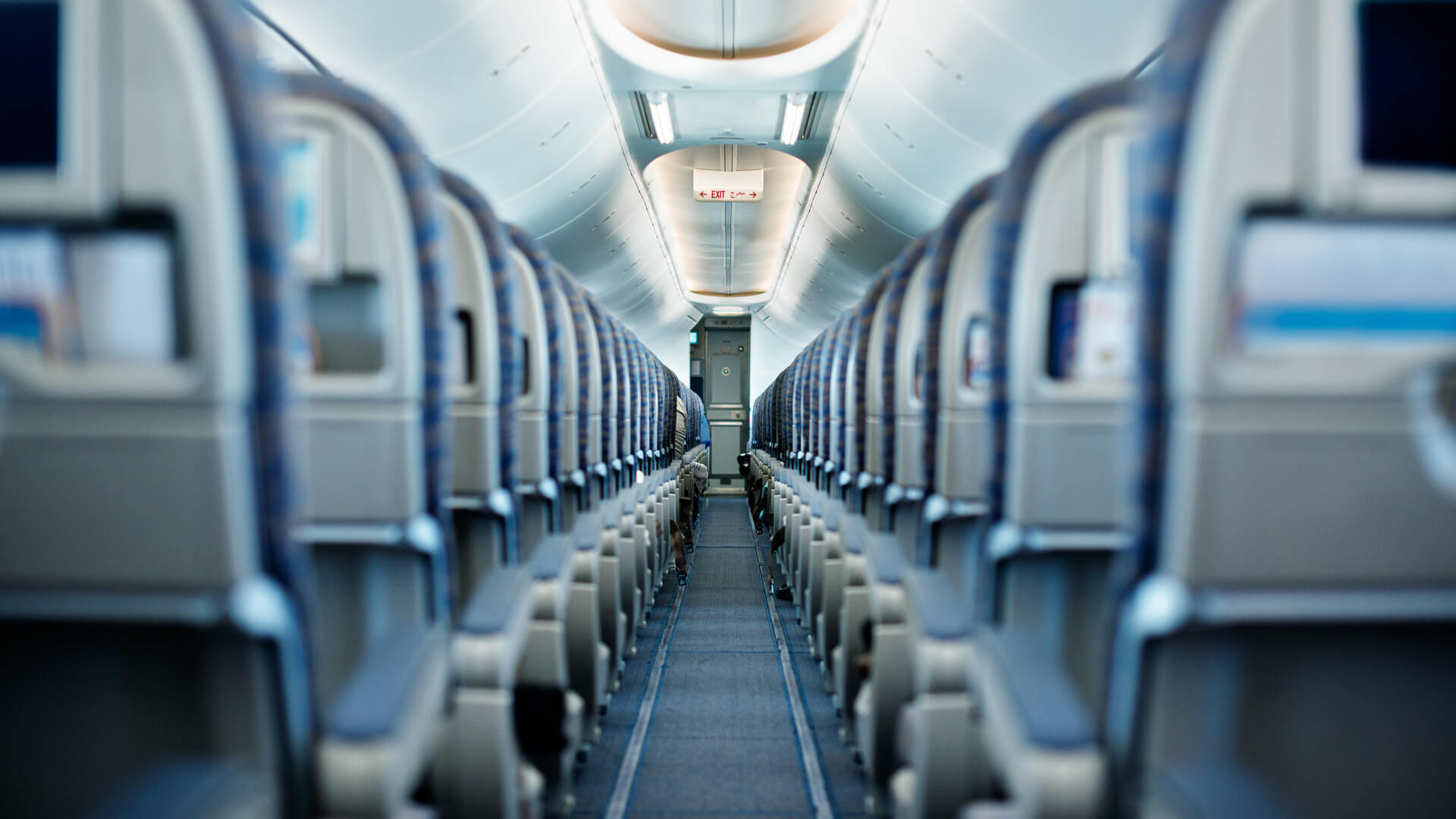
Airline seat selection used to be a free amenity included with the cost of your ticket. But starting in 2008, airlines began experimenting with seat fees, according to USA Today. By the late 2010s, paying extra to choose your seat had become standard practice as airlines with thin profit margins looked for new ways to generate revenue.
While no one enjoys paying for something that was once free, seat selection fees aren’t always a bad deal. In some situations, paying for a seat can significantly improve your travel experience — while in others, it’s an unnecessary expense. Read on to find out how airline seat selection works today and how to decide when it’s actually worth paying for.
Also here are top travel mistakes to avoid.
How Airline Seat Selection Works
Policies vary from airline to airline, but generally, seat selection is a paid-for add-on, much like baggage check or insurance. After you select your flight, you’ll usually have access to a seat map that will show you how much it will cost to select a seat. In many cases, seats that are perceived as less desirable, such as middle seats, will still be free of charge, while aisle and window seats will cost money. Exit-row seats or those with extra leg room, often carry the largest premiums.
Trending Now: 6 Things You Must Do When Your Savings Reach $50,000
For You: 5 Google Flights Tricks To Help You Land the Cheapest Holiday Airfare
There are a few ways to avoid paying for seat selection. If you have elite status for an airline, for example, you may be able to choose your seat for free. The same is true if you pay the most expensive fares for a given flight. Some airlines allow free seat selection during the check-in process, typically 24 hours before flight time, but by that point, most of the better seats are often taken.
When Paying for a Seat May Be Worth It
Everyone has their own mental cost/benefit matrix as to when a seat becomes “worth it,” but here are some of the scenarios in which you might consider paying a little extra.
Long-Haul International Flights
Most travelers can tolerate a bad seat, even a middle seat, for a few hours. But if you’re flying across the ocean for 8, 12 or even 16 hours, that cramped seat can become extremely uncomfortable. In that scenario, choosing a seat by a window can give you some extra measure of comfort, as in addition to the view you likely have a bit of extra space between you and the window — or at least a wall you can lean your head against. The same is true with an aisle seat, which often feels more spacious simply because there is no one immediately next to you and you can stand up at your leisure.
Fully-Booked Flights
If you’re on a heavily trafficked route, such as early morning flights from Los Angeles (LAX) to New York (JFK), you might consider paying for a seat at the time of booking. If you wait until the 24-hour window, you might score a free seat, but your only options might be middle seats at the back of the plane by the lavatories. This is particularly true during peak seasons, such as summertime or the winter holidays.
Traveling With a Companion or Family
Airlines don’t always guarantee free seating together unless you pay or book specific fare types. For couples or families, paying for seat selection can be the simplest way to avoid being split up. If you are traveling with children, you may have no choice but to pay up and select your seats together.
Seats That May Not Be Worth the Price
Just because a seat costs money doesn’t necessarily mean it is “premium.” Here are some seats you might want to avoid.
‘Preferred’ Seats That Are Just Closer to the Front
Many airlines label certain economy seats as “preferred” even though they offer no additional legroom or comfort. Sure, there’s the benefit of deplaning a few minutes early and for certain travelers, that may be worth a small premium. But unless you’re facing an extremely tight connection, paying extra just to be closer to the front of the plane rarely provides meaningful value.
Exit Row Seats Near Lavatories
This is a common situation in the premium-seat world that often divides traveler opinion. Yes, exit row seats near lavatories offer extra legroom, sometimes even more than in business class if you’re on an international flight. But exit row seats near restrooms also typically come with increased foot traffic, noise and sometimes even unpleasant smells. Passengers also tend to congregate in your extra-legroom area while either waiting for the lavatory or simply to stretch. If comfort and relaxation are your priority, this may not be the type of seat you want to pay for.
Middle Seats With a Fee Attached
Some airlines charge for advance seat selection even if the seat itself offers no advantage. Paying to reserve a middle seat rarely makes sense unless it’s the only way to sit with a companion. In many cases, waiting until check-in may yield the same seat for free.
More From GOBankingRates
- Nearly 1 in 3 Americans Hit by a Costly Holiday Scam, Norton Survey Shows -- How To Avoid This
- Here's What Retirees Wasted the Most Money On in 2025 -- and How To Avoid It in 2026
- How Middle-Class Earners Are Quietly Becoming Millionaires -- and How You Can, Too
- 6 Safe Accounts Proven to Grow Your Money Up to 13x Faster
This article originally appeared on GOBankingRates.com: The New Rules of Airline Seat Selection — What You Should (and Shouldn’t) Pay for in 2026