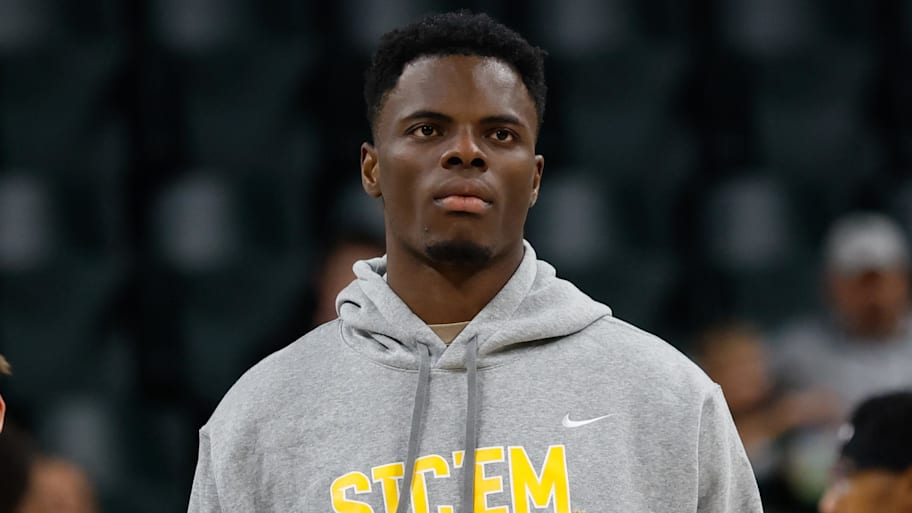
Last week, Kenneth Lofton Jr., a burly forward who played parts of two NBA seasons with Memphis, Philadelphia and Utah, caused a stir on social media when he announced he would be returning to play at his alma mater, Louisiana Tech. Lofton, who is currently in China in his second season playing for the Shanghai Sharks, posted an old photo of him in a Tech uniform with the caption “I’ll be there in 1 month!” Lofton likely isn’t serious—there is currently no precedent for former college players who surrendered eligibility to turn pro to get it back—but that it was taken seriously by some shows just how uncertain the NCAA landscape has become.
Since 2024, when the NCAA simplified its rules to allow unlimited free transfers, college sports have descended into chaos. Free transfers coupled with the fusion of name, image and likeness (NIL) cash have turned what were once four-year commitments from student-athletes into a string of one-year deals. For all intents and purposes, it marked the end of amateurism in athletics.
That landscape shifted again last week, when Baylor announced that it had signed James Nnaji, a 7-foot center from Nigeria. In 2023, the Detroit Pistons selected Nnaji with the 31st pick in the NBA draft. While Nnaji has continued to play overseas, his rights have been traded three times, most recently in a 2024 multiteam deal that sent Karl-Anthony Towns to New York. Shockingly, the NCAA granted him four years of eligibility.
The decision drew sharp criticism. “I thought I’d seen the worst,” said Michigan State coach Tom Izzo. “[This] topped it.” Gonzaga coach Mark Few said the NCAA’s “lack of leadership is really showing.” Arkansas coach John Calipari said, “If your name was in that draft, and you got drafted, you can’t play college [basketball].” Izzo suggested he should call former Spartans Magic Johnson and Gary Harris about suiting up. “I mean, if that’s what we’re going to, shame on the NCAA,” said Izzo. “Shame on the coaches, too.”
From afar, NBA officials have monitored the college basketball mayhem. Some have been bemused. “Most dysfunctional mess I’ve ever seen,” said a high-ranking team official. Others have been supportive. “Anytime a guy has an opportunity to make money,” says Pistons coach J.B. Bickerstaff, “I feel like they should have the right to go and make money.” Still, team executives are keenly aware that the NCAA’s willingness to grant eligibility to drafted players could have ripple effects that reshape the NBA’s own draft process.
Consider: “Draft-and-stash” is a phrase used to describe the act of a team drafting a player—usually foreign born—to retain his rights and then working out an agreement where the player spends at least one season playing overseas. It’s often mutually beneficial: The player can continue to make good money internationally while a team can monitor his progress without clogging up a roster spot.
The Nnaji ruling, theoretically, creates more “stash” possibilities. The decision to grant eligibility to Nnaji opens the door for future foreign-born draft picks to enroll at U.S. universities. Further, multiple team executives tell Sports Illustrated they have had internal discussions about what could happen if a player with years left of eligibility challenges rules against returning. In that scenario, players could continue to rake in NIL money while teams could more closely monitor their development.
Player agents believe teams will jump at those opportunities. “It’s changing so fast and evolving so quickly,” says Todd Ramasar, the CEO and president of Life Sports Agency. Last September, Ramasar negotiated Thierry Darlan’s enrollment at Santa Clara. Darlan, who is from Senegal, played for three G League teams in two seasons, making him the first player with G League experience to join an NCAA program. If a player can maintain eligibility after being drafted, second-round picks would suddenly become more valuable.
Says Ramasar, “That 60th pick might mean more than if a team used it on a player that went to Europe or the G League and gets lost in the shuffle.”
Getting there would require a court battle, but legal experts believe that, like others, those limits will be tested. Before Nnaji, players who entered and stayed in the NBA draft were considered ineligible to return. “This determination to allow Nnaji to have eligibility,” says Darren Heitner, a sports and entertainment attorney at Heitner Legal, “just throws that policy on its head.” It isn’t just drafted players. Heitner says he has had conversations in the last week with agents of players who have logged NBA minutes about their discussions with college programs. On Tuesday, NCAA president Charlie Baker tweeted that “The NCAA has not and will not grant eligibility to any prospective or returning student-athletes who have signed an NBA contract,” including two-way contracts. But the NCAA may not have a choice. “If there is a rejection, if it’s worth it to a player,” says Heitner, “we may see some litigation in this new space.”
The @NCAA has not and will not grant eligibility to any prospective or returning student-athletes who have signed an @NBA contract (including a two-way contract). As schools are increasingly recruiting individuals with international league experience, the NCAA is exercising…
— Charlie Baker (@CharlieBakerMA) December 30, 2025
And the NCAA has had mixed results in the courts. Last year, Vanderbilt quarterback Diego Pavia won a preliminary injunction to play this season, successfully arguing that his seasons spent playing in junior college should not count against his eligibility to play Division I football. Last spring, Rutgers defensive back Jett Elad won a similar injunction, arguing the NCAA’s eligibility rules violated antitrust laws. The NCAA did succeed in blocking two ex-Overtime Elite players, Matt and Ryan Bewley from winning eligibility to play at Chicago State in 2023–24. But last week, Pavia, a Heisman Trophy finalist, joined a group of former junior college athletes seeking more eligibility, citing the NCAA’s decision to clear Nnaji to play. Meanwhile the NCAA’s solution is to hope that Congress solves the problems for them.
For the NBA, there is a potential downside. The right to return post-draft could be weaponized. Use Ace Bailey for example. Last June, the Rutgers forward reportedly attempted to steer his way to the Washington Wizards, who held the sixth pick in the draft. Utah selected Bailey fifth. With no real leverage, Bailey signed a multiyear contract with the Jazz.
If Bailey had the ability to return to college, that leverage would increase significantly. Any team that drafted him would retain his rights but how many would be scared off by the threat of an underclassmen returning to school, where they could collect NIL money comparable with a first-year rookie contract? Rookies have enormous value in the NBA, both in on-court production and the hope they offer a fan base. The possibility of not having a player for a year or more could disincentivize a team from taking that risk.
“A kid could say, ‘We’re going to go to UCLA, or we’re going to go to St. John’s, or we’re going to go to a big market,’ ” says Ramasar. “And either you guys trade our rights away or we’re going to go play in college.”
It’s all theoretical, of course. But if recent events prove anything it’s that the old rules, all of them, no longer apply. In the aftermath of the Nnaji ruling, Dwight Howard weighed in. “Wait,” Howard posted on X, “so I can go get a degree and play college ball?” Howard, who was inducted into the Basketball Hall of Fame this year, was one of the last players who made the jump to the NBA straight from high school. League and team officials dismissed Howard’s comment as a joke. Then a few of them wondered … can he?
More NBA from Sports Illustrated
Listen to SI’s NBA podcast, Open Floor, below or on Apple and Spotify. Watch the show on SI’s YouTube channel.
- Mannix’s NBA Notebook: Clippers’ Defensive Turnaround and Luka Dončić’s Referee Beef
- Jordan Poole’s Terrible Game-Tying Shot Attempt Perplexed Announcers for Both Teams
- Nuggets Get Mostly Positive Injury Update on Nikola Jokić
- SI:AM | LeBron James Enters Uncharted Territory as He Turns 41
This article was originally published on www.si.com as The NCAA’s Latest Eligibility Ruling Could Upend the NBA Draft.