
Get all your news in one place.
100's of premium titles.
One app.
Start reading
LiveScience
LiveScience
Pandora Dewan

The moon is turning red tonight — here's why, and how to watch

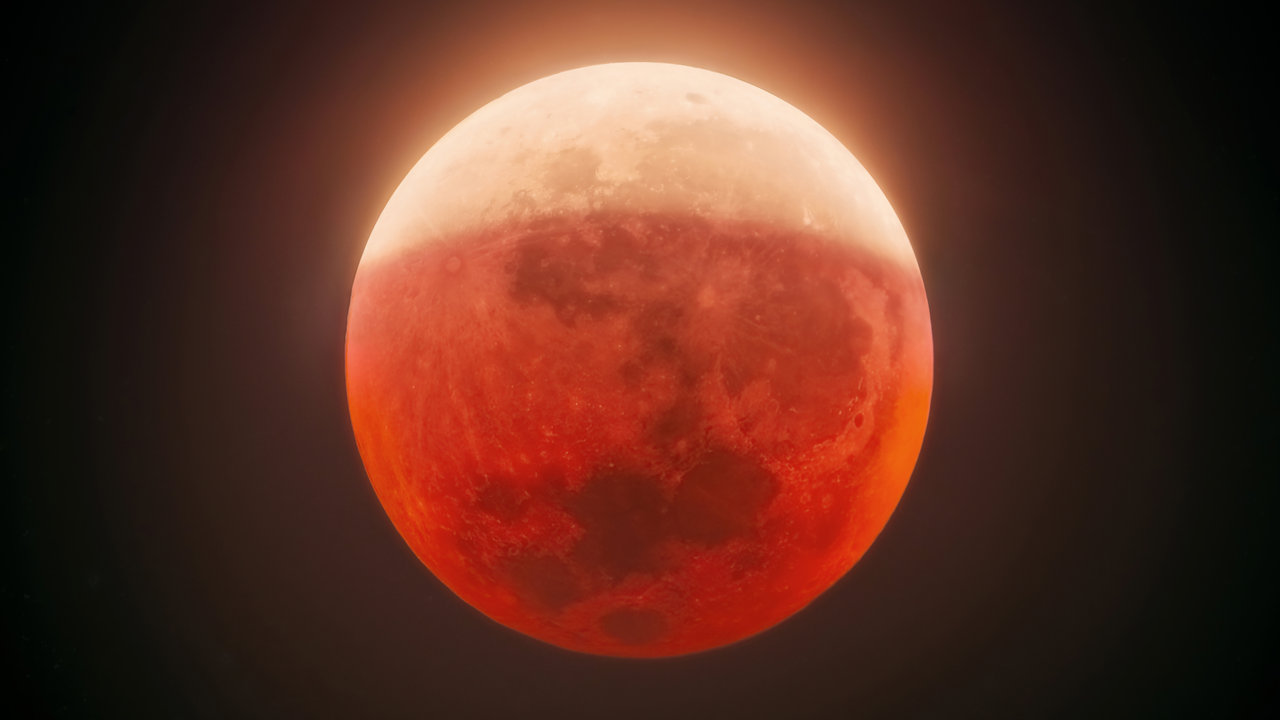
Moon experiencing a partial lunar eclipse in Vallejos. Málaga, on September 7, 2025.

Skywatchers are in for an ecliptic encore tonight (Aug. 27 to 28) as a very deep partial lunar eclipse promises to turn the full moon coppery red.

As the full moon slides into Earth's shadow, it will cast an eerie red glow over 96% of the lunar surface. In North and South America, every stage of the eclipse will be visible in the night sky, beginning at 9:23 p.m. EDT on Thursday night (Aug. 27), ending around 3 a.m. Friday (Aug. 28), and peaking just after midnight. Meanwhile in Europe, the eclipse will occur just before dawn as the moon sinks below the horizon.

The moon won't fall totally under Earth's shadow, so we can't officially call it a "blood moon," but it will be the deepest lunar eclipse anywhere in the world until the next total lunar eclipse on Dec. 31, 2028.

Why does the moon turn red during a lunar eclipse?

A lunar eclipse happens when the moon passes directly behind Earth and falls into its shadow. But instead of going completely dark, the moon turns a deep shade of coppery red. This is because of the way Earth's atmosphere absorbs and bends light.

RELATED STORIES

Rare red northern lights may be visible alongside red moon during tomorrow night's partial lunar eclipse

Scientists finally know why astronauts struggle to poop in space — and reveal a hidden risk of long-haul spaceflight

Out-of-control SpaceX rocket carved a 60-foot crater into the moon, NASA images reveal

Sunlight is made up of a spectrum of colors. The blue and yellow parts of this spectrum are absorbed by Earth's atmosphere. But red light is bent, or refracted, by our planet's atmosphere and directed toward the moon, lighting it up like a blood-red flashlight beam, according to the European Space Agency.

The exact shade of red depends on what else is going on in Earth's atmosphere at the time. For example, volcanic ash and desert dust can significantly darken a lunar eclipse.

Unlike with a solar eclipse, you don't need eclipse glasses to safely see a lunar eclipse.

While the partial eclipse will be visible to the naked eye, even better views are possible if you use one of the best telescopes, best smart telescopes or best stargazing binoculars. If you're looking to photograph the moon, check out our picks for the best astrophotography cameras to capture the best shots of the lunar eclipse.

Sign up to read this article
Read news from 100's of titles, curated specifically for you.
Already a member? Sign in here
Related Stories
Top stories on inkl right now
One subscription that gives you access to news from hundreds of sites
Already a member? Sign in here
Our Picks
Fourteen days free
Download the app
One app. One membership.
100+ trusted global sources.