Get all your news in one place.
100's of premium titles.
One app.
Start reading
The Economic Times
The Economic Times

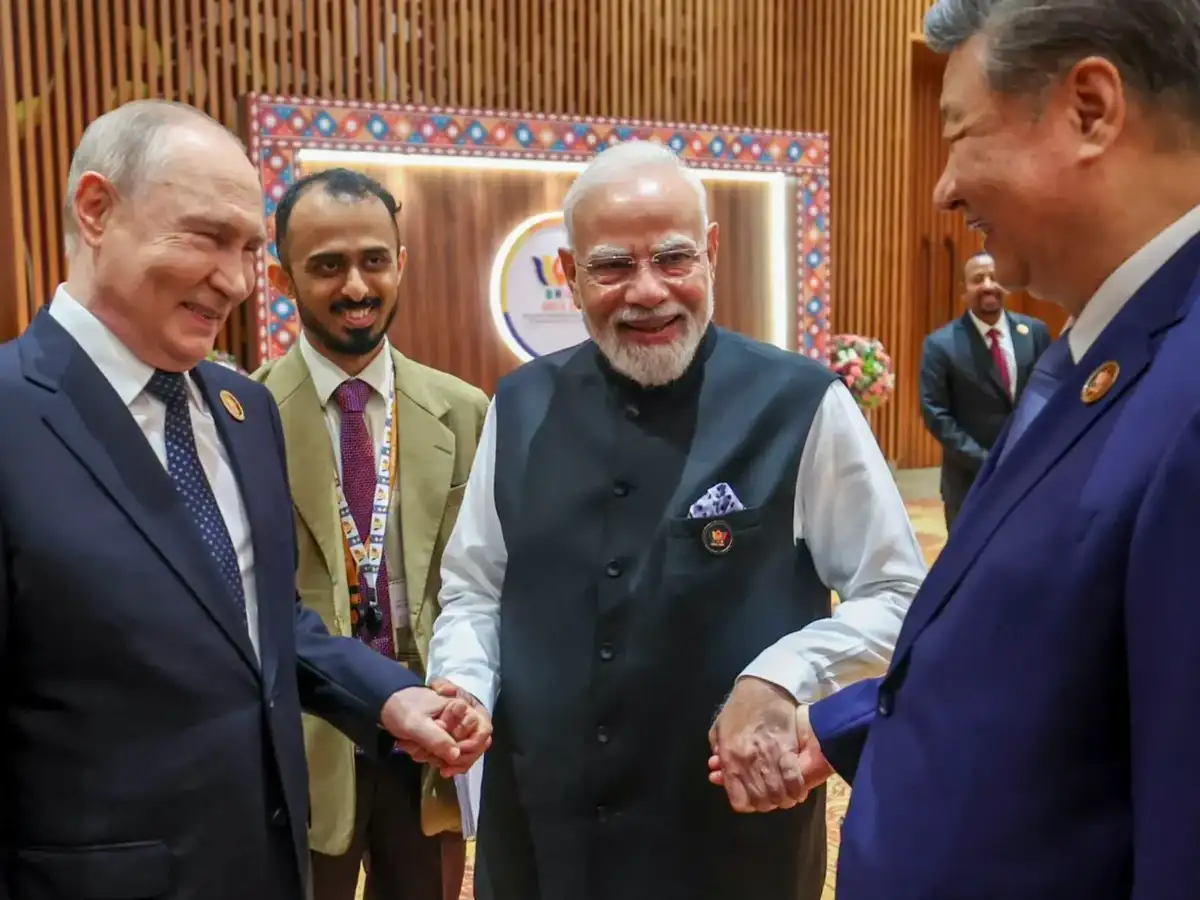
The Modi-Xi-Putin picture and the rise of a multipolar world trying to remake global power

When Prime Minister Narendra Modi, Chinese President Xi Jinping and Russian President Vladimir Putin stood together in New Delhi at the BRICS summit, the photograph carried a message larger than the three men in the frame.

A year after their much-publicised huddle at the Shanghai Cooperation Organisation summit in Tianjin, Modi, Xi and Putin were together again, this time at a summit of an expanded BRICS that represents nearly half the world's population and has become an increasingly important platform for countries seeking a bigger voice in global affairs.
Also Read: BRICS leaders adopt New Delhi declaration, voice concerns over 'unilateral' tariffs and non-tariff trade barriers

It image was striking because the three countries are increasingly part of a world in which power is being distributed across more centres, and BRICS is becoming one of the places where that transition is taking institutional shape.

BRICS leaders unanimously adopted the New Delhi Declaration on Saturday after India worked through differences among members, including over the conflict involving Iran and the UAE. The declaration raised concerns over unilateral tariffs and non-tariff barriers, condemned unilateral coercive measures and called for continued work on practical solutions for cross-border payments.

Follow all BRICS related stories here

Only months earlier, BRICS foreign ministers had failed to issue a joint statement in New Delhi, underscoring how difficult consensus can be in the expanded grouping.

The fact that the 11 members managed to reach agreement this time is therefore more than diplomatic housekeeping. It suggests that despite their differences, the countries see enough value in the BRICS platform to keep building it.

And that is perhaps the most important message from the Modi-Xi-Putin photograph: the emerging order does not necessarily require countries to agree on everything. It requires them to have institutions where their interests can overlap.

Sign up to read this article
Read news from 100's of titles, curated specifically for you.
Already a member? Sign in here
Related Stories
Top stories on inkl right now
One subscription that gives you access to news from hundreds of sites
Already a member? Sign in here
Our Picks
Fourteen days free
Download the app
One app. One membership.
100+ trusted global sources.