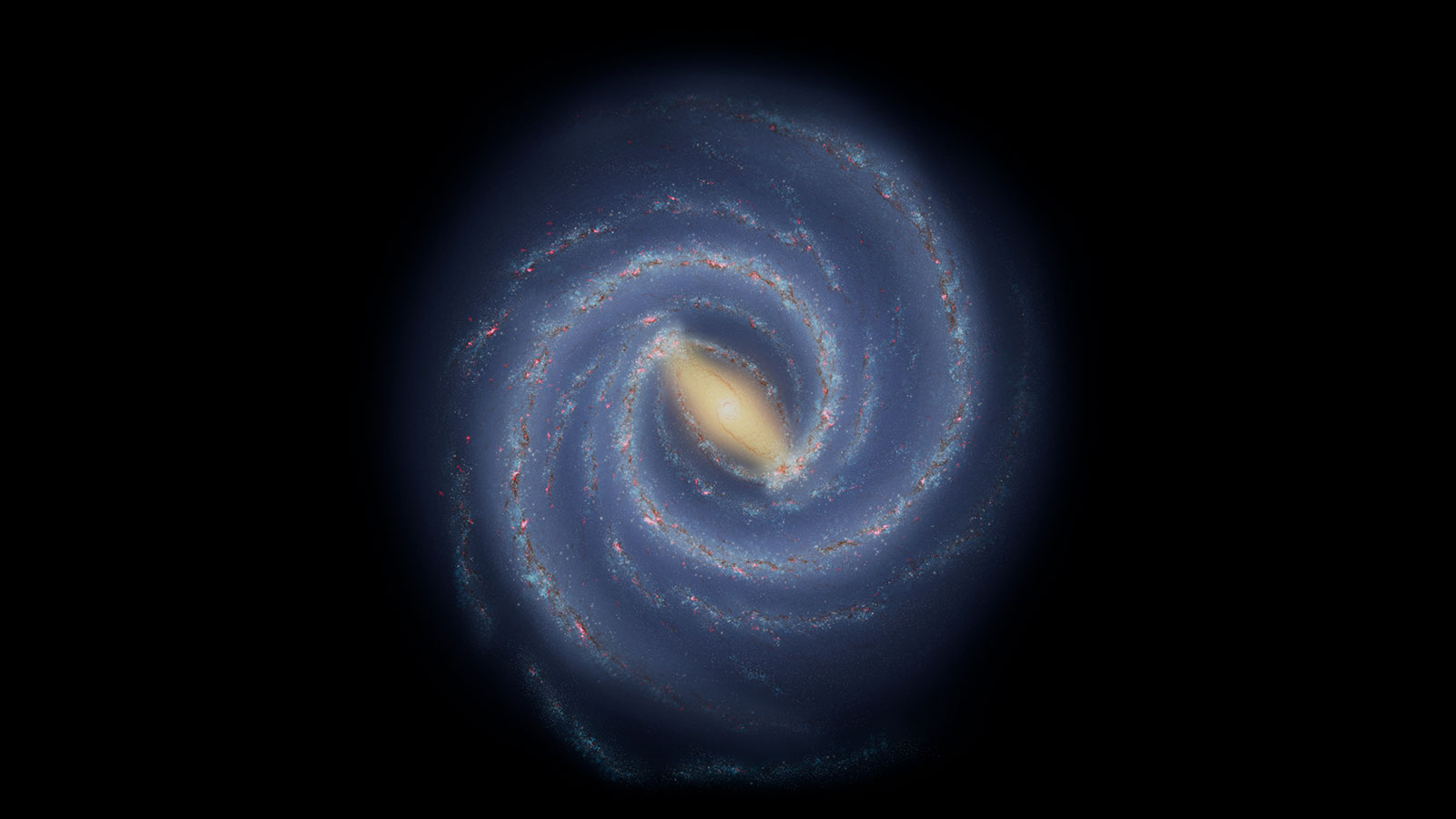
If you were to spring from Earth so high you could glance down at the entire Milky Way, our home galaxy would look like a spinning pinwheel. In it, some 100 billion stars are sprinkled across some 100,000 light-years, accompanied by unfathomable amounts of gas and dust. Together, these galactic components swirl around in a stellar disk, spilling into four giant spiral arms emanating from the galaxy's blinding center, the home of a supermassive black hole.
We've come to really identify our galaxy with its spiral structure (although its exact number of galactic arms is still being debated). Yet, astronomers have long puzzled over why spiral galaxies such as ours appear to be strikingly scarce in our crowded pocket of the universe. The pancake-like supergalactic plane in which the Milky Way is embedded, spanning 1.4 billion years in width, is instead dominated by clumpy, somewhat rounded, galaxies known as ellipticals.