Get all your news in one place.
100’s of premium titles.
One app.
Start reading
The Independent UK
The Independent UK
Lifestyle
Lauren Taylor

The Michelin-starred way to cook the food you loved as a child

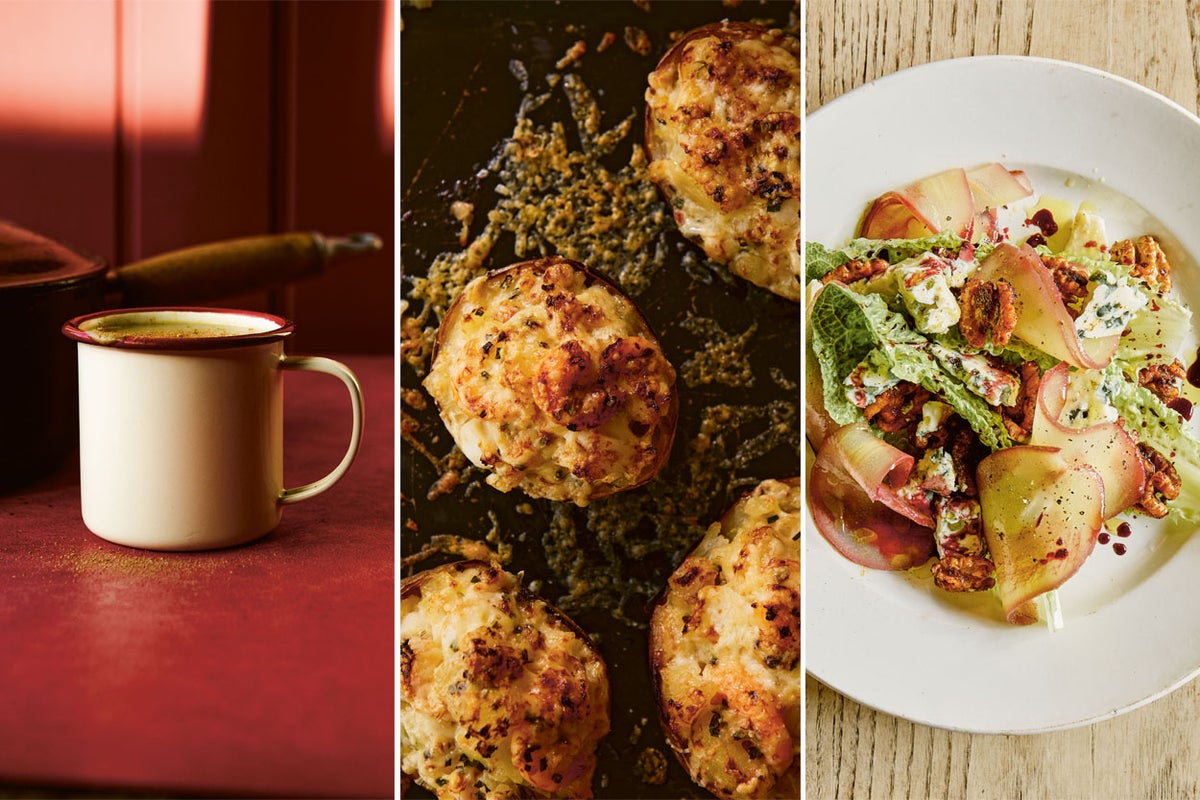
Three dishes that prove Stephen Harris’s point – the food you remember tastes better when it’s done properly at home - (Kim Lightbody)

Stephen Harris remembers feeling ill one day and craving the comforting childhood memory of cream of mushroom soup. And being bitterly disappointed with a can from a shop.

“I opened it, the smell was horrendous. I couldn’t even eat that,” says the Michelin-star chef, who owns The Sportsman near Whitstable, Kent.

“So I felt, right, I’m going to improve this recipe and make it as good as my memory. I fried up some mushrooms, added a bit of soy sauce – because that brings out the mushroom flavour – I made a stock by putting some milk in a pan, dried cep mushroom, a bit of thyme and a clove of garlic” – along with extra raw mushrooms blitzed up, the stock strained into the blender.

“I just got this gorgeous mushroom soup, that exactly matched the memory I had of it as a kid. I also made cream of tomato and cream of chicken,” adds the 64-year-old. “Oh my god, it’s simple, but it’s better.”

Homemade tomato soup (the best tomatoes he can find, cut, blitzed until liquid, boiled off in a pan to lose a third of the water, salt and sour cream) is Harris’s lunch once a week. “Everybody can do that”.

Don’t talk to him about the word nostalgia, though – “I’m not a fan, I find it slightly empty,” he notes – despite it being the tag line on his latest cookbook, The Sportsman At Home: Flavoursome Recipes for Nostalgic Eating.

His vision is more about “improving the food you remember”, he says, in a way that works for home cooks in their kitchens. Think cullen skink, cottage pie and homemade digestive biscuits. As well as a thousand island sauce, this time accompanying baked salmon, rather than the Seventies prawn cocktail.

His acclaimed gastropub has held a Michelin star since 2008, but Harris is a bit of an anomaly in the culinary world – previously a financial consultant with no formal food training. At the age of 37, as a self-taught amateur cook, he quit corporate life to pursue a dream of opening his own restaurant.

‘The Sportsman at Home’ is about improving the food you grew up with, not chasing restaurant-level complexity (Quadrille)

“I’d lost 15 years of my career, to be honest, if you’re not a head chef by the time you’re 40 you’re probably not going to get anywhere,” he says. “I was late to it.

He’d take himself for lunchtime deals at top Michelin-star restaurants. “It wasn’t too expensive, they used to do nice £25 lunches, and I taught myself to cook by eating a dish and then going home and trying to cook it, often with their recipe book. It was quite an unusual way of cooking but it’s quite logical, if you think about it.”

Having a complete career change decades after most chefs start their training was a risk, but Harris says, “I didn’t have any children, I’d split with my girlfriend of many years, I didn’t have any ties, I didn’t have a mortgage. So I was in a really good position to just say, ‘Right, sorry, I’m going to start again’. And I literally started again, from zero.

“I just wasn’t cut out for going into an office every day wearing a suit. I just love the freedom of being a chef, even though I was going to have to work long hours, it felt like freedom to me straight away.”

He did “six months here, six months there” in restaurants, to learn how they worked – “I wasn’t arrogant enough to think I could just open a restaurant” – and then found a seaside run-down pub five miles outside of where he lived in Whitstable, and bought it with his brother, Phil.

“I can remember people thinking, ‘What are you doing? It’s so horrible’. Now people love it.

“The area now has the benefit of being known as ‘bleak chic’. The idea that an out-of-season seaside town could have beauty, if you can see it. There are some caravans around, but what’s wrong with that?”

Harris’s approach is calm, precise and rooted in instinct – a self-taught chef refining classics rather than reinventing them (Kim Lightbody)

Since its opening in 1999, The Sportsman has become known for its simple use of quality locally sourced ingredients – and attracted many famous faces to its unpretentious setting.

“I wanted it to be like a three-Michelin-star restaurant that you’d get in London or Paris, but with all the extraneous stuff left out. So you wouldn’t have 40 people walking the floor… I would leave anything out that wasn’t essential to the flavour of the dish. But I would source the best ingredients.

“I just love good basic food. Give me like, chicken, roast potatoes, vegetables that came out of the ground recently and a beautifully made gravy. And that’s it – I’m happy.”

The location is almost as important as the restaurant. “I’m looking out now and I can see the sea where the fish come from. There’s bass, turbot, mackerel, brill… near the beach, there’s cockles and different shellfish. I can see across three farms. During the summer, we have strawberries, raspberries, blackberries, cherries, then later on plums and apples. And we’re in Kent, where the best dairy comes from because the pasture in mid-Kent is gorgeous.

“And I just thought, that’s a palace, that’s everything I need. I don’t really need to look any further than what’s around me.”

He grew up in Whitstable on his mum’s “fresh, properly cooked food”, and eating healthily has become even more important recently. “It’s age – I’m 64 now, that’s quite old but I don’t feel it. I eat a lot of olive oil,” he says.

One of his favourite nutritious dishes to rustle up is ratatouille. “It’s basically whatever vegetables cooked in olive oil for a long time. You buy a few extra things like soy sauce, a knob of ginger, dried wild mushrooms and dried ceps – you need them to make stock. When all the vegetables are cooked, pour over the stock and reduce it right now and it gives your vegetables this really intense [flavour] – it tastes of what it’s supposed to.”

Cream of mushroom soup

A proper cream of mushroom soup that tastes of mushrooms, not tins, shortcuts or nostalgia alone (Kim Lightbody)

Canned mushroom soups can taste neither of mushrooms nor of cream, says Harris. So he came up with a recipe that’s quick and convenient.

“The results were spectacular; a comforting, clean-tasting mushroom soup with a freshness that only comes from making something at home. The warmth of the past freed from contextual complexity.”

Serves: 4

Ingredients:

700ml whole milk

20g dried porcini

50g unsalted butter

1 bunch of salad onions, chopped

500g chestnut mushrooms, thinly sliced

1 tbsp light soy sauce

1 tsp white truffle oil

2 tbsp crème fraîche, plus extra to serve

2 tbsp finely chopped chives

Salt

Method:

1. Preheat the oven to 150C fan (350F).

2. Bring the milk to the boil in a saucepan, then add three-quarters of the dried porcini. Remove from the heat and leave to infuse while you prepare everything else.

3. Scatter the remaining porcini over a small baking sheet and toast in the oven for 10 minutes, then transfer to a small food processor and blitz to a powder.

4. Heat the butter in a large non-stick frying pan or saucepan over a medium heat. As it melts, add the salad onions and mushrooms. Add a good pinch of salt – this will draw the water from the mushrooms and help them to cook down. Cook for about 5 minutes until the mushrooms are starting to show signs of browning, then add the soy sauce and continue to cook for 5 minutes until the mushrooms have given up most of their moisture. Add another good pinch of salt and cook until the pan is almost dry.

5. Transfer the cooked mushrooms to a blender along with the truffle oil. Strain the dried porcini from the milk and pour the milk over the mushrooms in the blender.

6. Finely chop half the rehydrated porcini and add to the blender (I find adding all of them doesn’t produce a good result but they have done their job in adding flavour to the milk).

7. Blend the mixture on high speed for a couple of minutes until it’s a smooth consistency. Add the crème fraîche and blend again. It should now be a soup with froth on top. Check the seasoning.

8. Pour the soup into bowls and top with the chopped chives and a dollop of crème fraîche. Put the porcini powder into a tea strainer or fine-mesh sieve and tap it over the soup rather like chocolate on a cappuccino. Serve.

Baked potato fish pie

A fish pie you can eat with your hands, built inside a baked potato for warmth, ease and good seaside logic (Kim Lightbody)

“This was an idea I saw around, and I am sorry that I can’t credit the person who came up with it, as it is really clever,” says Harris.

“The premise is that you make a fish pie inside a jacket potato skin, having scooped out the potato and mixed it with the fish pie filling. You can eat these around a bonfire with just a napkin to hold it. It is perfect for that time of year, when you may want to eat something warm, standing up, outside. They’re great for the beach as well.”

Serves: 4

Ingredients:

Neutral oil, for rubbing on the potatoes

2 large baking potatoes, peeled

50g unsalted butter

1 onion, finely diced

1 celery stalk, finely diced

½ fennel bulb, finely diced

200ml vermouth

200g crème fraîche

300g skinless cod fillet, diced

200g prawns

1 small bunch of chives, chopped

Squeeze of lemon juice

50g Cheddar, grated

Salt and freshly ground black pepper

Method:

1. Preheat the oven to 180C fan.

2. Rub the potatoes with oil and season well on the outside. Bake in the oven for 1 hour 15 minutes, or until a knife easily penetrates the flesh. Remove from the oven and allow to cool.

3. Meanwhile, heat the butter in a large non-stick frying pan over a medium heat, then add the onion, celery and fennel. Sweat without colouring until soft, around 10 minutes.

4. Add a pinch of salt and the vermouth and boil until the vermouth has almost all evaporated. Now add the crème fraîche and let it melt into the pan. When it is simmering, add the cod fillet and prawns and stir them into the sauce. Cook for 1 minute, then remove from the heat.

5. Cut the cooled potatoes in half lengthways and scoop out the flesh. Add the flesh to the fish mixture and stir to combine. Add the chives and a squeeze of lemon and check the seasoning.

6. Place the potato halves on a baking sheet and fill them with the fish mixture. Cover with the grated Cheddar, then place under a hot grill (broiler) until the cheese melts. Serve in a napkin with wooden forks.

Pear, walnut and roquefort salad

A sharp, savoury salad from The Sportsman’s early years that still earns its place on the table (Kim Lightbody)

This is an early dish from The Sportsman that old customers and staff still talk about now,” says Harris. “It was based on a salad from Cafe Pasqual’s Cookbook (a restaurant in Santa Fe), which I got from my brief time cooking in a Mexican restaurant in Canterbury. They used pecan nuts, which I changed to walnuts, and the blue cheese became Roquefort.”

Serves: 4

Ingredients:

50ml red wine

2 tbsp caster sugar

1 cinnamon stick

1 star anise

3 cloves

Pinch of chilli flakes

4 Conference or Bosc pears, peeled

1 tbsp neutral oil

2 tsp coffee liqueur (Tia Maria or Kahlúa)

2 tsp smoked paprika

1 tsp icing (powdered) sugar

Small handful of walnut halves

1 romaine lettuce

200g Roquefort

Salt and freshly ground black pepper

Method:

1. First, poach the pears. Put the wine, sugar, cinnamon stick, star anise, cloves and chilli flakes into a saucepan and add the pears. Ensure the pears are totally submerged in the wine by placing a circle of baking parchment on top and then weighing them down with a plate. Poach gently over a low heat for about 30 minutes, or until the pears are soft – check them with a sharp knife.

2. Once cooked, remove the pan from the heat and allow the pears to cool in the poaching liquid, then strain the poaching liquid into a clean saucepan. Boil the poaching liquid to reduce it until it is the consistency of a syrup. This will make about 200ml syrup.

3. Next, make the walnuts. Preheat the oven to 180C fan (400F).

4. Put the oil, coffee liqueur, paprika and icing sugar into a bowl and mix together. Add the walnuts and toss to coat, then spread the nuts onto a baking sheet and toast in the oven for 30 minutes. Check and stir them regularly so they don’t burn. Remove from the oven and leave to cool.

5. Slice the cooled pears lengthways on a mandoline.

6. Put the large lettuce leaves on each plate, then toss the leaves with a mixture of the pears, walnuts and Roquefort. Drizzle the poaching syrup around the salad, then sprinkle the salad with a pinch of salt and a twist of black pepper.

The Sportsman at Home’ by Stephen Harris (Quadrille, £30).

Sign up to read this article
Read news from 100’s of titles, curated specifically for you.
Already a member? Sign in here
Related Stories
Top stories on inkl right now
One subscription that gives you access to news from hundreds of sites
Already a member? Sign in here
Our Picks
Fourteen days free
Download the app
One app. One membership.
100+ trusted global sources.