
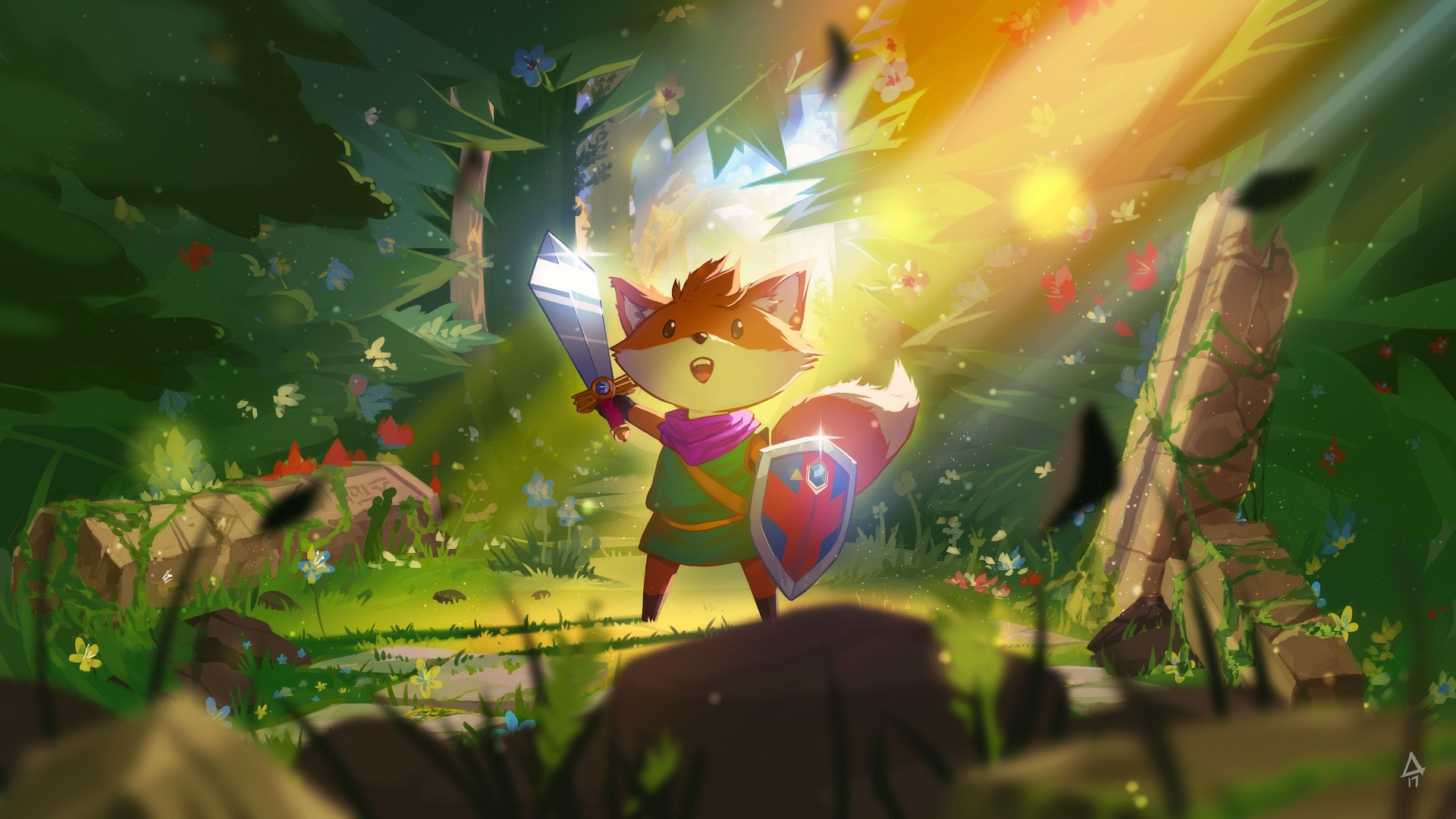
Sitting down with Andrew Shouldice, fresh off the back of a double BAFTA win, conversation immediately wanders away from the topic of how this award-winning game was made, and onto the question of notebooks. Shouldice leans over the table to admire ours, a little black Moleskine affair, and it's only after a good few minutes on the relative benefits of stitched versus ringbound that we actually get back to the point at hand. An unexpected tangent, certainly – but one that, as it turns out, speaks to the important role such apparatus played in Tunic's development.
This shouldn't, perhaps, come as a surprise. After all, Tunic makes clear Shouldice's fondness for good old-fashioned paper and ink through its in-game instruction manual. Loaded with beautifully illustrated maps, with hints written in a glyph cipher and biro annotations left by some unseen hand, it feels like a gentle suggestion that you might want to keep your own notetaking equipment to hand, in order to track the game's many secrets, and perhaps even dabble in a little translation if you choose.