Get all your news in one place.
100's of premium titles.
One app.
Start reading
MusicRadar
MusicRadar
Entertainment
Ben Rogerson

“The Lego prototype went through many, many phases of moving buttons around... It was playful and not permanent”: Ableton’s Jesse Terry reveals the Lego brick origins of the company's Push hardware instrument as he revisits a rare early prototype

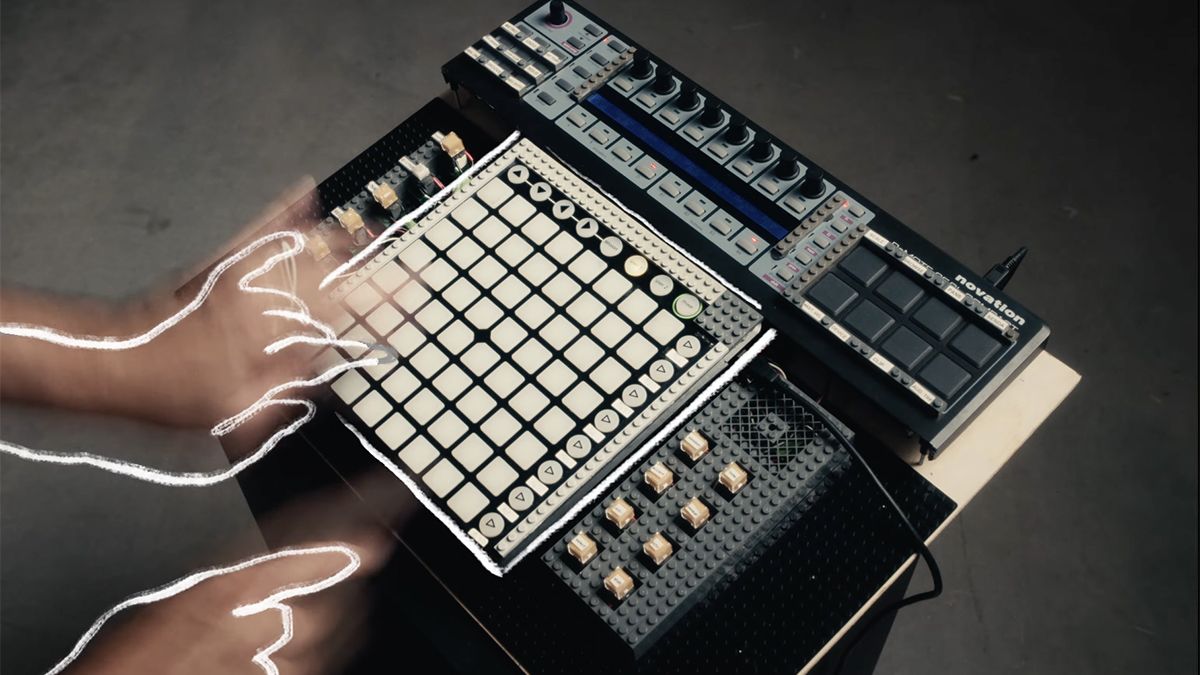
Ableton Push Lego prototype.

Released in 2013, Ableton’s Push was the hardware that turned its Live DAW into a playable instrument (Ableton never liked to think of it as a controller) and, through various iterations, it's been gracing stages and studios ever since.

The original Push was actually built in collaboration with Akai Pro – Ableton had previously worked with Akai on its APC40 and APC20 Live control surfaces – and was designed to bring something different and more integrated to the market.

However, it was actually the brainchild of Jesse Terry, now Ableton’s Head of Hardware, and in an interview with Powerhouse Museum, he’s now revealed that his original prototypes were built out of Lego.

Discussing his inspiration for the device, he says: “The prototype of Push is like the way I work with samples: I chopped up a bunch of other products and sampled the parts of them that I wanted.”

Terry recalls that he first heard about Live while writing for a music magazine, and was immediately impressed by its flexibility.

“The way you could stretch audio and move it around like a rubber band. I was like, ‘This is the thing that I've been missing.’”

Of Push’s origins, he says: “I bought an electric saw and just started chopping things up to see if I could glue them together and combine their outputs, merge them into one thing. Push was reconciling those worlds of using my hands, playing rhythmically, playing with nuance and swing and the world of the computer which can process audio in such cool and different ways.”

It appears that Terry took particular inspiration from Novation. Looking at the prototype, the pad section is powered by a Novation Launchpad, another official Live controller that was released in 2009, and the upper controls are lifted from a Novation Remote SL Compact. It appears that the Lego was used primarily to house the controls to the left and right of the pads.

(Image credit: Powerhouse Museum/Ableton)

“The Lego prototype went through many, many phases of moving buttons around, trying to figure out what was the right ergonomics for it, figuring out where and what buttons we wanted to have to do the different functions,” says Terry. “And it was playful and not permanent. And that's what allowed us to go through so many iterations to get the right thing.”

Push became such a success that it spawned two successors, and the latest version, Push 3, is also available in a standalone configuration that works without a computer.

In 2024, meanwhile, Ableton released Move, another standalone device that’s designed as a portable musical sketchpad.

Sign up to read this article
Read news from 100's of titles, curated specifically for you.
Already a member? Sign in here
Related Stories
Top stories on inkl right now
One subscription that gives you access to news from hundreds of sites
Already a member? Sign in here
Our Picks
Fourteen days free
Download the app
One app. One membership.
100+ trusted global sources.