
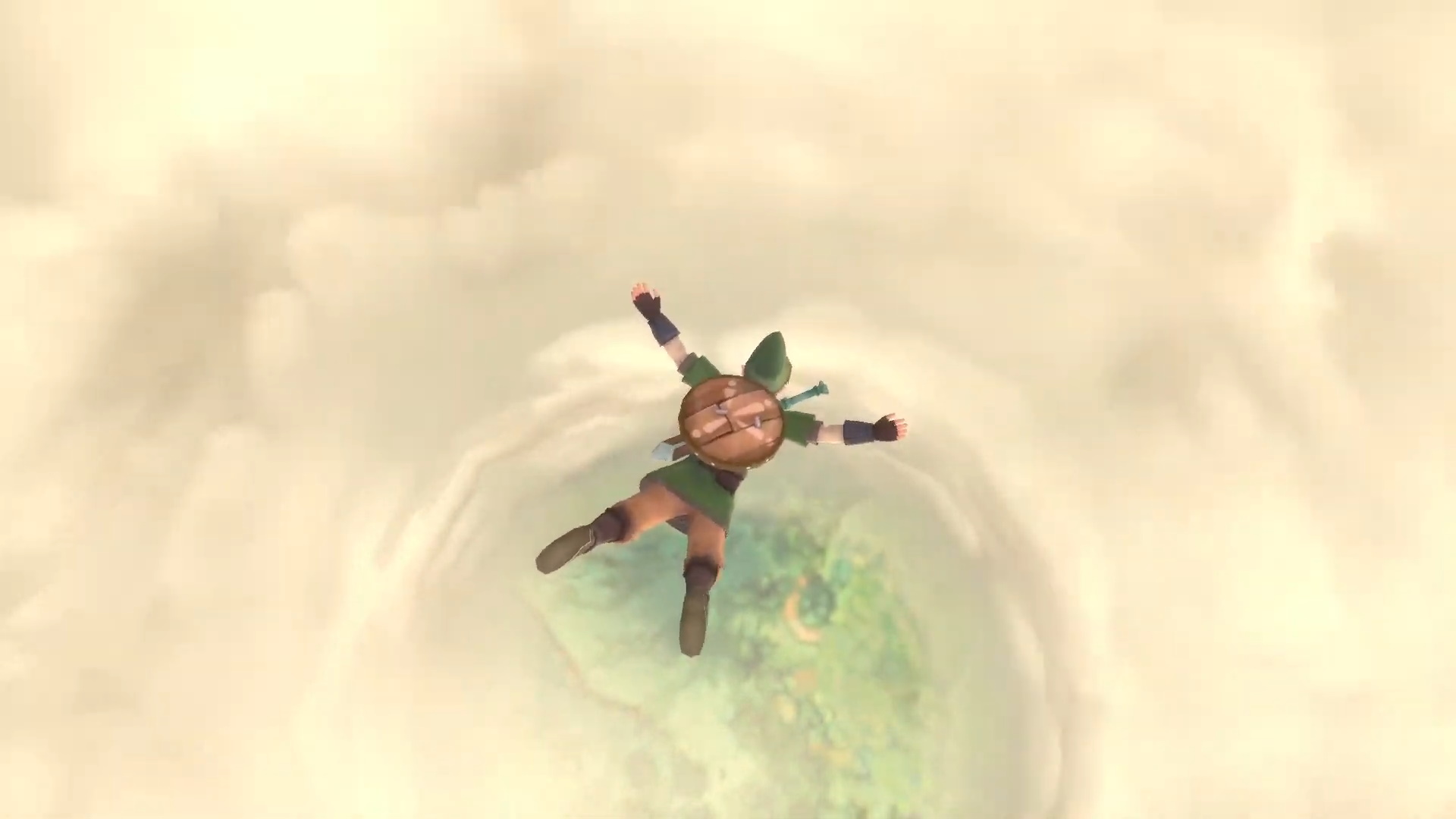
When Zelda games are pitched as legends retold in new eras, you have to sometimes take with a pinch of salt where in the timeline they are. Nonetheless, Skyward Sword is regarded as the beginning of the Zelda canon, set after the world's creation and the Era Of Hylia, a time before there was even a Hyrule. Indeed, the setting here is up in the skies where the Goddess Hylia sent survivors to escape the destruction wrought on the lands below by the Demon King Demise, with descendants countless generations later living their lives amongst scattered floating islands – the largest being Skyloft – believing the surface below as nothing more than a myth. That is until one day, Link, a new knight-in-training, embarks on a quest to rescue his childhood friend Zelda (not yet a princess but the daughter of the Skyloft Academy's headmaster) who's taken by a dark tornado and whisked below the clouds.
This new chapter called for a new look and one that would best serve the then-ageing Wii console, itself already technologically behind its competitors who had taken the leap to HD. Neither sticking to the more realistic look of Twilight Princess nor reverting to the divisive cartoonish cel-shading of Wind Waker (even though in retrospect the latter is now considered timeless and beloved), Skyward Sword's art style is somewhere in the middle, with a soft and vivid painterly palette that takes inspiration from impressionist painters like Monet and Cezanne – Shigeru Miyamoto himself being a huge fan of impressionist art. The reasoning behind this aesthetic was also to better exaggerate the characteristics of its characters, though you can also imagine that an art style where there's not as much focus or detail works strongly in favour of the Wii's standard definition.