Get all your news in one place.
100's of premium titles.
One app.
Start reading
Times Life
Times Life
Aishwarya Kapoor

The Konkan Railway Is the Most Scenic Train Journey in Coastal India, and It Still Feels Magical

The window seat earns its reputation here

You board at Madgaon or Ratnagiri or somewhere smaller, and within twenty minutes the train has already made its case. A river appears below a bridge so high you feel the drop in your chest. Then a tunnel swallows everything, the light, the sound, the heat, and spits you out into a valley of areca palms so green they look unreal. The Konkan Railway does this repeatedly, without announcement, as if it has nothing to prove.
The route runs roughly 740 kilometres along India's western coast, connecting Mumbai to Mangaluru through Goa and the Konkan belt of Maharashtra. It was completed in 1998 after eleven years of construction through some of the most difficult terrain the country offered: the Western Ghats, 2,000 bridges, 91 tunnels. The engineering achievement is staggering on paper. On the train, you don't think about engineering. You think about the next bend.

This is what separates the Konkan stretch from other scenic rail routes in India. The Nilgiri Mountain Railway gives you altitude and mist. The Darjeeling Himalayan Railway gives you the feeling of a toy train doing serious work. The Konkan gives you lateral movement through a landscape that keeps rearranging itself, coast, then forest, then paddy field, then a village where someone is hanging laundry in a courtyard you'll never see again.

The train slows you down in ways a flight cannot

Flying between Mumbai and Goa takes fifty minutes and deposits you at an airport that looks like every other airport. The Konkan Railway takes nine to twelve hours depending on the express, and every hour is different from the last. This is not a flaw in the itinerary. It is the itinerary.

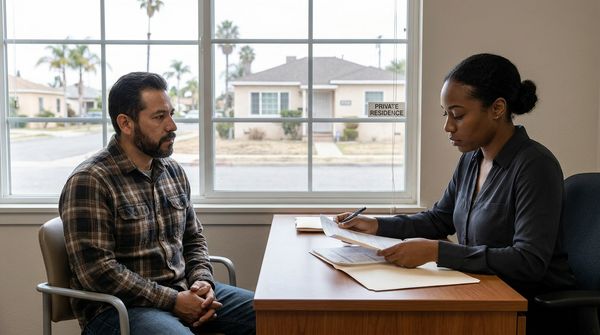
There is a particular quality of attention that a moving train produces in people who would otherwise be scrolling. The window does it. You can't look away from a window on this route the way you can on a highway, because the highway gives you the same thing for long stretches. The Konkan window gives you something new every few minutes: a white-walled church on a hillside, a creek mouth where fishing boats are beached at low tide, a waterfall coming off a cliff so close to the track that the spray sometimes reaches the glass.

You find yourself noticing things you would not think to notice anywhere else. The colour the sky turns just before a tunnel. The way the paddy fields hold water like mirrors in the early morning. A heron standing absolutely still in a flooded field while the train goes past at speed. None of this is curated for you. The train is simply moving and you are simply watching, and that combination turns out to be enough.

The monsoon makes the route something else entirely

Most travel writing about the Konkan Railway recommends the winter months, October through February, when the skies are clear and the waterfalls are still running from the retreating rains. That advice is sound. But the monsoon journey, June through September, is its own argument.

During the monsoon, the Western Ghats become so saturated with green that the colour stops looking like a colour and starts looking like a condition. Every surface that can hold water holds water. The waterfalls that are scenic in winter become violent in July, thick white columns dropping hundreds of feet off the Ghats, audible through the train window before you see them. The rivers below the bridges run brown and fast and wide.

The light is different too. Monsoon clouds diffuse the sun into something flat and even, which means the landscape has no harsh shadows. Everything is equally visible, equally close. You see into the forest in a way you can't in the dry months, when the undergrowth is sparse and the light is directional. In July, the Konkan coast looks like it has been painted by someone who had too much green paint and no restraint.

Travelling in the monsoon also means the train is less crowded. The tourists are gone. The passengers are mostly people going somewhere for a reason, visiting family in Kudal or Sawantwadi, carrying goods from Udupi, heading back to Ratnagiri after a job in the city. The compartment has a different feeling. Less performance, more ordinariness. And the ordinariness of a train full of people going about their lives, set against that monsoon coastal landscape, is more affecting than any scenic viewpoint.

What the camera cannot hold

Every person who takes this train photographs it. The photographs are always beautiful and always insufficient. A still image of the Dudhsagar Falls from the train window gives you the falls, but not the sound, not the spray, not the way the train slows slightly as if it too is looking. A photograph of the paddy fields at dawn gives you the colour but not the stillness, not the fact that you were the only one awake in the compartment when you saw it.

The Konkan Railway resists being captured because what it offers is duration, not image. You have to be on it for hours. The landscape accumulates. By the time the train reaches Goa or Karnataka, you have seen so much coastal India from so close that you carry a kind of geographic memory you didn't have before, a felt sense of how the land lies, how the coast bends, where the Ghats press in and where they pull back. No photograph stores that. No reel conveys it.

This is why people who have taken the route talk about it the way they do, not with specific descriptions but with a general insistence that you have to go. They are trying to hand you something that doesn't transfer in language. The train itself is the only medium.

The Konkan Railway is not the fastest way between its endpoints, and it was never meant to be. What it turned out to be, almost accidentally, is one of the few remaining places in Indian travel where the distance between two points is the entire point. The landscape doesn't wait for you to be ready for it. It arrives, and passes, and the next thing arrives. And somewhere between the first tunnel and the last bridge, you stop waiting for the destination and start being in the train, which is where the whole thing was always happening.

Sign up to read this article
Read news from 100's of titles, curated specifically for you.
Already a member? Sign in here
Related Stories
Top stories on inkl right now
One subscription that gives you access to news from hundreds of sites
Already a member? Sign in here
Our Picks
Fourteen days free
Download the app
One app. One membership.
100+ trusted global sources.