
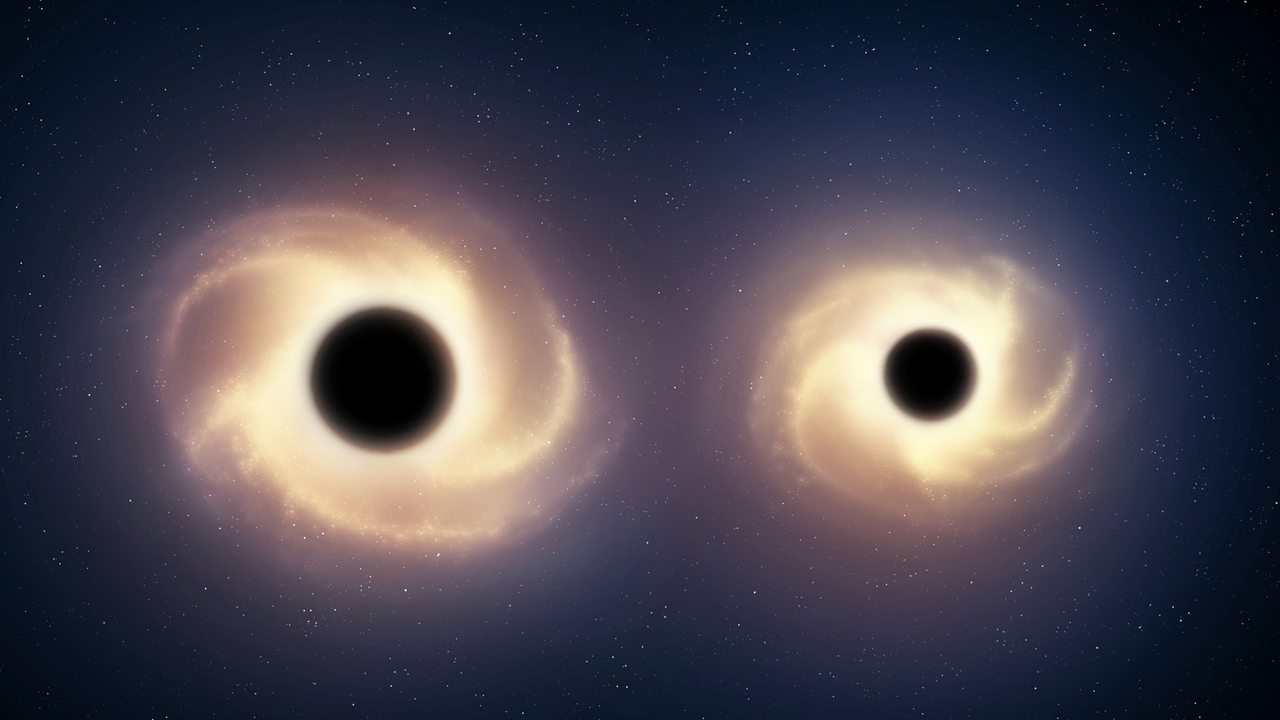
Astronomers have discovered a close pair of actively feeding supermassive black holes, seen when the universe was just 1.3 billion years old. Collectively known as LID-1166, the two monsters are separated by only about 4,900 light-years (1.5 kiloparsecs) inside a merging galaxy, offering the first clear view of a phase that's critical for understanding the growth of supermassive black holes.
Most large galaxies we can see formed over billions of years by merging with other galaxies. Most galaxies also have central black holes, so a merger between them would produce a system with two black holes. These "dual black hole" systems are thought to be common in the early universe. However, given that they're buried in dense gas and dust, these black holes are too close to be observed separately.













