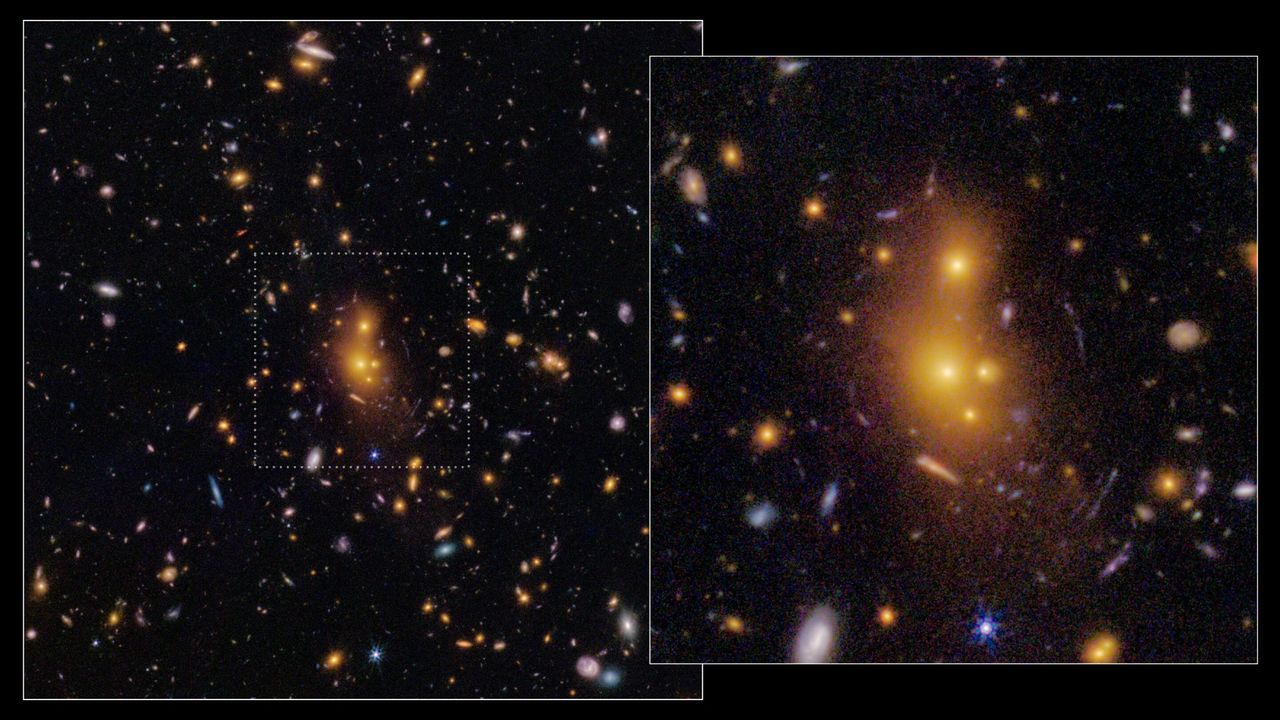
Using the James Webb Space Telescope, astronomers have spotted a massive and densely packed galaxy cluster at "cosmic noon." The fact that this cluster is so highly evolved could change theories of cosmic evolution, as it seems to exist before such structures were thought to be possible.
Designated XLSSC 122 and first seen in 2014, the cluster immediately stood out to the team in James Webb Space Telescope (JWST) data because, being so large and concentrated, it resembled the galactic clusters found much closer to our own galaxy. However, this cluster is seen as it was around 10.4 billion years, just around 3.4 billion years after the Big Bang, a time when such structures were theorized to have only just begun to assemble.