
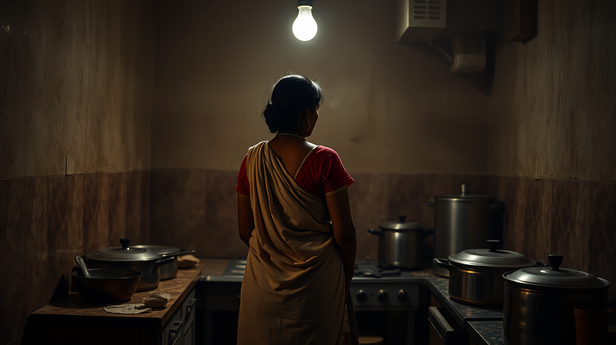
The work that has no name
You remember the first week. The kitchen was unfamiliar, the pressure cooker a different weight, the dal proportions someone else's memory. You figured it out by the second week. By the third, nobody noticed you had figured it out, because the expectation had already moved forward. That is how invisible labour works. The moment you absorb a task, it disappears from view. It was never counted as effort. It simply became you.The sociologist Arlie Hochschild named the second shift in 1989, the unpaid domestic work women do after their paid workday ends. Indian daughters-in-law often don't have a first shift to come home from. The domestic is the whole shift. And inside that shift lives a category of work so granular it resists language: remembering that your father-in-law's blood pressure medication runs out on the 14th, knowing that the youngest child cannot eat onion, tracking which relative is arriving when and what they prefer for breakfast. This is not caregiving in the clinical sense. It is the connective tissue of a household, and it lives entirely in your head.