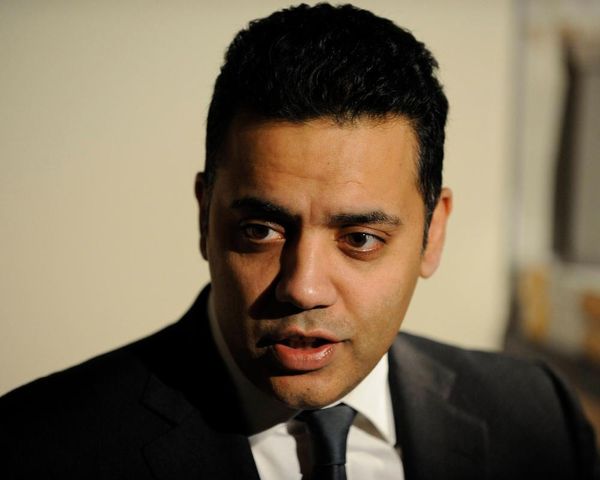
The international criminal court’s chief prosecutor, Karim Khan, has been on an exoneration tour, with stops including an interview with Mehdi Hasan and an appearance at the Oxford Union. Accused by a lawyer in his office of repeated sexual misconduct, which he denies, he claims that an internal review of the allegations has vindicated him but the situation is more complex than that.
It has been a year since Khan took a leave of absence while the claims against him were investigated as an internal employment matter. That absence has left the ICC under the control of his deputies, with important decisions to be taken in Gaza, Ukraine, Sudan, eastern Democratic Republic of Congo, and elsewhere. Yet the ICC member states, which have ultimate authority over whether Khan stays or goes, have dawdled, acting as if they had all the time in the world. And the procedure that they relied on to resolve the matter turned out to be a travesty.
They assigned fact-finding to the UN’s Office of Internal Oversight Services (OIOS). It interviewed the complainant as well as Khan and other people in the prosecutor’s office. Yet shockingly, it did not decide what had happened. It detailed the complainant’s testimony and Khan’s denials but refused to make the assessments of credibility that were needed to decide who was telling the truth. On the key matters in dispute, it made no findings of fact at all.
For example, the complainant, who is married and has a child, alleged a pattern of coercive sexual behavior by Khan that occurred in hotel rooms during work trips, in Khan’s office at the ICC, and at his home. The OIOS reported her detailed testimony but never opined whether she was credible in revealing alleging these humiliating and painful encounters, ones that reportedly led to “suicidal thoughts” and placement on a “suicide watch”.
When the OIOS asked Khan whether he had had a sexual relationship with the complainant, he gave a prepared statement that he had never engaged in any prohibited conduct with her that “could be construed as inappropriate, unwelcome or abusive”. He reinforced this in his recent interview with Mehdi Hassan once again stating that he did not have a “sexual relationship” with her and denying allegations of sexual misconduct.
Instead of making the credibility determinations needed to resolve this differing testimony, the OIOS delivered a 150-page “he said, she said” account.
That, in turn, was handed to a panel of three judges who had been tasked to advise the ICC’s member states by assessing the findings under the relevant standard of law – in this case, whether the allegations had been proven beyond a reasonable doubt.
But there were no findings to assess. When it came to the heart of the matter, the OIOS had not made any.
Given that factual void, the three-judge panel had no choice but to conclude that the burden of proof had not been met. The panel chastised the OIOS for not making judgments of credibility or resolving the contradictory testimony, but the panel’s mandate precluded it from conducting its own fact-finding, so all it could do was to assess the non-existent fact-finding of the OIOS. The panel noted that this incomplete record does “not disprove the allegations of misconduct”, yet Khan claims, “the process exonerated me”.
The matter has now gone before the 21-member executive bureau of the Assembly of States Parties. The bureau is composed of states chosen from among the 125 ICC members. Khan argues that it should defer to the judges. But since the judges had no factual findings before them, a better approach would be to recognize that the OIOS utterly failed in its fact-finding responsibilities and rectify it.
One option would be to return the matter to the OIOS with explicit instructions to make credibility assessments and determine what happened between Khan and the complainant.
But unless the OIOS is ordered to act with a dispatch that it so far has lacked, that would lengthen a process that has already gone on far too long. Even though the ICC prosecutorial team continues to do important work, there is no substitute for having an active chief prosecutor.
The other option would be for the bureau to make its own credibility judgments, as reportedly 15 of the 21 bureau member states seem inclined to do. Normally credibility is assessed by hearing witnesses testify in person, but it may be possible to make adequate credibility determinations from the extensive, detailed written record, especially because this is not a criminal prosecution but a review of alleged workplace misconduct.
The judges did that to some extent, noting adversely, for example, that the complainant kept traveling with Khan on court business and often maintained a facade of cordiality with him. That struck me as insensitive to the realities of some workplace hierarchies and how sexual misconduct often plays out. It would have been better to ask the complainant rather than assume the answers.
As the Wall Street Journal reported, “The woman, a lawyer from Malaysia, stayed at the job because she didn’t want to leave one of the most important offices in human-rights law and worried she wouldn’t be able to pay the medical bills of her mother, who was dying of cancer, according to her testimony and ICC officials. She also came to fear retaliation from Khan, according to interviews with current and former ICC officials.” Khan has described the allegations as an effort to undermine the ICC.
If the bureau decides to make credibility assessments itself, it could ask: why would the complainant have subjected herself to the ordeal of having filed a complaint – the pall it has cast over her legal career, the apparent disruption to her family life, the mental anguish she has reportedly endured? Would Khan have endangered his position by behaving in the way she alleges?
If the bureau finds serious misconduct on Khan’s part, the decision on his fate goes to the full Assembly of States Parties. If the bureau finds lesser or no misconduct, it can resolve the matter on its own. Either way, another obstacle stands in the way of a just resolution.
The complaint has become caught up in the issue of Israel and Palestine. As soon as the allegations against Khan became public, supporters of the Israeli government sought to instrumentalize them. The Wall Street Journal suggested that Khan might have accelerated his war-crime charges against the Israeli prime minister, Benjamin Netanyahu, and former defense minister Yoav Gallant to change the subject from the accusations against him. The investigation of Israeli conduct in Palestine had long preceded the complainant’s allegations. And a different three-judge panel upheld the charges against Netanyahu and Gallant (They have rejected those charges as false and absurd). Khan has denied any link between the Israeli warrants and the sexual assault claims.
Some suggest that the complainant is acting at the behest of the Israeli government or its Mossad spy agency. Mossad did threaten the prior ICC chief prosecutor, Fatou Bensouda, to try to forestall an investigation of Israeli conduct, but a private investigation found no evidence to support the allegation that the complainant had anything to do with the Israeli government. She had undergone numerous security reviews while working at the court, and a Qatari-financed investigation failed to unearth any such link.
Indeed, the complainant reportedly was reluctant to complain about Khan’s behavior in part because she strongly supported the investigation of Israeli leaders. In her testimony, according to the account given in the Wall Street Journal, she claimed that Khan cited the negative consequences for the case as an argument for why she should not make any complaint. Khan has denied this, saying that from the beginning, while he denied the allegations, he encouraged the complainant to report them following the normal process and he called for an investigation.
But the biggest threat to justice is that governments seem to be lining up for or against Khan not on the basis of the case brought by the complainant but according to their views on the Israel-Palestine case. Some governments, mostly western, apparently want to see Khan ousted because he had the audacity to charge Israeli officials; they hope a successor will be more restrained. Many other governments evidently want to see Khan stay because he did ultimately charge Israeli officials, even if before 7 October 2023 he had been slow-walking the investigation (he never advanced a case on Israel’s war-crime settlements) and while still on active duty, never publicly charged Israeli officials for anything involving indiscriminate bombing, executions, torture or genocide in Gaza.
Personally, I want to see the Israel-Palestine case advance, but that is no reason to ignore the claims against Khan. If he did what he is alleged to have done, he should not stay on as chief prosecutor. And the complainant deserves real consideration of her claims, not an investigation with no meaningful fact-finding and a legal review of that evidentiary void. If he did not do as she alleges, then he should be properly cleared.
It is appalling that so much time has been wasted. The ICC bureau should ignore Khan’s exoneration tour and take matters into its own hands. It should either make the credibility judgments itself that the OIOS was unwilling to make or press the OIOS to expeditiously fulfill the responsibility that it disappointingly shirked.
-
Kenneth Roth is a Guardian US columnist, visiting professor at Princeton’s School of Public and International Affairs, and former executive director of Human Rights Watch. He is the author of Righting Wrongs: Three Decades on the Front Lines Battling Abusive Governments. Before joining Human Rights Watch, he served as a federal prosecutor in New York and Washington