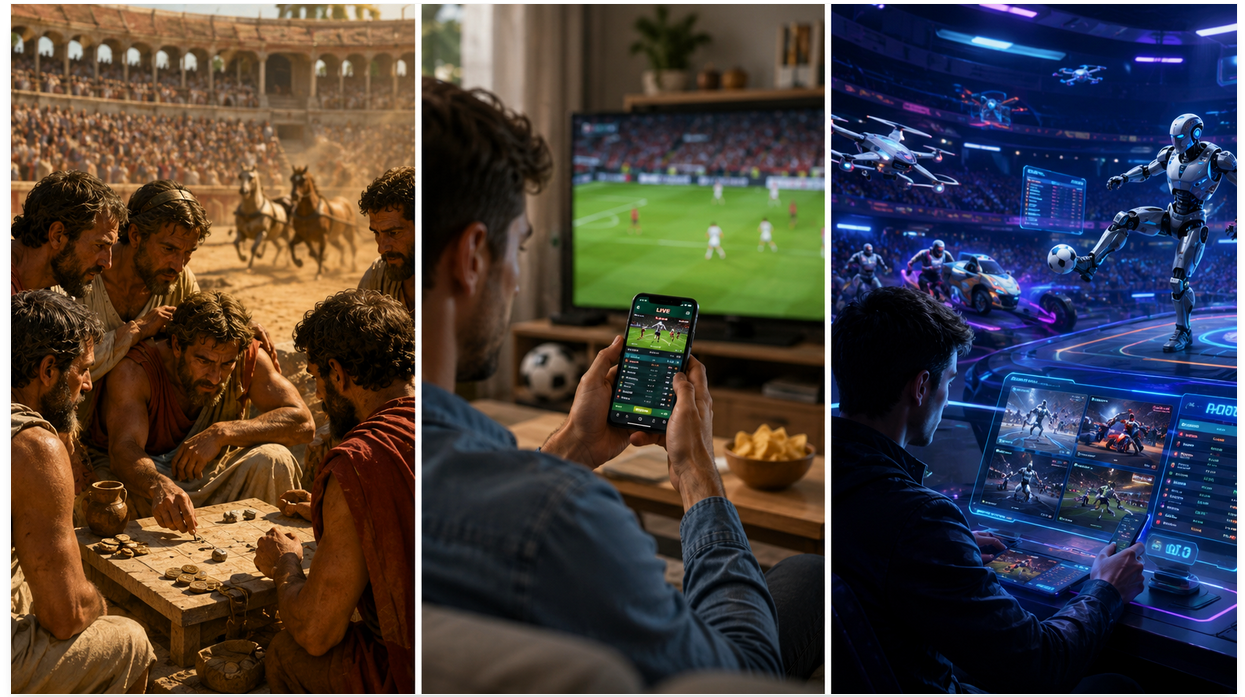
From ancient chariot races to today's exciting live blackjack games, betting has always been a part of human entertainment. What began as simple wagers between spectators has evolved into a global industry driven by technology, innovation, and a timeless passion for predicting the outcome.
Gambling Is Older Than You Know
Gambling is ubiquitous in today’s world. People gamble on football matches, tennis matches, esports, and so forth. With one click on your phone, you’re done!
However, gambling is much older than the Internet, casinos, or even organised sports.
As the name implies, it all comes down to two people having opposing views. To add some spice, there should be something to bet.
And that’s been going on since forever. Gambling was born almost immediately after the first competition between people.
The First Bets in Human History
Historians believe that forms of gambling existed in Ancient China, Egypt, and Mesopotamia. People rolled dice, played games of chance, and made predictions about different outcomes.
The Greeks loved competition. During the ancient Olympic Games, spectators often argued about which athlete would win. Many were willing to back their opinions with money or valuable goods.
But betting really took off in Ancient Rome.
Romans were passionate about gladiator fights and chariot races. Huge crowds gathered to watch these events, and many spectators placed bets on their favourites.
People wagered on almost everything. They bet on sports, public contests, and sometimes even political events.
Authorities often tried to limit gambling, but those efforts rarely worked. The excitement of predicting a winner was simply too strong.
The Middle Ages: Betting Goes Underground
After the fall of the Roman Empire, attitudes toward gambling changed.
Many religious leaders viewed gambling as a bad habit or even a sin. As a result, betting was restricted in many places.
Still, it never disappeared.
People continued to make wagers during knight tournaments, archery contests, and local festivals. Wherever there was competition, there were usually bets.
Horse racing became especially popular. Owners wanted to prove they had the fastest horse, while spectators enjoyed predicting the winner.
These races would later help shape the betting industry we know today.
The Birth of the Bookmaker
A major turning point came in England during the 17th and 18th centuries.
Horse racing had become so popular that people needed a more organised way to place bets.
This is when bookmakers appeared.
Their job was to accept bets and calculate the odds for different outcomes. The term "bookmaker" comes from the fact that these early operators recorded wagers in books.
Over time, bookmakers became more sophisticated. They studied competitors, estimated probabilities, and adjusted odds accordingly.
The basic system they created is still used today.
Betting Becomes a Business
During the 19th century, betting grew rapidly.
Transportation improved. Communication became faster. News about sporting events could travel much more quickly than before.
People were no longer betting only on horse races. Boxing, cricket, football, and other sports attracted growing audiences.
Bookmakers expanded their operations and opened businesses in different regions. Betting started to move from informal wagers between friends to a large commercial industry.
For many people, it became a regular form of entertainment.
The Television Era Changes Everything
The 20th century brought major changes to both sports and betting.
At first, fans followed events through newspapers and radio broadcasts. Then television arrived and transformed the experience.
For the first time, people could watch matches live from their homes.
Sports became more popular than ever. Naturally, interest in betting grew as well.
Bookmakers began offering more options. Instead of simply betting on the winner, people could predict scores, goals, player statistics, and many other outcomes.
By the end of the century, betting had become a global business worth billions of dollars.
The Internet Revolution
The biggest change came in the 1990s with the rise of the internet.
Suddenly, people no longer had to visit betting shops.
They could place bets from home using a computer. Later, smartphones made the process even easier.
Online bookmakers opened their virtual doors to customers around the world. Betting became available 24 hours a day.
Technology also changed how bookmakers worked. Advanced software helped them analyse huge amounts of data and update odds in real time.
The industry entered a completely new era.
The Rise of Esports
Twenty years ago, few people imagined that betting on video games would become a serious business.
Today, esports is one of the fastest-growing industries in the world.
Professional gaming tournaments attract millions of viewers. Some events offer prize pools worth millions of dollars.
As audiences grew, betting followed.
Fans now place wagers on esports teams just as they do on football clubs or basketball teams. For younger generations, gaming stars can be just as famous as traditional athletes.
Esports shows how quickly betting evolves alongside new forms of entertainment.
Betting Today
Modern betting is powered by technology.
Bookmakers use artificial intelligence, machine learning, and massive databases to analyse sporting events.
Odds can change within seconds based on what happens during a match.
Live betting has become especially popular. Instead of placing a bet before a game starts, people can make predictions while the action is taking place.
Today, betting extends far beyond sports.
People wager on election results, reality TV shows, music competitions, award ceremonies, and many other events.
If an outcome can be measured and verified, someone will probably offer odds on it.
The Future: Robots, AI, and New Competitions
So what comes next?
Many experts believe technology will create entirely new betting markets.
Robot competitions are already happening today. Most are still experimental, but that could change in the future.
Imagine a Robot World Cup where autonomous machines play football without human control. Fans could support teams and place bets just as they do now.
Artificial intelligence may create a new category.
Different AI systems could compete in strategy games, engineering challenges, or even creative contests. People might place bets on which AI performs best.
Drone racing is another possibility. Autonomous vehicles could compete on complex tracks while spectators follow the action in real time.
Some futurists even predict virtual sports leagues populated by digital athletes. These competitions could take place entirely in virtual worlds.
What sounds like science fiction today may become normal within a few decades.
From Dice to Artificial Intelligence
The history of betting is really the history of human curiosity.
People have always wanted to predict the future, support their favourites, and test their instincts.
Thousands of years ago, they wagered on gladiators and horse races. Today, they use smartphones to bet on events happening across the globe.
Tomorrow, they may place wagers on robots, artificial intelligence, drone races, or competitions that have not even been invented yet.
The technology will change. The events will change. But the thrill of trying to predict a winner will likely remain the same for generations to come.