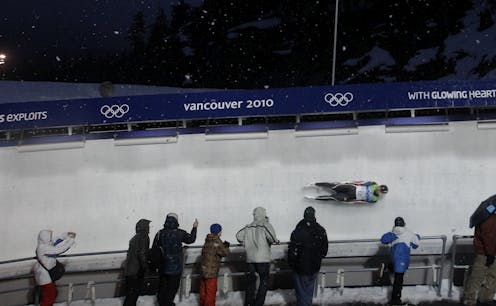
Speed alone may be the factor that draws many sports fans to the bobsled, luge and skeleton events at this year’s Beijing Winter Olympics. But beneath the thrilling descents of the winding, ice-covered track, a myriad of concepts from physics are at play. It is how the athletes react to the physics that ultimately determines the fastest runs from the rest of the pack.
I study the physics of sports. Much of the excitement of a luge run is easy to miss – the athletes’ movements are often too small to notice as they fly by looking like nothing more than a blur on your television. It would be easy to assume that the competitors are simply falling or sliding down a track at the whim of gravity. But that thought merely scratches the surface of all the subtle physics that go into a gold-medal-winning performance.