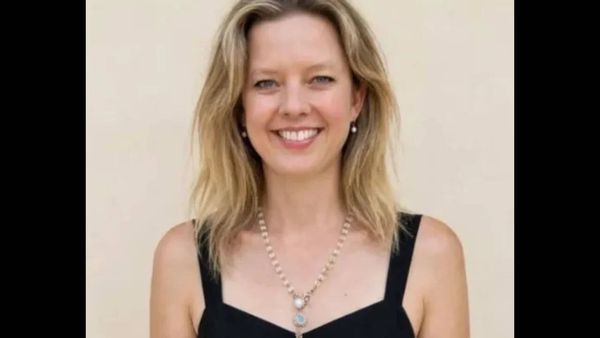
“I don’t want to talk about him,” Selina Ullah said, when asked what she thought of Matt Goodwin, the GB News presenter running for Reform in the Gorton and Denton parliamentary byelection.
She would rather talk about the hope she took from the national reaction to the murder of her brother, Ahmed Iqbal Ullah – and the memorial campaign afterwards – in the same Greater Manchester constituency in 1986.
“There was revulsion,” she said. “There was such an outpouring from people from all backgrounds who came and stood by us. [National Union of Mineworkers’] representatives came to demos. An elderly miner from Newcastle gave me a badge and said: ‘Wear it with pride.’”
Ahmed, a “bright, popular” boy from a British Bengali family, was 13 when he was stabbed by another 13-year-old, Darren Coulburn, in the playground of his high school in Burnage, the suburb on the southern boundary of the modern-day constituency. A day earlier, Ahmed had intervened as Coulburn bullied another Asian boy. Coulbourn was jailed indefinitely.
A public inquiry concluded it was a racist murder. It was a watershed moment for anti-racism in education and community relations.
Ullah now fears solidarity is being weakened as people become “desensitised” to “Islamophobic, racist or homophobic comments”.
“We’re not horrified that somebody can say these things any more,” she said. “And that means a worse thing can happen. The public’s tolerance level of what is acceptable is changing. And that’s worrying.
“So many people wrote to us [when Ahmed died] in sympathy,” she added. “Given the rhetoric that’s around now, whether there would be the same reaction today, I can’t say.”
This year marks the 40th anniversary of Ahmed’s murder – and there are fears that decades of progress could be undone.
Gorton and Denton is metropolitan Britain in microcosm. It contains all the social and ethnic communities which have made up Labour’s diverse urban vote.
Reform aims to split that coalition. Goodwin has argued that UK-born people from minority ethnic backgrounds are not necessarily British and that Europe is facing “civilisational erasure”.
While there have long been anti-immigration views in Gorton and Denton, as in any constituency, it would not have been characterised as a nationalist stronghold. According to pollsters Electoral Calculus, the area – made up of postindustrial working-class neighbourhoods and multicultural suburbs – ranks 291 out of 650 seats in a scale of social conservatism, measured by support for tradition, authority and the “dominant culture”.
But among those who face the real-world impact of majoritarian identity politics, there is little doubt that Goodwin is among public figures who have legitimised and amplified views once thought beyond the pale.
For the first time in years, the hard right is not just knocking at the door of Manchester’s inner city – it feels as if it has a real chance of getting in.
The far-right party Advance UK, whose leader, Ben Habib, suggested in a broadcast interview that some people travelling to the UK by boat should be left to drown, is also fielding a candidate – Nick Buckley, who grew up in the constituency and has courted controversy with comments about Black Lives Matter, women and trans people.
The culturally conservative SDP – a different entity from the 1980s centrists – is also fielding a candidate. Their leader, William Clouston, said in February that “mass migration is a form of colonisation” and the UK was being “looted”.
As hard-right politicians trade tough talk on migrants, ordinary people are seeing the consequences.
“We had a case of a woman who said a dog was released to chase her children – because of all this uproar. People are telling us that racism is affecting their mental health,” said Idowu Morafa.
Morafa runs Across Ummah, a community interest company tackling health inequalities and food poverty, providing employability and addiction support, family mediation and counselling to people in Gorton and Denton. Lately, driving around the city wearing a hijab, she has experienced more hostility from other drivers – stares, gestures and swears.
“They don’t know my story,” Morafa, who was born in Nigeria, added. “I just shake my head for them. No matter what they do, you need to be like that rose, that beautifies things and has a good scent.”
Raluca Terry-Enescu, a data analyst who also lives in the constituency, is also feeling the tension. She is a Romanian citizen with settled UK status, and recently challenged “dog-whistle” pro-Reform posts in a Facebook group she suspected had been posted from outside the area.
Soon afterwards, she said, pictures of her from Facebook, which showed her at an anti-Brexit rally, were doctored to make it look as if she was holding up a banner supporting Reform – a party she fears will have a “dramatic negative impact on my life” – and posted online without her consent.
“My local community is incredibly supportive,” she said. “But I’m worried about Reform. They might want me to be denied British citizenship because I’m on maternity [leave] and get child benefit like anyone else. They may want to take away my settled status.”
Now, a grassroots fightback against division is under way. Neighbours in Gorton and Denton took action to empower the community after Andrew Gwynne, the constituency’s former Labour MP, was suspended for insulting constituents in a WhatsApp group, before quitting on health grounds.
The group that resulted – Local Voices – decided to organise citizens’ assemblies, community organising training and election hustings, building on everyday concerns.
Beth Powell, from Local Voices, said: “We’re at a really challenging moment. And sometimes we feel like we’re on the front foot, creating beautiful, positive energy, having community festivals … but then, over time, it feels like it’s not enough to just do lovely work, we have to have a say over how power is used in our name.
“It feels like the other team sort of started winning a bit – you know, this divisive team. And it’s worrying. People talk about: where would I go? What would I do? What if we end up with kind of an ICE situation going on?
“Let’s build some hope together that we can change the issues we share, whether it’s the party that you wanted or not that gets elected. It doesn’t take much to realise what unites us – when we disregard the language coming from divisive places.”
Goodwin did not attend the diverse, cordial Local Voices hustings in Gorton in February, pulling out at the last minute claiming to be concerned about “bias”. Local Voices said they had refused many requests for Reform activists from outside the constituency to attend.
After the hustings, Dr Charles Leyman Kachitsa, a Malawi-born academic who sits on Greater Manchester race equality panel, said he felt hopeful. He said there were more opportunities in Manchester than 25 years ago – and that he preferred when racism was not hidden.
“When people come openly, it’s an opportunity to tackle the issue head on, rather than when people hide behind smiles,” he said. “The shift towards justice, it’s unstoppable. Whatever government comes, they might delay it a bit – but it will not stop.”
But Jeremy Hoad, organiser of Levenshulme Pride, the region’s largest free local Pride event, is concerned about what the climate means for trans people and other minorities.
“The impact of the rise of the right wing is one of destabilisation and fear. There’s a reactionary agenda affecting people’s lives every day – to remove rights, dehumanise and alienate people. That’s very scary. We see what’s been going on in the USA with Trump. There are people funding groups in the UK to do the same thing.”
At a hustings hosted by Hoad at St Peter’s church in Levenshulme, the suburb described by Labour’s byelection candidate, Angeliki Stogia, as the “radical heart” of the constituency, questions about Gaza and trans rights got the noisiest reactions.
Amina Lone, a former Labour councillor whose grandfather migrated from Kashmir in the 50s, interjected at the hustings in support of sex-based rights. She said she understood why her neighbours in Gorton might vote for Reform. She also said she had become disillusioned with Labour over two issues close to her heart – single-sex spaces and Muslim women’s rights.
“We’re not an extreme country,” she said. “But when you’re ignoring people and their concerns, whether it’s about migration, women’s rights, religion, or jobs, then people will say: ‘Let it burn. Let’s see what we can rebuild from the ashes.’
“My working class neighbours are salt of the earth. They’ve contributed to communities. But some of them will be shy Reform voters who will take the secret to their grave.”
At the Ahmed Iqbal Ullah centre, the specialist race and migration library founded in the schoolboy’s memory, there is a determination to continue his legacy. Selina Ullah, who now lives in West Yorkshire, is a trustee of the library’s sister Education Trust. Questions from visitors to the library about why they existed had become more frequent, Maya Sharma, who heads both organisations, said.
“People are feeling far more emboldened coming into our library and asking us questions like: ‘What about white histories?’” she added. “Or we’ve had people who come in and say: ‘Well, it wasn’t a racist murder. It wasn’t racism.’”
• This article was amended on 25 February 2026 to remove some personal information.