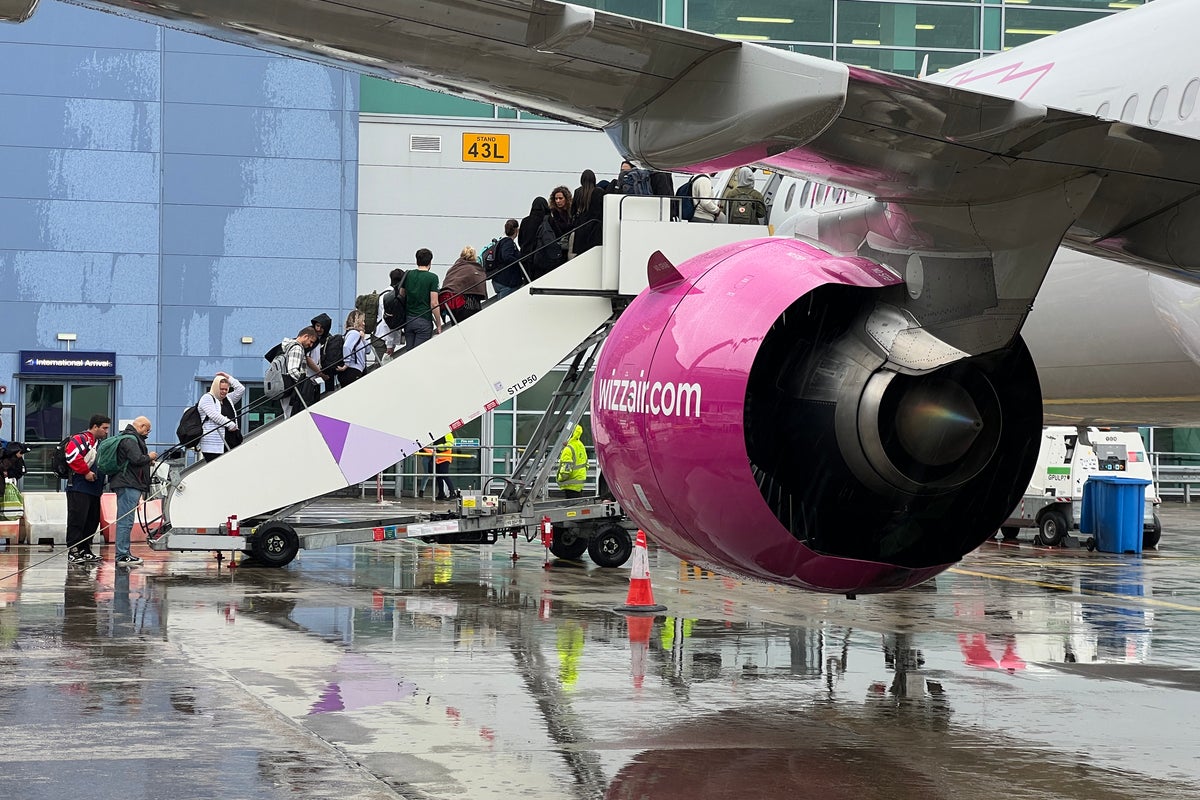
“Unbelievable,” says Mark Tiana. “I booked four months in advance for flights from Luton to Rome. Four people, £600 return each. I look today – one week before – and see same flights are now £370!”
I share Mark’s pain, having bought tickets well ahead only to see the price plummet; had I waited, I could have saved around half.

Mark says: “I wonder if Wizz Air understands how dynamic pricing works?”
The budget airline – third-biggest budget carrier in Europe after Ryanair and easyJet – certainly understands the dark art of dynamic pricing.
The concept, as you know, is that an item is priced according to demand – predicted and actual. In this case the product is a seat on a flight from Luton to Rome. When the Airbus takes off, any empty seats represent potential revenue that has gone forever.
Wizz Air aims to fill every seat; the low-cost carriers are remarkably good at selling over 90 per cent of their capacity. Every airline likes to start at a relatively low fare and steadily raise the cost as the flight fills. The carrier will have plenty of data to help it to predict the likely “sales curve”.
Perhaps the first few seats, almost a year in advance, sold for £100 one-way. Mark booked four months in advance and paid (I’m guessing) £300 each way. At that stage, Wizz Air would have hoped to push the fare still higher, with the last few spaces sold for many hundreds of pounds a day or two before departure.
The trouble is: passengers are promiscuous. Travellers have plenty of choice, thank goodness, and if they don’t like that Wizz Air price from Luton they will consider other airlines and alternative airports. Thanks to fare-comparison sites like Skyscanner, prospective passengers are close to what economists term a “perfect market” – with visibility of all the options.
Yet we cannot see what will happen to the fare in future.
To buy, or not to buy? That is the “Hamlet dilemma” for travellers. In the case of Mark’s flight, I surmise that subsequent sales proved sluggish. Any carrier looking at row after row of empty seats with the days ticking away would start cutting the fare. This week Wizz Air sent me a marketing message promising “15 per cent off selected flights” for fairly immediate departures. I wonder if yours is included in the seat sale?
The average person who books four months ahead should get a better deal than someone buying with a week to go, but you were plain unlucky. For professional reasons, I trace the trajectory of the flights I buy. But the golden rule should be: when you are happy enough with a fare that you book, never look at the price again. Just look forward to the trip. You will be travelling to the Italian capital at an ideal time of year, before the crowds and the heat arrive.
There is an alternative strategy: “active inertia”. That simply means taking a look at prevailing fares and deciding to wait. I have my eye on a particularly flight to Greece in early July. The fare has stayed stubbornly high at £186. That is rather more than I would like to pay. So I am taking a bet that the cost will fall it shortly before departure. Of course, it could climb higher or sell out together.
Other, sub-optimal flights are available as insurance – but a disruption event could cause even those options to vanish. Looking at a couple of forward bookings that I made a few months ago: on one, I have saved a princely £2 compared with the price today. The other has sold out. As Shakespeare wisely observed: “Oft expectation fails.”
Simon Calder, also known as The Man Who Pays His Way, has been writing about travel for The Independent since 1994. In his weekly opinion column, he explores a key travel issue – and what it means for you.
Wizz Air launches new bag drop service at London airport
21 years of air passengers’ rights – Simon Calder asks: has it worked?
Relentless UK rain prompts surge in February half-term holiday bookings
Iconic trees at tourist hotspot being cut down after wounding visitors
British Airways parent company reports soaring profits amid strong demand
Why Spain can refuse British passport holders entry to Gibraltar