
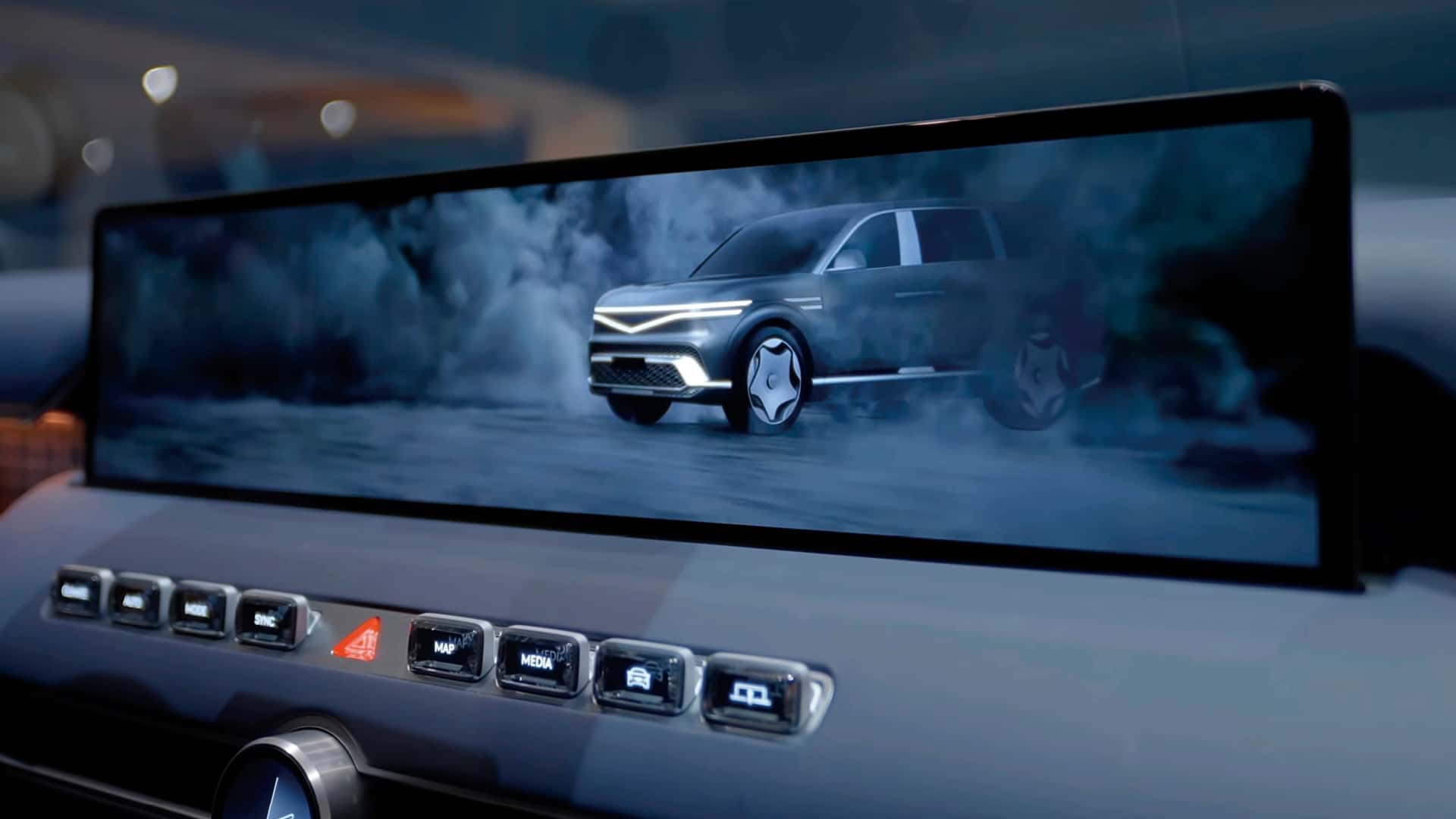
- The GV90’s OLED screen rises when parked, revealing roughly 70% more viewing area for movies and streaming.
- Genesis tested the mechanism over 100,000 cycles and engineered its mounting to reduce vibration.
- It’s an extravagant party trick, but charging stops could give the dashboard cinema a useful role.
Screens in new cars keep getting bigger. But for some manufacturers, a big screen isn’t enough; it needs some kind of second act. The new Genesis GV90 obliges with its already substantial dashboard display rising to reveal even more screen.

Genesis has talked at length about turning the GV90’s cabin into a luxury lounge, which is absolutely a cliché, but it’s also undeniably true if you sit in one. And while it may look simple to pull off, getting the screen to rise like that gave engineers rather more to worry about than popcorn. The manufacturer has explained what went into its motorized OLED display, and there’s something rather endearing about how seriously it approached this particular piece of car interior excess.
Gallery: Genesis GV90 Screen
While driving, the visible screen measures 23.6 inches diagonally. Once parked, it can rise 3.5 inches (90 millimeters), exposing the full 24.6-inch panel. That may not sound like much, but diagonal measurements don’t tell the whole story, and Genesis says the available viewing area increases by around 70%. The expanded display switches to a media interface for streaming services and live channels, depending on market availability.
Making the screen come out of the dashboard like that wasn't easy. It requires a motor, gears, and guides, all of which add weight. This created concerns about vibration, so engineers mounted the assembly directly to the structural crossbar behind the dashboard. A luxury cinema loses some of its appeal if the screen shudders over every road imperfection.
Genesis says the mechanism completed more than 100,000 test cycles, with operating noise below 40 decibels across different temperatures. One engineer even climbed into a chamber cooled to -22°F (-30°C) to assess its performance. They had a very cold working day in a giant freezer to make sure the screen always presents itself in a dignified manner.
Airbag clearance was also an issue. The screen not only retracts on the move to avoid hampering visibility, but it also stays clear of the front passenger’s airbag deployment path.
But Genesis went to all of this trouble to engineer something that users may not really need. In Asia (especially China), it’s common for people to watch movies in their car; in the West, people don’t do it nearly as often. Sure, you might watch a spot of Netflix while waiting for the car to charge, but choosing your car over your home setup for movie time isn’t really something we do.
Still, I’m willing to entertain the extravagance here. Luxury cars are allowed a little theater (literally, in this case), and a screen that physically changes is at least a party trick that will surely impress your passengers. Whether it makes the GV90 a better car will depend on how well it goes down the road, but Genesis has clearly put considerable effort into making you enjoy sitting in one while it’s parked.