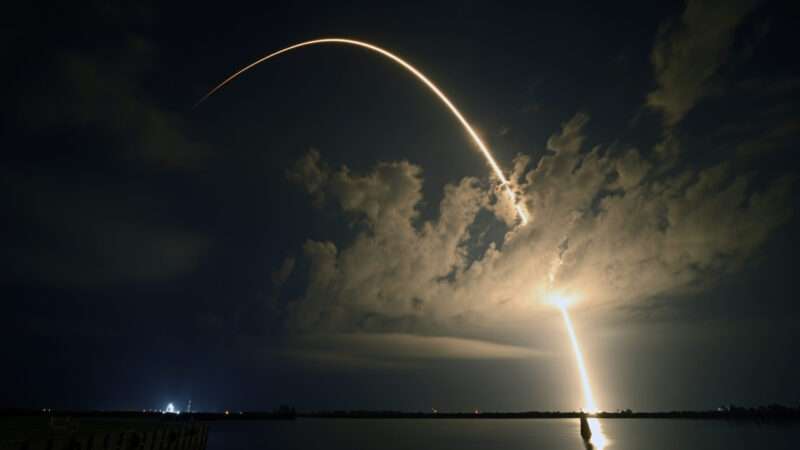
Elon Musk's satellite internet service, Starlink, announced a new milestone in November: 8 million users worldwide, up from its previous high-water mark of 7 million in August. Many of these users would otherwise have no connection at all. For decades, reliable internet service has been out of reach for too many, with traditional fiber-optic broadband rollout slow, challenging, and costly. Starlink and new innovators are changing that, revolutionizing how we connect rural America.
A service of SpaceX, Starlink delivers broadband through a constellation of low-Earth-orbit (LEO) satellites, a technology unconstrained by the traditional "last mile" problem of physically connecting homes to high-speed networks. Each terminal links directly to satellites, providing high-speed internet worldwide. Because Starlink's satellites orbit roughly 340 miles above Earth, versus about 22,000 miles for geostationary satellites, latency is dramatically lower, reducing signal delay and enabling high-quality, bandwidth-intensive uses like video calls and online gaming.