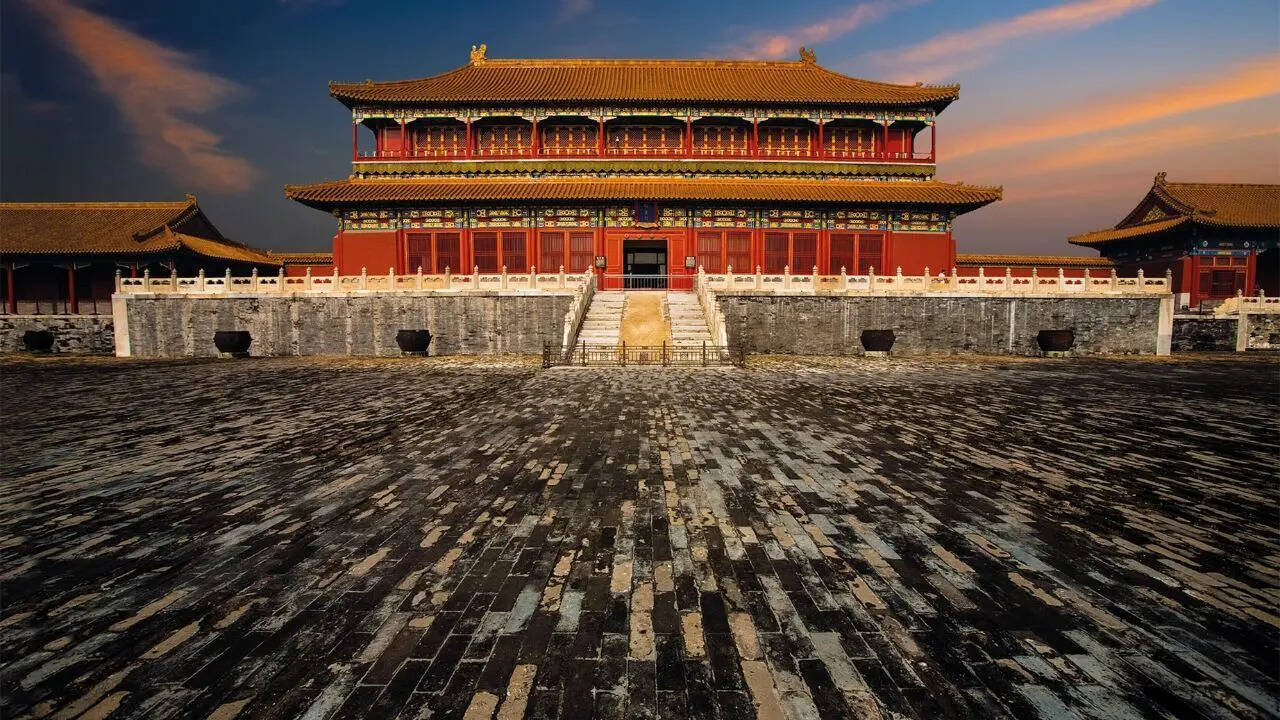
At the centre of Beijing sits a place that once functioned as a city within a city. From above, the Forbidden City appears orderly and measured, enclosed by walls and surrounded by water. On the ground, however, it reveals something more complicated: a carefully managed world designed to organise power, family life, ritual, and government within a single vast enclosure, preserved today as one of the most significant architectural and cultural heritage sites in China attracting millions of visitors annually.
For centuries, entry was restricted to a small portion of society. Decisions affecting an empire were made here, ceremonies unfolded according to strict rules, and generations of emperors spent their lives behind its gates. Although the palace complex now receives streams of visitors rather than officials and servants, its layout still reflects the priorities of the political system that created it. Every courtyard, hall and residence formed part of a larger vision about authority, hierarchy and order.