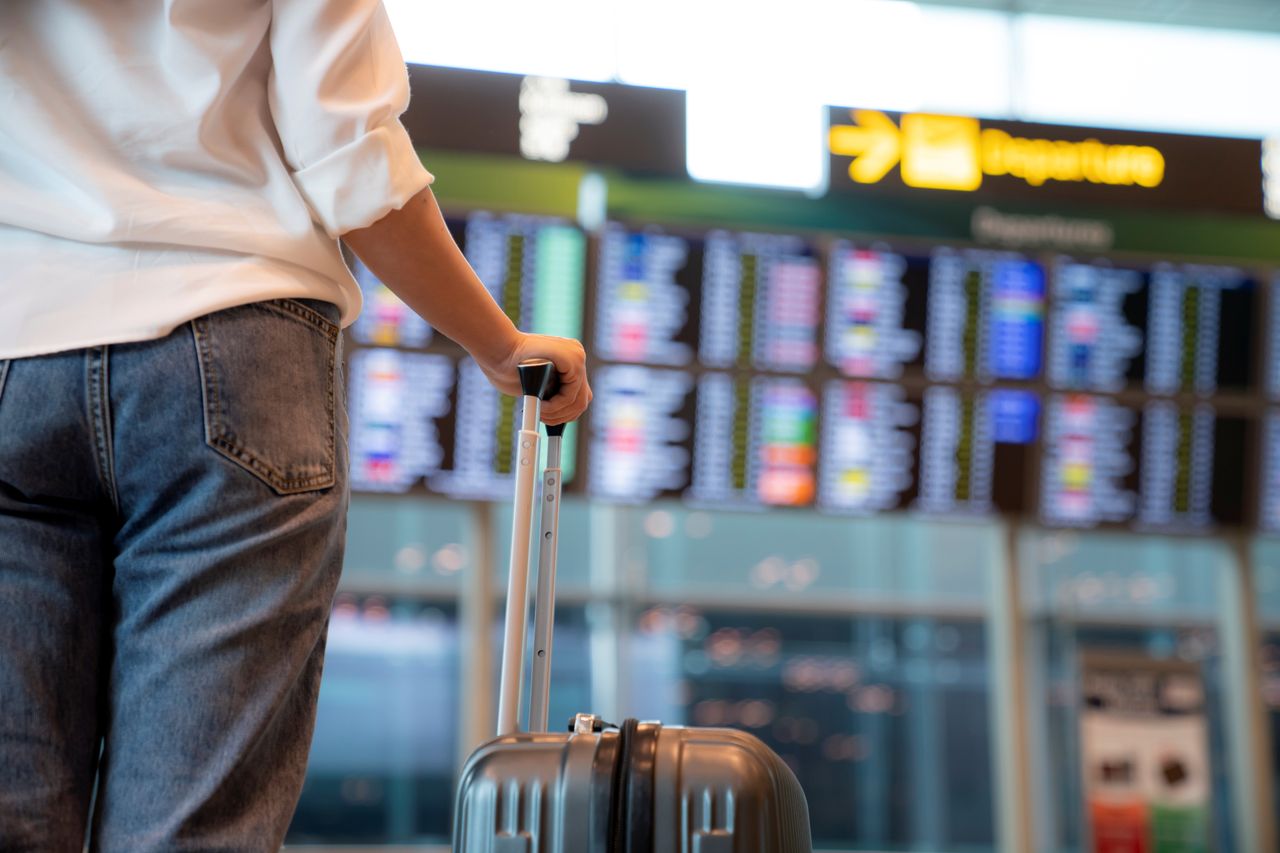
There’s no disappointment quite like showing up to the airport early and using your Clear or TSA PreCheck membership to breeze through security only to get to the gate and find out your plane is going to be an hour or more late. Depending on which airport you live closest to, this experience might happen to you more often than you’d like.
So, if you’re a frequent flyer who’s considering a move or you’re booking a connecting flight and deciding which airport is your safest bet for making your connection, it helps to know just how reliable the U.S.’s major airports are when it comes to keeping flights on schedule.
To help you figure that out, we compared the on-time performance of 30 major U.S. airports and picked out the five best and the five worst when it comes to flight delays. The rankings are based on 2025 data from the U.S. Department of Transportation’s Bureau of Transportation Statistics (BTS).
Nationwide, 76.84% of all flights were on time in 2025, which is defined by the BTS as landing at its destination within 15 minutes of its scheduled arrival time. This is down a few points from 2024, when 78.1% of flights were on time.
But the top five airports that had the best on-time performance last year all managed to keep around 80% of flights on schedule. As for the worst five, on-time performance ranged from a surprisingly low 68.44% up to 72.68%.
Top 5 airports with the fewest flight delays
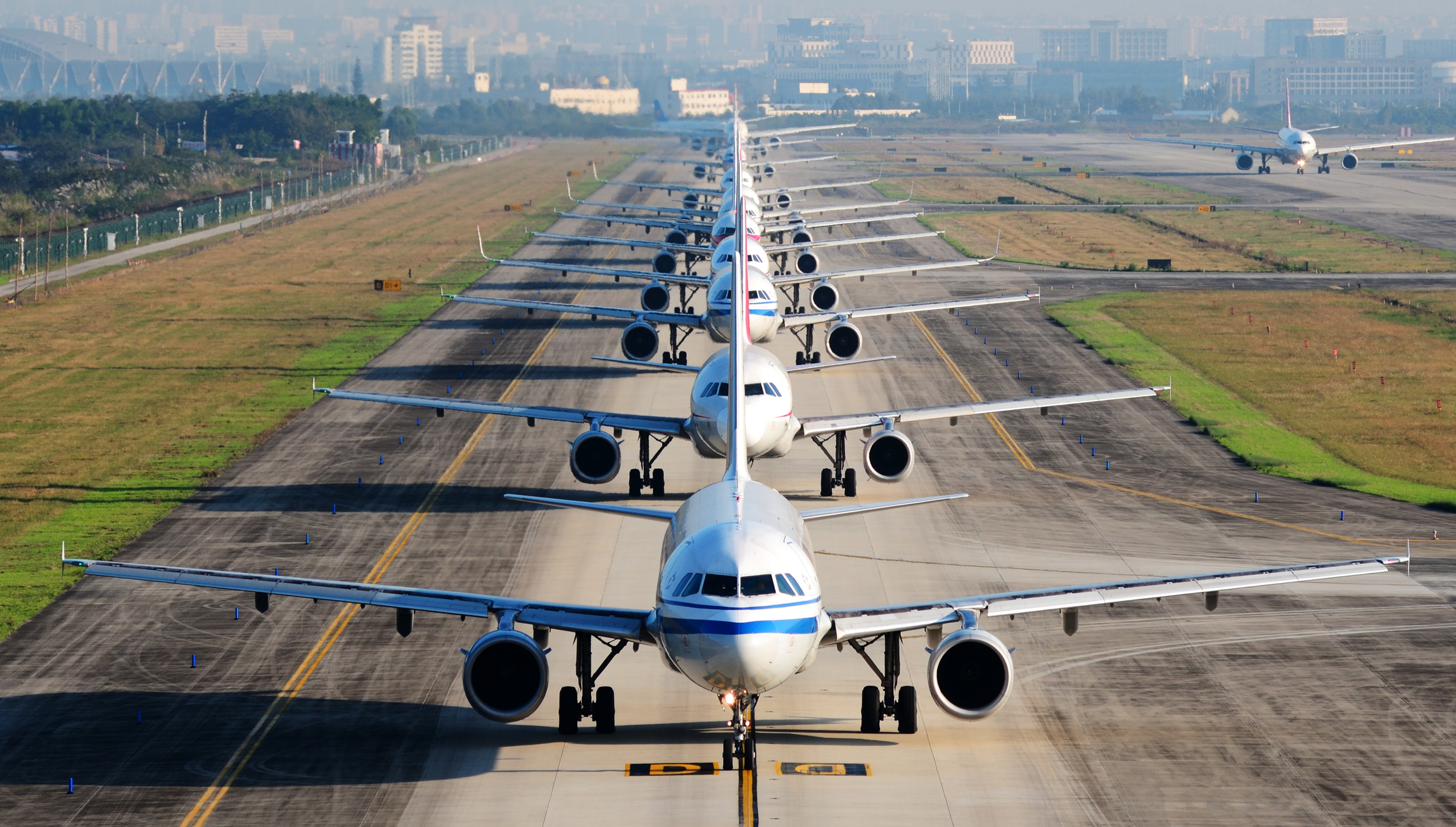
If you want to minimize your risk of being delayed on your next family vacation, consider booking your flight out of one of these five airports.
1. Salt Lake City International
Coming in first place for the second year in a row is Salt Lake City International, boasting an impressive 84.69% on-time flight performance. This is up almost a full percent over the airport's 2024 performance (83.96%).
The Utah-based airport handles about 28 million passengers a year, who can all rest reasonably assured that their flight will be on time.
2. Minneapolis-St. Paul International
Minneapolis-St. Paul International boasts an on-time performance of 81.32%, which is good news for the roughly 37 million travelers passing through the Midwest airport. That's up slightly from 81.12% in 2024.
The wait time if your departure is delayed isn’t too bad, either (relatively speaking). On average, delayed passengers wait just under 72 minutes for their flight to leave.
3. Los Angeles International Airport
With an on-time performance of 80.92% in 2025, Los Angeles International Airport ranks third among the airports with the fewest delays. A lack of extreme weather may help the California airport avoid some of the most common causes of delays.
4. Detroit Metro Wayne County
Coming in fourth place is Detroit Metro Wayne County. The 31 million passengers that fly through the Motor City’s airport have an 80.76% chance of their flight being on time. If their plane is late taking off, they’ll wait an average of nearly 75 minutes.
5. Atlanta Hartsfield-Jackson International
With an on-time performance of 79.96% in 2025, Atlanta Hartsfield-Jackson International still ranks in the top five, but its dropped from third place down to fifth. Considering the nation’s busiest airport handles over 100 million passengers a year, it’s no small feat that it ranked this highly.
The wait time for a delayed departing flight is also the lowest among the top five, averaging just over 66 minutes compared to average delays ranging from about 67 to 75 mins at the other top-ranking airports.
The 5 Worst Airports for Flight Delays
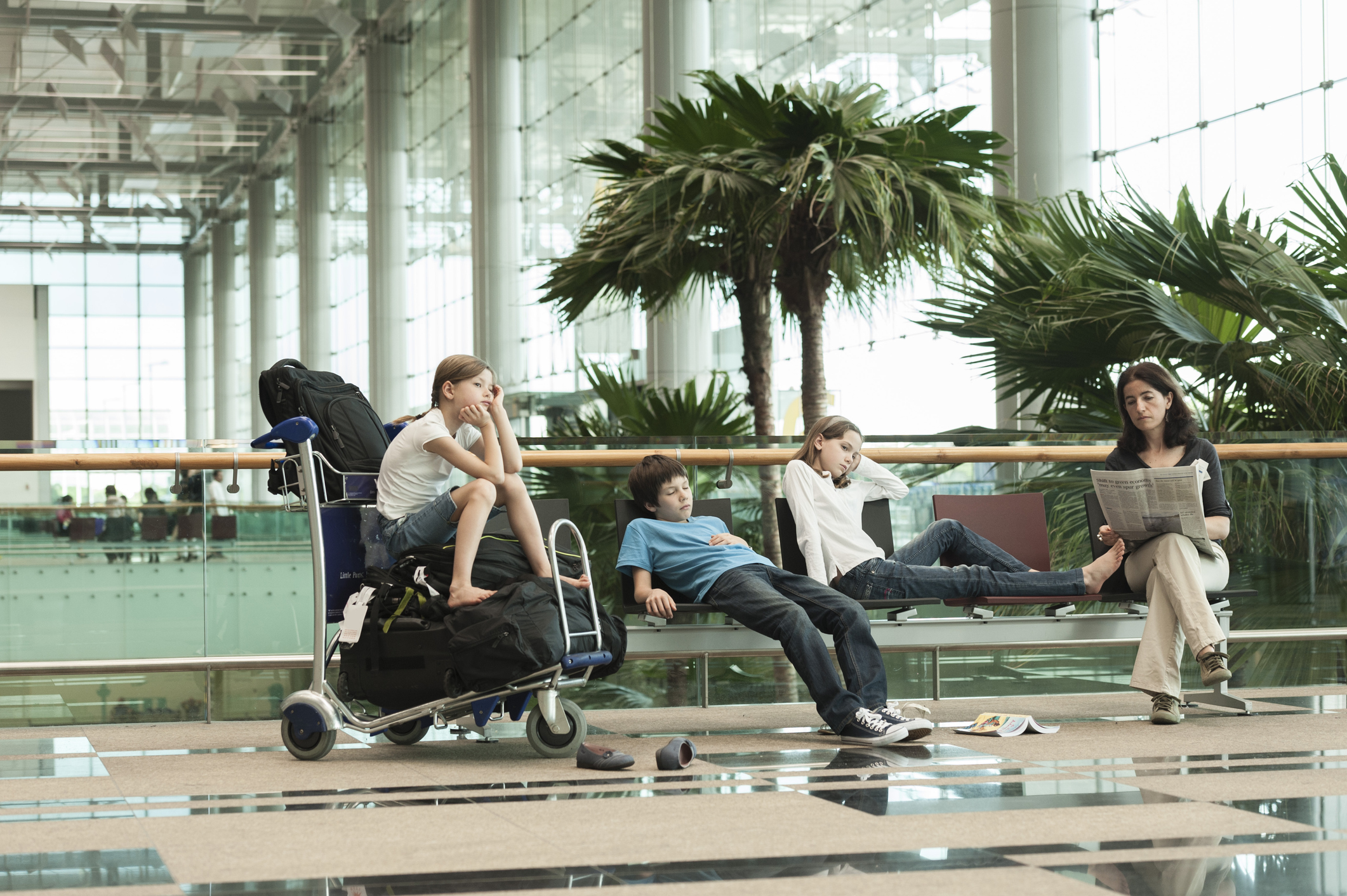
Air traffic control staffing shortages, safety issues and weather dominated the causes of delays in 2025. This led to airports in colder parts of the country or with heavier traffic volume making up the bulk of the airports with the worst on-time performance last year.
5. La Guardia Airport
With 72.68% of flights being on time at La Guardia, La Guardia airport is the best of the worst. The most common cause of delays is weather.
But, that's not necessarily extreme weather. Instead, La Guardia passengers are more likely to face delays from normal weather that slows down (but doesn't stop) air traffic.
If you are delayed at La Guardia, bring plenty of entertainment or splurge on an airport lounge day pass because you'll be waiting awhile. Delayed departures here are typically delayed by over 81 minutes on average.
4. Boston Logan International Airport
Coming in fourth place is Boston Logan International Airport with an on-time performance of just 72.66% in 2025. While passengers can blame a lot of those delays on weather, the airport also grappled with frequent runway closures last year.
3. Dallas/Fort Worth International
Just 72.45% of flights were on time at Dallas’s airport last year. To its credit, the Texas airport handles over 87 million passengers per year, making it the third busiest airport in the United States.
Still, it ranked low both in percentage of delays and the wait time on those delays. If you’re stuck at Dallas/Fort Worth International waiting for your flight to depart, expect to wait about 74 minutes on average.
2. Newark Liberty International Airport
After the air traffic control safety drama in early 2025, it's probably no surprise that Newark landed near the bottom of the list when it comes to on-time performance across major airports.
Across the year, just 70.18% of flights were on time. But, at the worst of the staffing shortages and equipment failures, on-time performance plummeted to just 49.21% in May.
Wait times are the longest among the airports on this list, too. If your flight is delayed, expect to spend more than 82 minutes on average waiting to depart.
1. Ronald Reagan Washington National Airport
Another airport that made headlines last year for safety issues, Ronald Reagan Washington National Airport plummeted to the bottom of the list in 2025, with an on-time performance of just 68.44%.
Congested airspace is a big factor behind the delays at DC's busiest airport. The bulk of delays were caused by heavy air traffic volume.
But safety issues and staffing shortages were another major factor. Following a midair collision between a military helicopter and a commercial airplane in January 2025, some runways were closed and airspace restrictions were tightened. This led to its worst performance all year, with just 53.58% of flights being on-time in February last year.
How to Avoid Airport Delays

Whether your closest airport ranked in the top, bottom or somewhere in between, there are a few things you can do as a traveler to reduce your risk of facing flight delays regardless of which airport you’re flying out of.
Book flights earlier in the day
If you only follow one tip from this article, this is the one to pick. Of all the flights at all the airports that were delayed last year, the most common cause for the delay was a late-arriving aircraft.
A plane that arrives late is likely to get a late start on its next route as well. As the day goes on, small delays can have a ripple effect, creating longer and longer waits later on. Scheduling a morning departure improves your odds of being one of the first flights on that aircraft’s schedule.
Avoid tight connections
If you can avoid connections altogether, that’s your best bet. But if you do need to book a flight with stops in between you and your destination, make sure to pad those stops with a little extra time. That way, if you’re delayed on the first leg of your flight, you can still make your connecting flight on time.
Typically, travelers recommend about 90 minutes between flights for domestic travel and two or three hours between flights for international trips. When the time between connecting flights is short, you run the risk of needing to be rebooked on the next available connecting flight. That might be an hour later or it might be a full day later.
Give yourself wiggle room for delays
You may not be able to avoid all delays, but you can prevent them from ruining your trip by scheduling in some wiggle room. This is especially advisable when you absolutely need to be at your destination by a particular time.
If you’re traveling for a wedding, for example, plan to arrive at least a day early. That way, if your flight is delayed, your later departure still gets you to the destination before the actual wedding.
Choose the better-performing airport for connections
If you’re choosing between two flights that have layovers, check both airports where your layover would be on the BTS’s on-time statistics dashboard.
Choose the one with the better on-time performance in the most recent month for which data is available. You can even filter the data by carrier to see the on-time performance of the specific airline you’d be flying with at each airport.
Check your information right after booking
While most causes of delays are out of your control as a passenger, one cause that is in your control is mismatched passenger information. While you might already know to book with your full name rather than your nickname, details as simple as leaving out your middle name when it is included on your passport can be enough to cause issues when checking in.
Have a hyphenated name? Make sure it looks the same on your booking confirmation as it does on your ID. Even if you typed it in correctly, some systems might jumble it because the name entry field isn’t equipped to deal with hyphenated names. You’ll want to sort that out with the airline well in advance of your flight.
Another common issue is booking right after a name change. If you’re recently married, for example, and you’ve already changed your name on your ID, but your airline loyalty program still has your old name saved in its systems, you’ll run into issues at the gate.
Other details you’ll want to doublecheck include:
- The airport you’re departing from, especially if you live near multiple airports. You don’t want to accidentally head to the wrong airport because you swore that’s where you were scheduled to depart from.
- Departure time. Check this again in the days leading up to your flight, in case there’s a last-minute change.
- Baggage allowance. If you’re planning to check a bag, doublecheck that you actually added that to your booking. While you can usually do this at the airport if you forget, some airlines charge more for reserving a checked bag at the airport. Even if your airline doesn’t, this adds an extra step and extra time to your check in process.
Know your rights
While airline policies vary on what they’ll offer passengers whose flights are delayed or cancelled, the Department of Transportation (DOT) does set a minimum standard that all airlines must follow. As of this writing, these are your rights when it comes to delayed or cancelled flights:
- If your flight is cancelled, you’re entitled to a refund, even if you have a non-refundable ticket. That “non-refundable” status refers to refunds when you cancel your booking, not when the flight itself has been cancelled. If you accept an alternative booking or travel voucher offered by the airline, you won’t get a refund. But if you choose not to be rebooked, the airline must refund the ticket and price and any associated fees to your original payment method. You do not have to accept a travel voucher or credit if you’d rather get your money back.
- If your flight is significantly delayed or changed and you choose not to travel as a result, you’re entitled to a refund. On domestic flights, this means a departure or arrival time that is three or more hours different than originally scheduled. For international flights, the threshold is six hours. Other significant changes that are eligible for a refund include a change of airport, an increase in the number of connections or, for those with disabilities, a change to an airport or aircraft that is less accessible than the one you originally booked.
- If your class of service is changed — such as being downgraded from business to economy — you are entitled to a refund of the difference in fare price. This is true even if the airline was forced to downgrade you because the rebooked flight or new aircraft doesn’t have the class you originally booked.
- If your checked bag is more than 12 hours late on domestic flights or more than 15-30 hours later on international flights (depending on length of flight), you are entitled to a refund of the checked bag fee, even if your bag wasn’t declared lost.
- If you are entitled to a refund, you are entitled to a prompt, automatic refund to your original payment method. This means you aren’t required to proactively request it, though you may have to if the airline didn’t automatically refund you. It also means that refund must be issued within seven days for credit cards or 20 days for all other payment methods. Lastly, it means you do not have to accept travel credits or other forms of compensation. The airline will likely offer one of these alternative forms of compensation first but, you are allowed to refuse them. And, if you refuse, you are entitled to a refund to your original payment method, whether that was cash, card or airline miles.
You may have additional rights or options under the airline’s own policy, which it is required to uphold. You can check and compare the cancellation and delay policies of many major airlines on the DOT Airline Cancellation and Delay Dashboard.
If you believe the airline is violating one of its own policies or refusing a refund you believe you’re entitled to, you can file a complaint with DOT.
But first, request the refund from the airline in writing — either via email or via an online chat service. While the refund should be automatic, whether or not you formally request it, having these written records will help when filing a complaint with DOT.
We may get compensation if you visit partner links on our site. We may not cover every available offer. Our relationship with advertisers may impact how an offer is presented on our website. However, our selection of products and services is made independently of our relationship to advertisers.