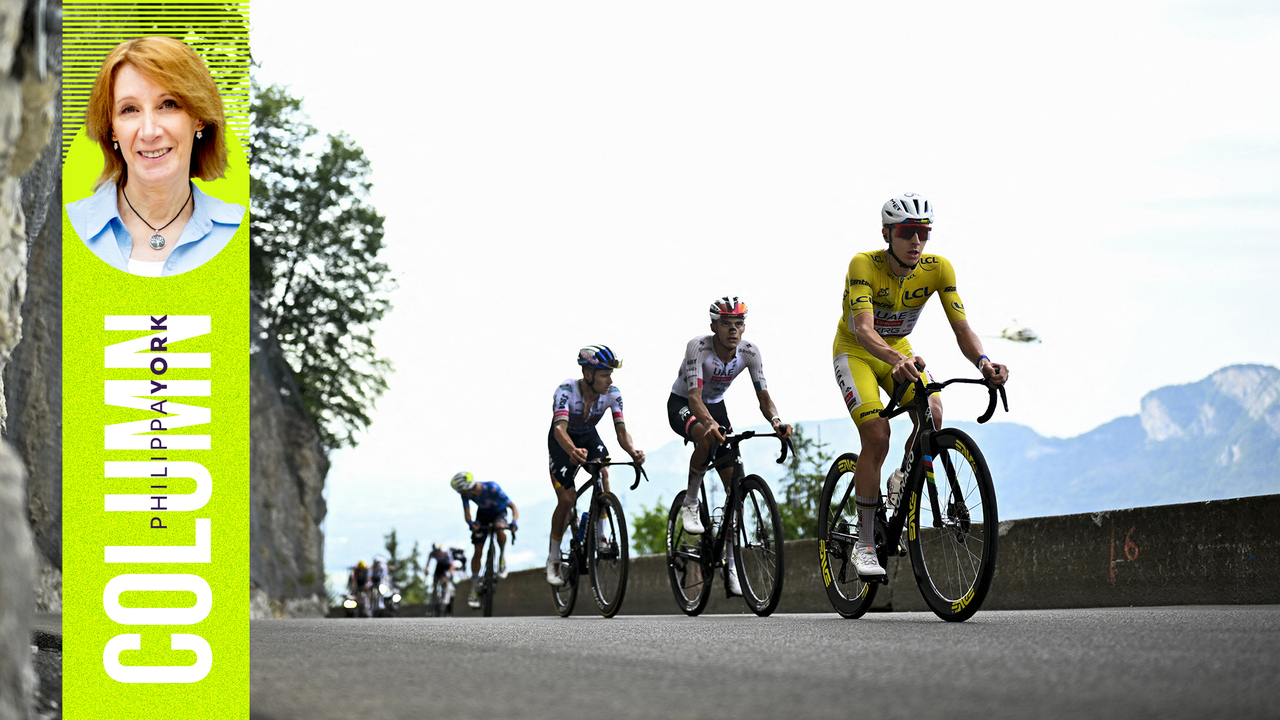
The Tour de France thrives on a close rivalry, and the removal of the only constant in the challenge to Tadej Pogačar’s dominance – after Jonas Vingegaard crashed out on stage 15 – means a reset not only in the GC group but also in how the race will be conducted during the final week.
But before looking ahead, it's worth reflecting on the last six stages and the conclusions that we can draw from them.
It seems like a long time ago now, but the second week began, in an almost routine manner, with a Pogačar stage win. In his usual style, he kept the break in check and then attacked on the penultimate climb, passing a valiant Richard Carapaz and soloing to the finish. Behind, Vingegaard gave chase but had little help from the others in his group before they all jumped him in sight of the finish line. They were not strong enough to collaborate with the Visma-Lease a Bike leader, but strangely reinvigorated when the line came into sight. It has been, up until his untimely exit, an all-too-familiar tale in pursuit of Pogačar. However, with Vingegaard's abandonment, it's an option for the podium contenders that no longer exists, and that is going to change so many tactics.
Another pair of stage wins for Pogačar is no surprise in the second week, and neither was another sprint victory for Tim Merlier despite Alpecin-Premier Tech having the best leadout train. They still haven’t got their timing right for Philipsen at the stage finishes, which was something that Søren Wærenskjold took advantage of in Nevers.
After holding the race lead in the first week, another Uno-X Mobility celebration on day 12 was a refreshing change to the status quo of the usual names grabbing the limelight.
Then there was the tricky route to Belfort and a Pinarello-Q36.5 plan to put Tom Pidcock fully into the GC fight. Up until then, Pidcock had been hiding just outside the top 10, but a super day and equally super teammates changed things completely. He took a chance, and it paid off, climbing to fourth on GC, which must have been a wake-up call for the guys he leapfrogged in the overall classification.
Read more Tour columns & opinion
- Jonas Vingegaard abandoning the Tour de France doesn't just make a fifth Tadej Pogačar victory even more likely, it radically alters how we'll perceive it – Analysis
- I can't understand why UAE Team Emirates-XRG are riding so much, but Pogačar is so good that he will correct any mistakes in the Alps - Sean Kelly's Tour column
- In this extreme heat there's less room to hide, it's like you're at altitude and some riders adapt better than others - Matej Mohorič's Tour de France diary
An even bigger fright came the next day when the Briton sneezed into the escape again, and what could have been a day of relative calm became another stage that increased both stress levels and fatigue. Though it was probably not the best decision to go in the break when a GC race is mainly about patience and choosing when to commit fully, it was a sign that, for Pidcock, this Tour is as much about seeking a stage win as it is about testing where he is in the Grand Tour hierarchy and noting what can be worked on.
Then there’s the satisfaction element to take into consideration because there’s no joy in being dragged around for three weeks with no real influence on proceedings. I don’t think that is something Pidcock would even contemplate, so no surprise he tried again on the first proper mountain top finish heading into the second rest day. This was definitely an effort too far, which was shown by his capitulation on the slopes of Plateau de Solaison, losing nearly four minutes inside the last 4km. He has some decisions to make on the rest day concerning how hard he rides the upcoming time trial and how much energy he should save for the Alpe d’Huez days in the second half of the week.
Now that Visma-Lease a Bike no longer have Vingegaard in the race, their contributions at the head of affairs will end, and they’ll be in the stage-hunting battle along with the likes of EF Education-EasyPost and Jayco-AlUla. The big groups of attackers we have seen in the middle week might have been successful only once, when Mauro Schmid outsprinted Harold Tejada on stage 13, but that’ll change as there’s a reshuffling in the podium game.
I have to admit that I didn’t have Remco Evenepoel on my bingo card for the win on stage 15, given he had been struggling on the longer climbs earlier in the race and I thought the Salève climb was going to hurt him more than his direct rivals, but what a pleasant surprise and what a way to silence his critics in the Belgian media. It was a great ride and a great sprint to beat the UAE duo of Pogačar and Del Toro.
I do wonder just how much the result was affected by Vingegaard's crash because Pogačar looked quite subdued. Although he rode to distance Paul Seixas, moving Del Toro into the lead of the youth classification, he didn’t seem totally concentrated on ensuring another stage win. Evenepoel, in contrasting fashion, was clearly motivated and on a super day, which bodes very well for Tuesday's time trial.
It’ll be interesting to see how Seixas reacts now that he is deep into unknown territory – with no experience of how his body is going to cope in a third consecutive week of racing. So far he’s been solid, but the Vingegaard situation removes one of the reference points for him and Decathlon CMA CGM to manage their efforts.
Looking at the green jersey competition, and while Mads Pedersen might seem a fairly safe bet to have the jersey tied up, it is far from decided. He had an 88-point lead over Jasper Philipsen at the conclusion of stage 10, but six days later, that has been reduced to only 31. That is considerably less comfortable. With Mattias Skjelmose and Juan Ayuso fairly steady in their GC positions, Lidl-Trek could change how they manage their resources in support of Pedersen. They certainly can’t let another panic happen, like the stage 13 fiasco, when they missed Philipsen placing himself in Pidcock's breakaway.
Along with the race tactics and the consequences of the crashes, there’s the question of the 2am drug testing to deal with too. Yes, there’s a need to conduct the controls, and yes, they can be a surprise; however, there needs to be better judgment of when they happen. After midnight seems a really intrusive choice, to the point that it shows a lack of respect for the athlete. When you realise that Tadej Pogačar would have been tested after the stage already, and to go through that again barely eight hours later seems strange.
There are human rights issues involved that the PCA ought to be making clear to the UCI; there’s monitoring, and then there’s intrusion, which I feel is what happened on this occasion. Will Evenepoel and Seixas be getting the same treatment in the coming days is a question that immediately springs to mind.