Get all your news in one place.
100's of premium titles.
One app.
Start reading
International Business Times
Business

The Fed's Preferred Inflation Gauge Was Cooler Than Expected. But One Of Its Member Warned It's Still To High.

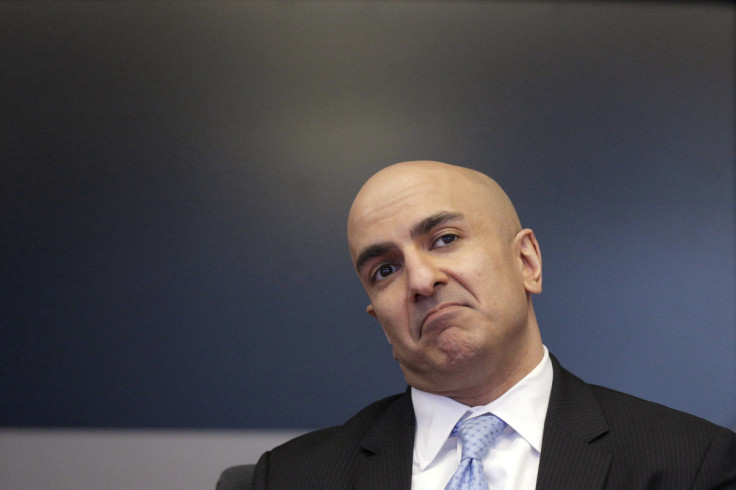
Minneapolis Federal Reserve President Neel Kashkari said inflation concerns remain even though the latest figure was much cooler than expected. (Credit: Reuters)

Minneapolis Federal Reserve President Neel Kashkari said inflation concerns remain even though the latest figure for the central bank's preferred gauge was much cooler than expected.

Speaking at a Council on Foreign Relations event in New York, Kashkari said that "there are many different measures of inflation, but it's running at around a 3% rate."

"It's been elevated now for more than five years. I didn't think the inflation data today really changed that story for me very much." He went on to note that other data also released on Wednesday, including an updated GDP report and private payrolls, showed that the U.S. economy remains "resilient."

According to the latest data from the Commerce Department, the personal consumption expenditures price index climbed a seasonally adjusted 0.3% for the month. The 12-month gain stood at 3.4%, below the 3.7% expected by economists.

However, the core index showed a 0.2% increase, below the 0.3% expected by economists. The annual figure stood at 3%, below the 3.3% expected by analysts.

Despite Kashkari's remarks, odds of a rate hike by the Federal Reserve in its next meeting decreased significantly after the report.

The CME Group's FedWatch tool showed that chances that interest rates remain at current levels now stand at 64%, compared to 49.1% on Tuesday.

Elsewhere, data from the Commerce Department's Bureau of Economic Analysis showed that the economy grew 2.2% in the second quarter of the year, slightly less than in the first one (when it grew 2.5%) but above its previous estimate of 1.5%.

"Real GDP was revised up 0.7 percentage point from the second estimate, primarily reflecting upward revisions to investment, consumer spending, and government spending," the report said.

Consumer spending, which accounts for about 70% of the U.S. economic activity, climbed 3.8%, up from 0.7% in the first quarter.

The report went on to note that consumer spending, investment and exports were the main contributors to the figure. The figure was dragged down by increased imports.

The leading industry contributors, the document noted, were real estate, information, durable goods manufacturing, finance and insurance and rental and leasing. In contrast, transportation and warehousing, retail trading and nondurable goods manufacturing dragged down the figure.

However, consumer confidence keeps deteriorating. The Conference Board Consumer Confidence Index released new figures on Tuesday showing that its index fell by 6.7 points, from 88.6 in August to 81.9. The Present Situation Index, which surveys consumers' assessment of business and labor market conditions, and the Expectations Index, based on their outlook for income, business and labor market conditions, also plummeted.

The surge in fuel costs, which is around historical highs, were a key factor in consumers' assessment of the situation. "Consumers also frequently cited politics, trade, and employment in their write-in responses, though to a lesser extent," the document noted.

Sign up to read this article
Read news from 100's of titles, curated specifically for you.
Already a member? Sign in here
Related Stories
Top stories on inkl right now
One subscription that gives you access to news from hundreds of sites
Already a member? Sign in here
Our Picks
Fourteen days free
Download the app
One app. One membership.
100+ trusted global sources.