Get all your news in one place.
100's of premium titles.
One app.
Start reading
Sports Illustrated
Sports Illustrated
Sport
Rich Fay

The European Run That Helped Define Wrexham

Wrexham will make history this week when they face Wisła Kraków in a match celebrating the hosts’ 120th anniversary. The fixture also marks Wrexham’s first preseason match of the summer.

The fact that Wisła Kraków approached Wrexham to help commemorate such a monumental occasion is further evidence of the global brand the club has become. It will also see the Red Dragons return to the country that witnessed one of their finest moments.
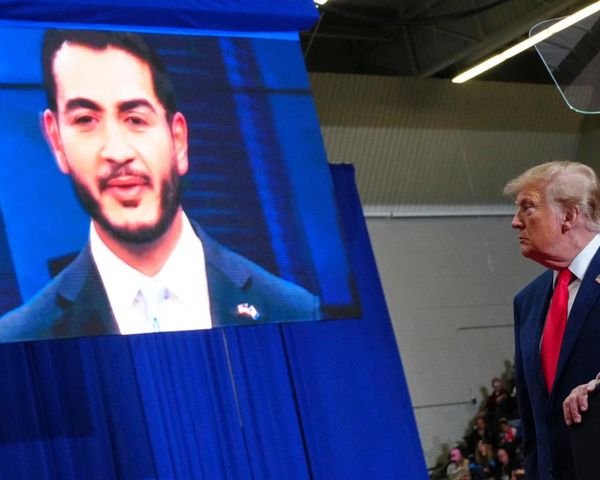
Wrexham and Wisła were both saved by their supporters, with their communities at the heart of each club. Meanwhile, Wrexham’s former Penley Hospital supported Polish soldiers and residents following World War II. The two communities are also connected through former Wisła Kraków player and vice president, Colonel Alfred Konkiewicz of the Polish Army, who is buried in Wrexham.

Although much of the focus will be on the home side, there will also be plenty of sentiment from a Wrexham perspective. The Red Dragons have played in Poland only once before, during their famous run to the quarterfinals of the European Cup Winners’ Cup in 1975–76.

The campaign began with an impressive victory over Swedish giants Djurgården, as John Neal’s side produced another famous upset over two legs. Having reached the FA Cup quarterfinals the previous year, Wrexham recorded one of the most memorable nights in their history when goals from Arfon Griffiths and captain Gareth Davies secured a 2–1 home victory.

Wrexham legend Mickey Thomas tells Sports Illustrated: “Phil Parkinson is incredible, but John Neal changed the whole concept of the club. He brought through all those youth players. He was a great manager with a great footballing brain. He knew the players inside out, he created a great dressing room, with some great characters and he knew how to handle the pressure.”

Wrexham football manager John Neal surrounded by his players after calling a meeting during a pre-season training session.
John Neal is arguably the greatest manager in Wrexham history. | Davidson/Mirrorpix/Getty Images

Graham Whittle scored in Stockholm to earn a 1–1 draw, enough to send the Red Dragons into the second round of the competition in only their second European campaign. Wrexham had previously appeared in Europe just three years earlier, when they also reached the second round of the European Cup Winners’ Cup.

That achievement was already remarkable for a Third Division side competing against some of the continent’s best teams after qualifying through the Welsh Cup loophole.

In many ways, being a lower-league side suited them. Not only did their opponents know little about Wrexham, but they often underestimated their determined rivals, who embraced their underdog status and possessed a secret weapon in their intimidating home ground.

That would prove true again in the second round, when Wrexham welcomed Stal Rzeszów, commonly known as Stal, to the Racecourse Ground. Stal had just won the Polish Cup as a second-division side and had defeated Norwegian club Skeid in the first round of what would prove to be their only European campaign.

On another famous night at the Racecourse, 9,613 supporters packed into the ground to see whether the Red Dragons could repeat their heroics.

Despite sitting 19th in the Third Division, Wrexham flew out of the blocks and bombarded the Stal penalty area with crosses. An early looping delivery from Alan Hill sent goalkeeper Henryk Jalocha scrambling backward as the Polish side conceded a corner, although it came to nothing.

“We knew it wasn’t like the third division back home,” Jalocha reflects. “We had some information—Zbigniew Gnida had actually watched a third-division match—so we were well aware of the level of play. You could say the difference between the Polish and English leagues was like night and day.

"First of all, the stadium was different from the ones we had back home—there was no running track. In Poland, the only similar setups were probably at the old Lech Poznań stadium and at Garbarnia Kraków. The atmosphere during the match was quintessentially English; the fans were fully engaged with the action on the pitch and reacted to every play.”

Loud chants of “Wrexham” echoed around the stadium, interrupted only by the piercing shriek of air horns—a common feature of matches in that era—as the home side won another corner shortly afterward. Brian Tinnion whipped the ball into the box, but it evaded everyone.

Thomas, then just 21, collected the loose ball on the edge of the area and drilled a fierce left-footed cross back into the danger zone. Billy Ashcroft met it with an outstretched foot to give Wrexham the lead after just 10 minutes.

Billy Ashcroft celebrates for Wrexham against Stal Rzeszów.
Ashcroft spent seven years with Wrexham before he joined Middlesbrough. | BBC Sport Wales

The Polish side responded well and created several promising openings of their own. Still, their hard work was undone by a comical moment of defending that allowed Wrexham to double their advantage before half time. Mel Sutton raced down the right wing with support from Hill but opted to swing an early cross into the box.

Tinnion failed to make contact with the ball, confusing both Jalocha and defender Bolesław Biel, who each left it for the other. Ashcroft gratefully tapped into an empty net to double Wrexham’s lead.

Jalocha adds: “The central midfielder, Arfon Griffiths, was very good—a Welsh international who wasn’t particularly tall. And of course, Billy Ashcroft, who scored two goals in the first match.” Still, for him, it wasn't a wasted trip. "I also remember that we flew in during the evening, and the next morning we went shopping—I bought quite a few clothes!”

Wrexham football players presented with a 60 foot scarf knitted by a fan before taking off from Liverpool airport.
Wrexham were playing in only their second European campaign. | Liverpool Echo/Mirrorpix/Getty Images

Wrexham had given themselves an excellent platform heading into the second leg, but they knew the task would be far more difficult in front of a partisan Polish crowd. Just 2,701 supporters attended Wrexham’s home match against Mansfield on the Saturday before the trip. Four days later, an estimated 20,000 fans were in attendance in Rzeszów, most of them backing the home side.

“I think people were surprised at just how well we did, but we had a team playing with great confidence and a track record of getting great results. It was a great distraction for us to play a foreign team, especially abroad. The new surroundings, the build-up to the match, it was a new experience for most of us,” Thomas said.

“I loved going to a new country where they didn’t know much about us, getting booed when we got off the bus. They were great games to play in. I will never forget the atmosphere in Poland. Those games just brought the best out of us; we felt quicker, we had more energy. It just gave us something different. I am not sure why it happened, but in those bigger games, we always rose to the occasion. It just felt like it meant more to us, the players, and for the fans.”

Unlike the first leg, which was played on a crisp autumn night in North Wales, the return match kicked off at 4 p.m. local time in Poland and felt more like a league fixture than a European cup tie.

Stal started brightly, with Tadeusz Krysiński firing narrowly wide before Wrexham goalkeeper Brian Lloyd produced a tremendous save to deny him again. Neal’s side once more relied on its physicality and direct style against a Polish team that made the mistake of trying to play long-ball soccer against opponents thoroughly accustomed to it. The teams went into half time level on the day.

Knowing they needed two goals to keep their European dreams alive, Stal pushed forward after the break. Yet it was Wrexham who began the second half on the front foot. Ashcroft picked up where he left off and could easily have completed a hat trick if not for an outstanding performance from Jalocha.

“Ashcroft played defensively for Middlesbrough; he could play center back as well,” Thomas added. “For me, as a player, when we didn’t have many options, you always had the option of the long ball with Billy. You hit it up to him to relieve the pressure, and you could also feed off him. That’s why I used to love playing with Billy, because you could pick him out; he was very good at controlling the ball and a very talented player.”

Middlesbrough striker Billy Ashcroft pictured in his Datsun Cleveland sponsored Adidas strip during a photocall.
Ashcroft holds a special place in Wrexham's rich history. | Danny Brannigan/Hulton Archive

Stal believed they should have been awarded a penalty when Andrzej Dziama was brought down in the box, but their passionate appeals were waved away by the referee. The match truly sprang to life when midfielder Michaliszyn Kozerski scored to put the Polish side ahead, cutting Wrexham’s aggregate lead to 2–1 with just 20 minutes remaining.

With time running out, Stal manager Zenon Książek instructed his players to commit numbers forward and risk everything in search of an equalizer. The gamble backfired eight minutes from time when Arfon Griffiths broke down the wing and crossed for Ashcroft. Once again, Jalocha denied him, but the rebound fell kindly to Mel Sutton, who fired into the back of the net.

Wrexham were not only level on the night, but they had restored their two-goal aggregate cushion. Stal were crestfallen. They may not have been one of Poland’s biggest clubs, but they had fancied their chances when the draw was made and knew they had missed what was likely their best opportunity to reach the quarterfinals.

They have not played in Europe since, and that season also proved to be their last in the Polish top flight. Consecutive relegations sent them down to the third tier, and they have spent the past five decades moving between the lower divisions.

Their former goalkeeper added: “Naturally, as a team, we couldn’t be happy because there was a chance to advance to the next round, but we didn’t make it. However, I admit that personally, I have fond memories that have stayed with me to this day.

“Our opponents played worse at our home ground—probably because we scored quite early—though we could have scored more goals. They had their chances too; I had quite a few duels with them, and the only goal we conceded came, I believe, after the third rebound. The match played out with us constantly attacking while Wrexham relied on counter-attacks.”


1975–76 European Cup Winners’ Cup Run

Round Opponent Home leg Away leg Aggregate
First round Djurgården 2–1 1–1 3–2
Second round Stal Rzeszów 2–0 1–1 3–1
Quarterfinals Anderlecht 1–1 0–1 1–2

Wrexham, meanwhile, marched on to the quarterfinals, where they once again defied the odds as a Third Division club. Neal’s side lost to the tournament’s eventual champions, Anderlecht, whose squad was packed with international talent, including two members of the Netherlands team that had reached the World Cup final just two years earlier.

The Red Dragons lost the first leg 1–0 in Belgium and famously took the lead in the return match through Stuart Lee, only for Rob Rensenbrink to break their hearts with 14 minutes remaining. A few months later, Rensenbrink scored twice as Anderlecht defeated West Ham United 4–2 in the final.

Wrexham might be one of the biggest names in modern soccer, but their rich history is another key reason why Wisła Kraków are delighted to welcome them back to Poland this weekend.

Sign up to read this article
Read news from 100's of titles, curated specifically for you.
Already a member? Sign in here
Related Stories
Top stories on inkl right now
One subscription that gives you access to news from hundreds of sites
Already a member? Sign in here
Our Picks
Fourteen days free
Download the app
One app. One membership.
100+ trusted global sources.