
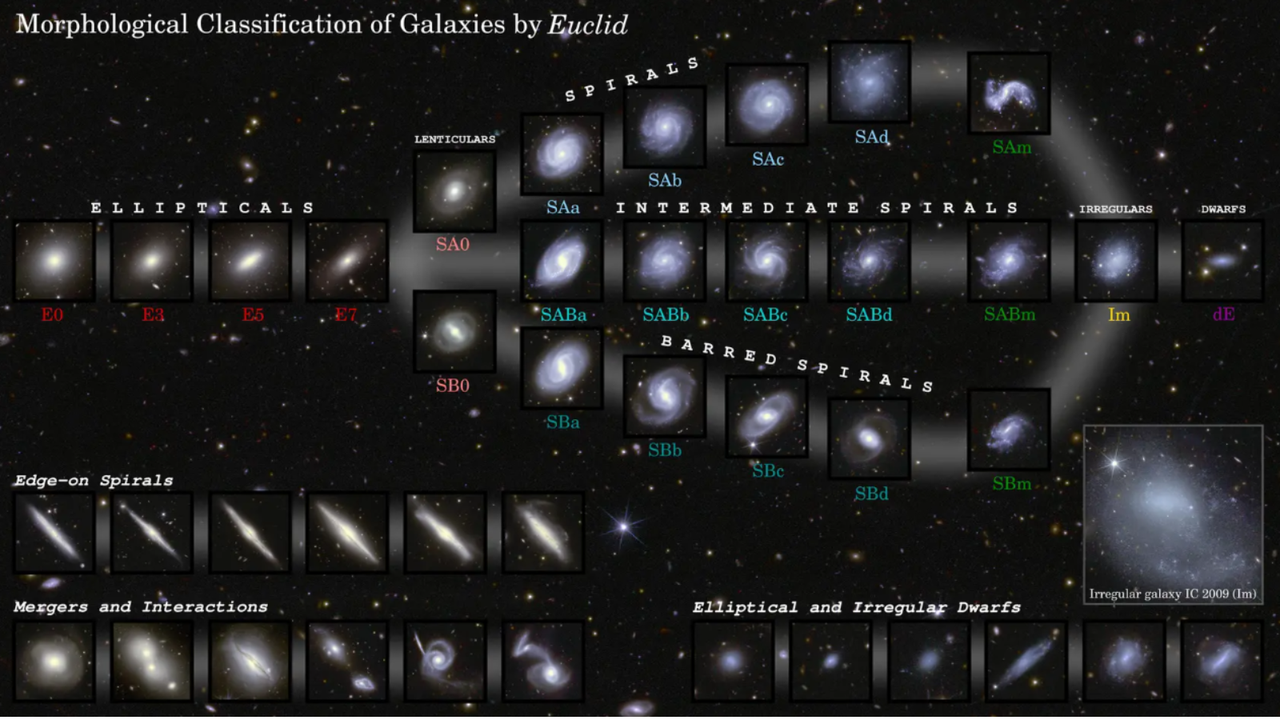
After only one year of operations, the European Space Agency's Euclid mission has begun to unravel the mystery of why galaxies take on different shapes and how these different shapes relate to each other. Answering this question involves tracking how galaxies and their central supermassive black holes grow together over time.
Having only launched in July of 2023, the Euclid space telescope has used its extraordinary field of view to observe a staggering 1.2 million galaxies. These galactic subjects are cataloged in the spacecraft's first data release, which dropped in March of 2025. It is estimated that, by the end of its 6-year primary mission, Euclid will have studied tens of millions of galaxies. It is therefore little wonder that astronomers are expecting it to make major waves in our understanding of how galaxies evolve.