
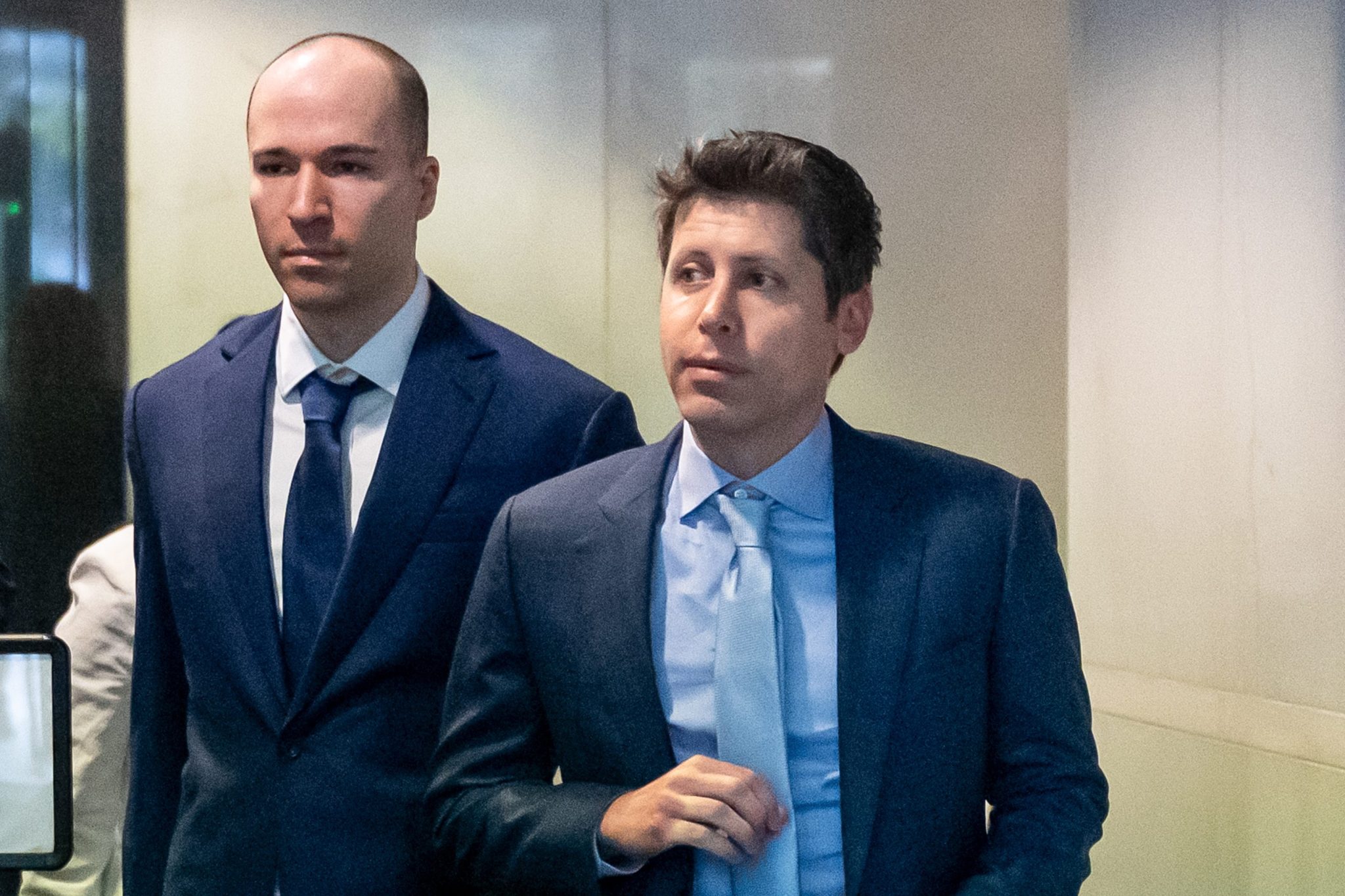
Hello and welcome to Eye on AI…In this edition: Sparks fly as Musk and Brockman testify in battle over OpenAI’s restructuring…the White House does a 180 degree U-turn on AI regulation and may begin reviewing AI models prior to release…OpenAI and Anthropic both target PE-backed companies with new joint ventures…a breakthrough in a foundation model for robotics…AI scientists may still be a ways off.
People in Silicon Valley and far beyond have been enthralled by the drama playing out in a courtroom in Oakland, California, where a jury is currently hearing testimony in Elon Musk’s lawsuit against OpenAI cofounders Sam Altman and Greg Brockman. The judge and jurors in the case (the jury’s verdict is merely advisory) will need to decide whether Altman’s and Brockman’s communications with Musk around the formation of OpenAI established a formal “charitable trust” and whether Altman and Brockman subsequently violated that trust when they restructured OpenAI so that its non-profit board no longer had sole control over its for-profit arm. They will also have to decide on Musk’s allegations that Altman and Brockman unjustly enriched themselves as OpenAI re-oriented from a research-oriented lab to being primarily a commercial entity.
Most legal analysts say Musk’s case is weak and that he’s likely to lose. In fact, I’m surprised the case has even come to trial. I thought that Musk would opt to settle at the last minute. I had long-assumed that this was one of those legal cases where the lawsuit itself was the whole point, not whether Musk ultimately prevailed. I thought his intention was two-fold: 1) to sow enough investor doubt about the viability of OpenAI’s new for-profit company structure to make it harder for OpenAI to raise further investment and possibly go for an IPO and 2) to use the discovery process to surface lots of embarrassing emails, internal documents, and details about Altman, Brockman, and the constant drama at OpenAI that would tarnish the reputation of his former cofounders.













