Get all your news in one place.
100’s of premium titles.
One app.
Start reading
The Times of India
The Times of India
World
TOI World Desk

The Dragon Hole of the South China Sea, where the ocean slowly runs out of oxygen

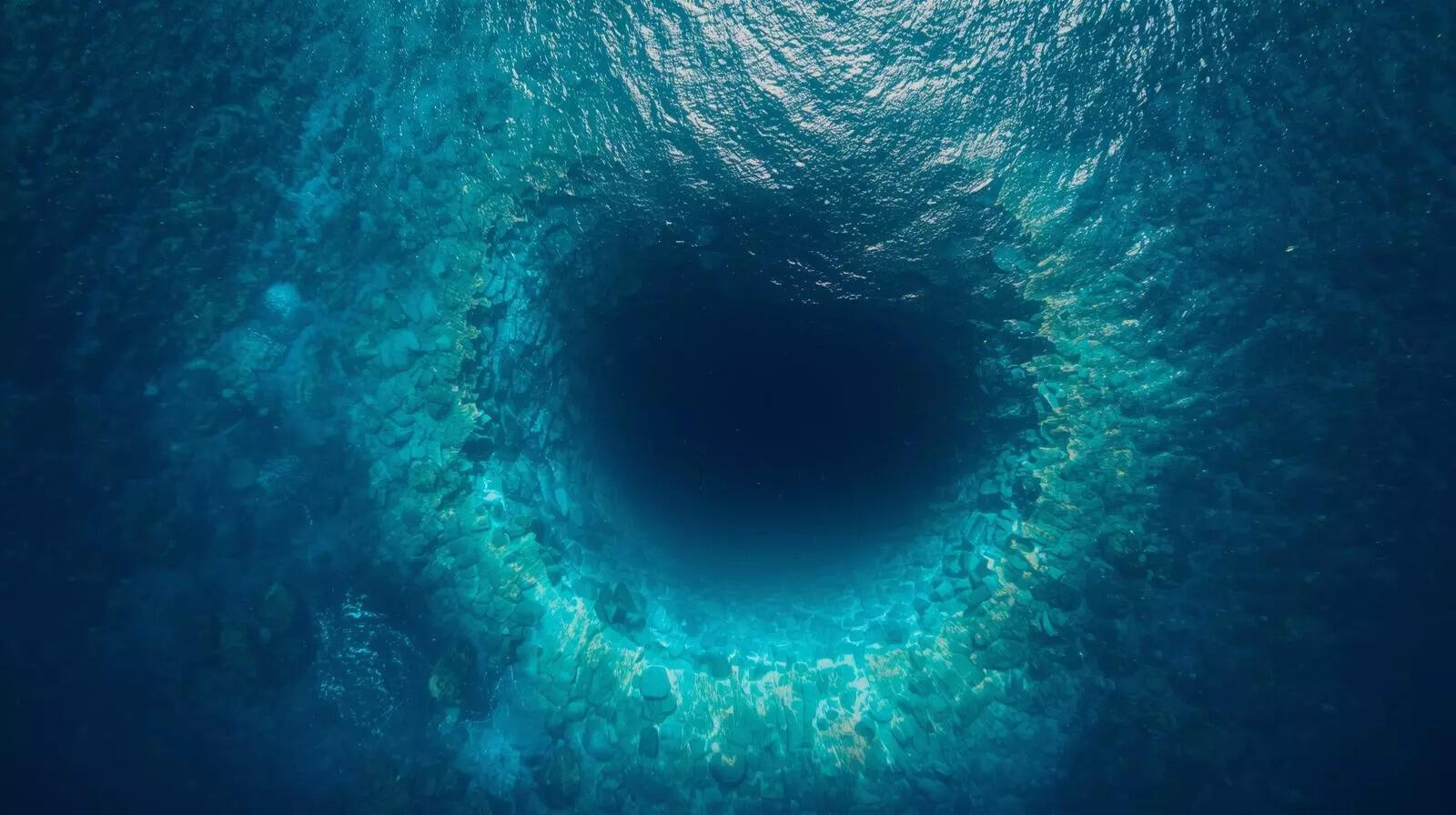
Blue holes are among the least understood features of the ocean floor. From the surface, they can appear ordinary, even calm, blending into the surrounding reef or open water. Below, however, they drop steeply and change quickly. The Sansha Yongle Blue Hole, also known as the Dragon Hole, sits in the South China Sea and has drawn scientific attention for more than a decade. Once confirmed as the deepest known blue hole at just over 301 metres, it has since lost that record to a deeper site in Mexico. Even so, its structure, chemistry and isolation continue to make it one of the most closely studied blue holes in the world. Researchers see it less as a record holder and more as a natural archive shaped by time, water and climate.

The Dragon Hole of South China sea remains one of the ocean’s most unusual blue holes

One of the most striking findings is that the Dragon Hole is not a simple vertical shaft. Detailed surveys show that it bends and tilts as it goes down. The deepest point lies more than 100 metres sideways from the surface entrance. Near the top, the opening is wide. Deeper down, the space narrows sharply, then opens again in places. The uneven form reflects a long and complex history rather than a single collapse.

Early attempts to measure the hole were limited by its shape. Turning walls and steep angles confused positioning systems. In 2017, scientists used a high grade underwater robot equipped with precise navigation tools. This made it possible to map the interior in three dimensions and confirm the depth accurately. Multiple instruments were used and cross checked, resulting in a final depth of 301.19 metres with very small uncertainty.

Mapping took longer than expected

For years, the interior resisted clean measurement. Instruments lost their bearings as walls tilted and passages curved. In 2017, researchers returned with a more capable underwater robot, fitted with precise navigation tools. Progress was slow but steady. The result was the first full three dimensional map of the hole, along with a confirmed depth of 301.19 metres. Several instruments were used, checked against one another, then checked again.

Stone walls hint at older shorelines

Inside the hole, the rock tells its own story. Ledges appear at certain depths. Some resemble steps. These features line up with ancient sea levels, formed when the ocean stood lower during colder periods. Fossilised shells and tiny coral fragments are embedded in the walls, hinting at life that once thrived here. The hole seems to have grown in stages, opening and reshaping as water levels rose and fell. Reef limestone dominates the walls, marked by side cavities that appear without warning. Sunlight filters in occasionally, highlighting textures and revealing the subtle colours of ancient deposits.

Oxygen fades quickly below the surface layers

One of the sharpest changes is not in shape, but in chemistry. Below roughly 90 to 100 metres, oxygen nearly disappears. Above this level, some life persists. Below it, conditions turn still and harsh. The water does not mix easily with the surrounding sea. Oxygen is used up and not replaced. In deeper layers, hydrogen sulphide becomes detectable, adding another barrier to life.

This lack of circulation gives the Dragon Hole an unusual quality. Water layers remain largely undisturbed, holding chemical signals that reflect past ocean conditions. For scientists, this isolation is valuable. It offers a way to read changes that unfolded slowly, without constant mixing or disruption.

Sign up to read this article
Read news from 100’s of titles, curated specifically for you.
Already a member? Sign in here
Related Stories
Top stories on inkl right now
One subscription that gives you access to news from hundreds of sites
Already a member? Sign in here
Our Picks
Fourteen days free
Download the app
One app. One membership.
100+ trusted global sources.