Get all your news in one place.
100's of premium titles.
One app.
Start reading
The Independent UK
The Independent UK
Lifestyle
Annabel Nugent

The director of Drive died for 25 minutes. Now he’s making movies again: ‘I was brought back to life by God’

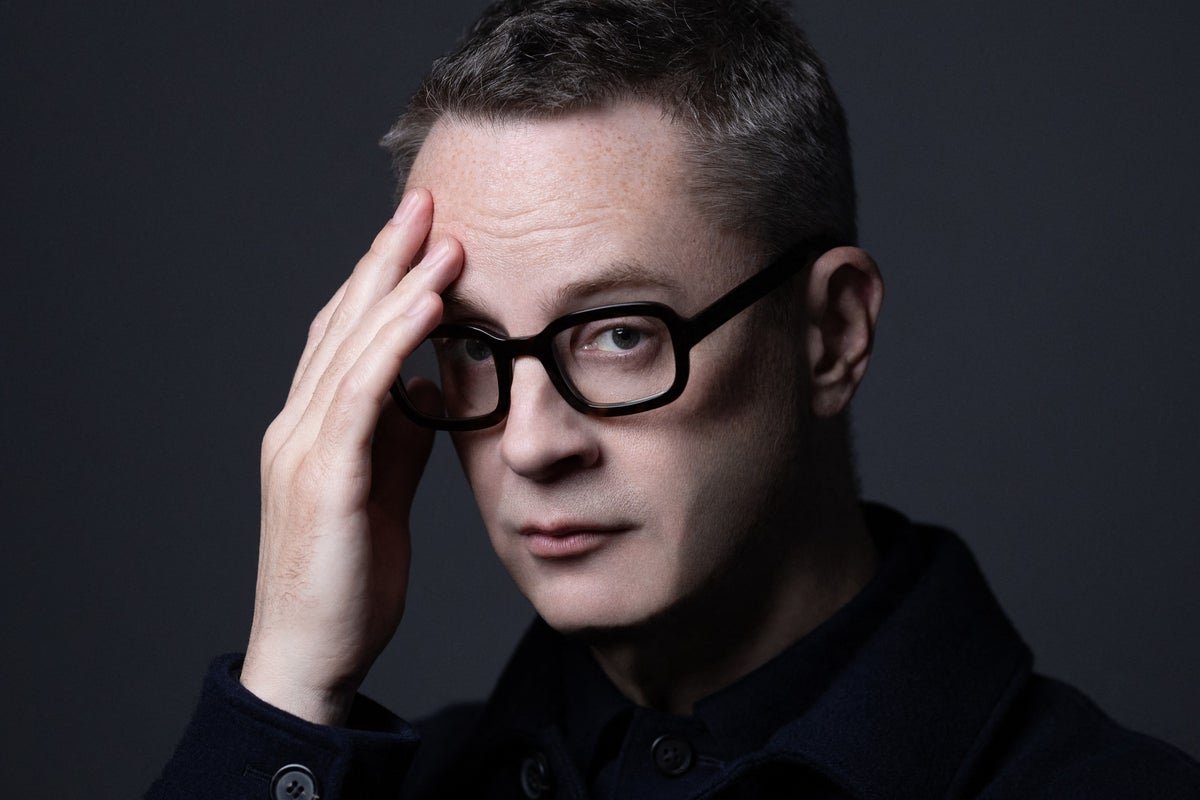
Nicolas Winding Refn: ‘Some people are very good at accepting restrictions. It’s just not really for me’ - (AFP/Getty)

If there is a shared trait among provocateurs, it is a hatred of agreement. Dissent is their lifeblood. Consensus, their scourge. If the Danish director Nicolas Winding Refn were to receive universal praise for any film of his, well, he would practically combust. “I would go into crisis,” says Refn, from across a large conference room table one afternoon in London. “I would stop making movies. It’s the same thing as everyone not liking it: what is interesting about that?”

At 55, Refn has done many things – pushing the envelope in on-screen necrophilia, for one – but something he has never done is make a film that is unanimously liked. He came close in 2011 with his Ryan Gosling vehicle Drive, for which he won Best Director at Cannes. But even that had its detractors. “Is this the most overrated crap ever?” read one online forum post at the time, which may well have been started by Refn himself, a director by trade, pot-stirrer by nature. His other films – Bronson (2008), a painterly portrait of the infamous prisoner starring Tom Hardy; Only God Forgives (2013), a twisted mother-and-son tale with Gosling and Kristen Scott Thomas; and The Neon Demon (2016), about a group of sadistic models led by Elle Fanning – were more divisive still.

His new film Her Private Hell is as baffling and beautiful as its predecessors. Sophie Thatcher is Elle, a young starlet who arrives in a futuristic, neon-lit city to shoot a sci-fi movie with her ex-best friend and perhaps one-time lover played by Havana Rose Liu, who’s now married to Elle’s absent filmmaker father. Elsewhere in another realm, it is post-World War II Tokyo and an American GI named Private K (Charles Melton) is hunting for his lost daughter, and a serial killer named Leatherman is on the loose.

Starry-eyed: Sophie Thatcher in ‘Her Private Hell’ (Mubi)

Refn’s first film in 10 years provoked walkouts at Cannes and allegations of incoherence but also genius. Business as usual, then – though one thing is different. Her Private Hell was made in the wake of a heart operation that saw Refn die for 25 minutes, and so carries the weight of that resurrection. “There was no light,” he says now of the time he spent on the other side. “Live your life now because I don’t believe there’s so much after it.”

Refn speaks in religious terms, an outlook that seems at odds with his ultra modern aesthetic, the chunky black spectacles and skinny suit. “Faith is part of our DNA whether we like it or not, and once you are faced with such harsh reality you become interested in its course,” he says. Someone certainly seemed to be pulling the cosmic strings when, after his recovery, he was invited to meet the new Pope with a group of other directors. “I was brought back to life by God and then he said, ‘Meet my representation at the Vatican,’” laughs Refn, who came away from the meeting with a “hello” message from the pontiff to his daughter.

Becoming a father is the second thing that changed him. He is, for example, more wary about violence – not that you can tell from his movies. Her Private Hell has a hacked off body part or two. It’s more of a cerebral concern, Refn says, than a practical one. Anyhow, recently he’s found that the thing more violent than a bloody fist is prolonged silence. “What used to be dangerous in entertainment – violence or sex, or something perverse in behaviour – is no longer that way because of the internet, because everything is accessible,” he says, using Charlie Kirk’s murder as an example. “Who hasn’t seen the footage? It was everywhere. So now, ironically what is considered offensive in entertainment is stillness and slowness.”

Refn grew up in a cinema family; his father is Anders Refn, a respected editor whose work includes Lars von Trier’s Breaking the Waves and Antichrist. He was raised, however, by his stepfather and cinematographer mother. Refn insists he would have become a director with or without the creative lineage. And for what it’s worth, he shares very little in common artistically or philosophically with Anders. It was moving to New York from Copenhagen as a child that made an impact on him more than anything. “Experiencing that cultural mecca, that last phase of swinging New York that created me,” he says.

His debut film, 1996’s Pusher, made when he was 24 years old, was born out of that experience. A nasty crime film about Copenhagen’s criminal underworld, it introduced the world to the charms of both Refn and a young Mads Mikkelsen, who he had cast in a supporting role. It’s realistic and ugly, punishing and horribly lit. Pusher is not what you expect from a Nicolas Winding Refn film. “With time, I realised that reality essentially has limitations and artistically I became interested in unreality because of the bottomless amount of potential,” he says now of his transition away from that outlook. “Realism has confines. Just because something is true doesn’t necessarily mean it’s interesting.”

Nicolas Winding Refn sits with Elle Fanning while filming ‘The Neon Demon’ (Amazon Studios)

The film was a hit (a word that Refn hates), and it made a star of this hot, young, up and coming filmmaker. But after the high comes the low, and around the corner was the lowest low of Refn’s career to date. “I rarely talk about it because it is my absolute, complete and utterly artistic and commercial failure,” he says of 2003’s Fear X. His second film starred John Turturro as a cop obsessed with finding his wife’s killer and was made at a time when Refn, by his own admission, was high on his own hype.

“It was all my own fault, which is a good thing,” he says. “I can’t blame anyone but myself.” Plus, he adds, “God was very kind in making me young so at least I had the strength and the arrogance to shake it off me.” If it had happened now, “would I be sitting here?” Refn finishes my sentence. “No. The older you get, the harder it is to accept failure.”

The financial ruin of Fear X, though, led directly to a second Pusher film and then a third, completing a trilogy that is, if not universally liked, then certainly well-respected. Not all his cash-strapped endeavours were so fruitful. He once (unsuccessfully) asked to have his name taken off an episode of ITV’s Marple when, brought on to finish an edition already half-directed by someone else, he was told he couldn’t reshoot the scenes that had involved the actor Tom Baker. “He was my favourite Doctor Who and I really wanted to meet him but they didn’t want to reshoot and so I said I’m not giving you my credit,” he grins.

I was trying to be accepted, trying to deliver what was desired, what the system would want and God gave me a heavy beating for that

There is a mischief to Refn, both in his work and his life. Take his relationship with fellow Danish auteur Lars von Trier. The pair have a long tradition of exchanging jibes in the press. All these years, I’ve wondered whether their feud is in earnest. Refn smiles knowingly. “Lars is as much of a showman as I am. He’s the king of showmen,” he says. “I admire him a lot obviously – and I wish him the best because he is very ill [in 2022, von Trier announced he’d been diagnosed with Parkinson’s disease], so that’s a shame. At the same time, our childish open battles are as much a theatrical trick for entertainment. It feeds an appetite for drama and if we can up it each time, till we reach 11, why not?” For what it’s worth, Refn would “go all in” on von Trier if he wasn’t so ill. “But I’m sure he’s a terrible junkie now,” he quips, powerless to resist.

Say what you want about Refn, but he has always done things his way. “All I’ve ever wanted was to be free,” he says. “All I’ve ever wanted was to be me and whatever that took, that is the path.” He sees the failure of Fear X as a result of going against that mindset. “I was trying to be accepted, trying to deliver what was desired, what the system would want and God gave me a heavy beating for that. He said, Don’t do that again. Be you. Don’t be anyone else and certainly don’t join the clubs because it ain’t worth it.”

Ryan Gosling and Refn on the set of ‘Drive’ (Shutterstock)

It’s why he turned down the chance to direct Spectre in 2016. Now, with new ownership and the departure of Daniel Craig, the future of Bond is once again wide open. Having aided the breakthroughs of Mads Mikkelsen and Tom Hardy, there are worse people to ask than Refn for an opinion on who should play 007 – the question of the decade – but today, he isn’t playing ball. “I would rather do my own version of [Bond],” he says. “At that level of financing, you have to accept the restrictions that come with that. Some people are very good at accepting restrictions. It’s just not really for me. I want to be free.”

‘Her Private Hell’ is in cinemas from 25 September

Sign up to read this article
Read news from 100's of titles, curated specifically for you.
Already a member? Sign in here
Related Stories
Top stories on inkl right now
Our Picks
Fourteen days free
Download the app
One app. One membership.
100+ trusted global sources.