
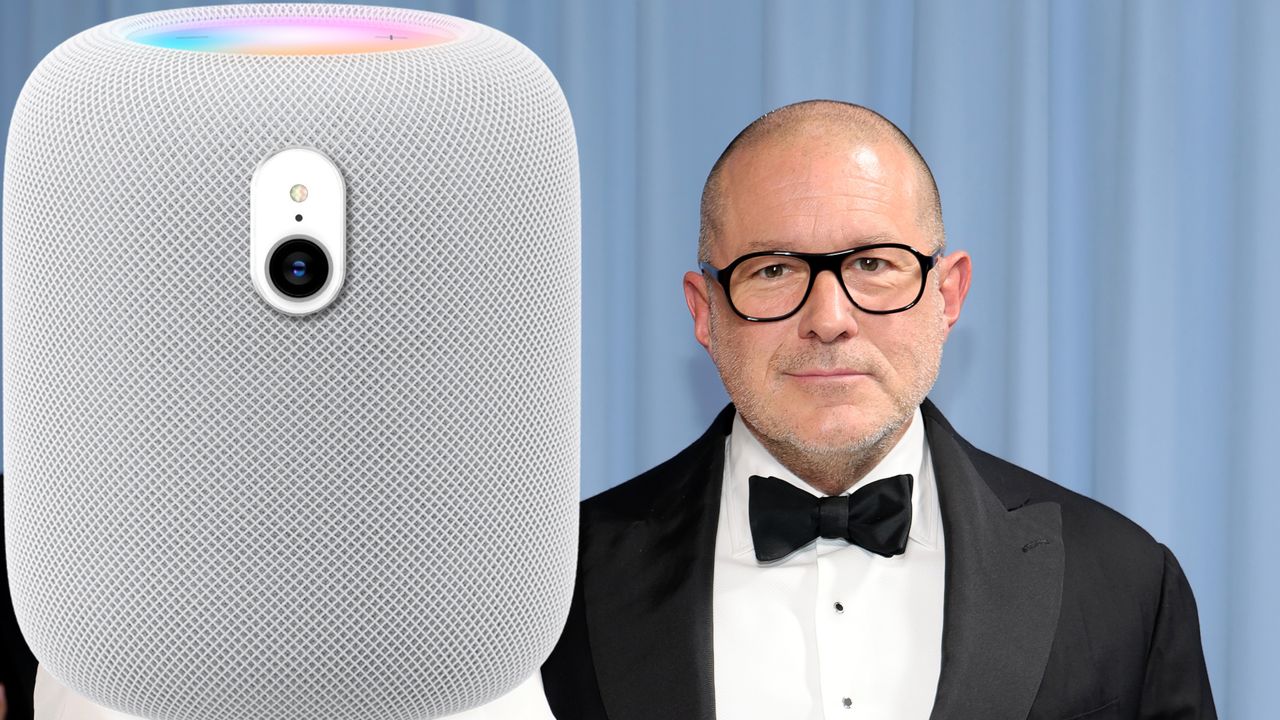
How much would you like it if you had an Amazon Echo, but with Chat GPT in it – and a camera looking out of it? According to several reports, it's time to start thinking about that because Jony Ive is helping OpenAI design and prototype just such a device...
"Cool" said my girlfriend – who, like me, has a purchase history which confirms a longtime enthusiasm for the design work of Jony Ive. How much she was listening to the other aspects of my description less certain – but not everyone is so scared of AI.

According to a paywalled report in The Information, the device being worked on will have a camera as well as the customary microphone to recognise things like “items on a nearby table or conversations people are having in the vicinity."
This will also grant it facial recognition so, it has been suggested, people will be able to purchase things simply by asking and being recognised.
This is an experience many phone owners will be a little used to already with FaceID and similar security systems, but may take it a step futher.
Open AI acquired Jony Ive's hardware company last year for the not inconsiderable $6.5 billion, and the smart speaker – with and anticpated price tag of $200 - $300 – is thought to be only one of several form factors for the AI that is being investigated.
Another is the clothing-worn pendant or badge-like device – perhaps in the vein of a Star Trek communicator – which we've recently also heard speculation about Apple considering as a potential new home for Siri.
The sense of this is uncertain, though, with Humane's AI Pin having not only failed to make a breakthrough, but having taken the company down with it. Humane was also started by former Apple employees Imran Chaudhri and Bethany Bongiorno so the heritage wasn't enough there!

Given the world's less-than-enthusiastic adoption of this concept before, it seems understandable that concepts closer to established technologies like smart speakers seem to be garnering more attention right now.
Photographers have already accepted that phoography is merely one of the uses of cameras, but this could be another step to making it a mere niche function of a key computing input device.
We'll have to ask ourselves, what will most camera component designers be concentrating on then?