When I was an undergraduate student at The George Washington University in the early 2000s, I used to take a couple of textbooks and trek down 23rd Street — past the Watergate and the Kennedy Center in the distance on my right, and the State Department complex on my left — to the Lincoln Memorial. I had a study spot I considered my own that offered a respite from university life, as well as a reminder of the weight of history surrounding me in the city I was learning to call home. Reaching the memorial’s terrace after climbing the small mountain of steps, I would bypass the temple housing Daniel Chester French’s famous statue of the 16th president and walk along the colonnade until I reached the quiet rear, where most Washington tourists never think to venture. There, I’d sling my backpack to the ground and, reclining into one of the large grooves in the monument’s columns, I’d read and study for hours, with the Potomac River and Memorial Bridge as my personal vista. In the distance, across the river in Virginia, was Arlington National Cemetery, and when the gloaming fell, I could see the flicker of the eternal flame marking the graves of John and Jacqueline Kennedy, with Arlington House illuminated by floodlights on the slope above.
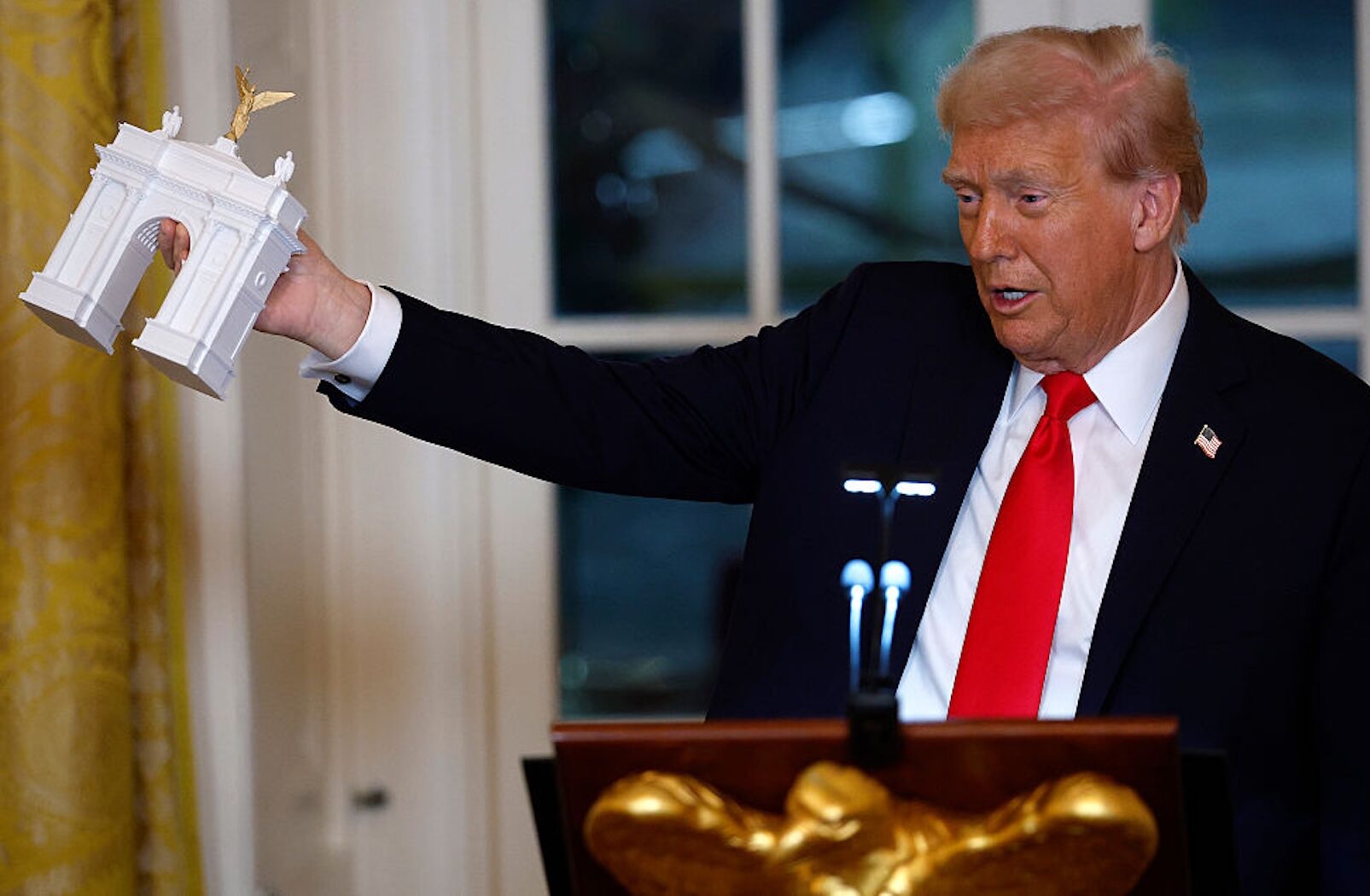
Now, each time I read about or see plans for the president’s proposed triumphal arch, which would stand in a traffic circle that marks the end of the bridge and the beginning of the cemetery’s formal entrance, I think of that view and how it could soon be no more. Plans for the arch were preliminarily approved in mid-April by Trump devotees who sit on the Commission of Fine Arts. The graves of America’s fallen soldiers will be obstructed, the eternal flame blocked — and from the cemetery, the majestic view of the Lincoln Memorial obscured — by a 250-feet monument. To Donald Trump.