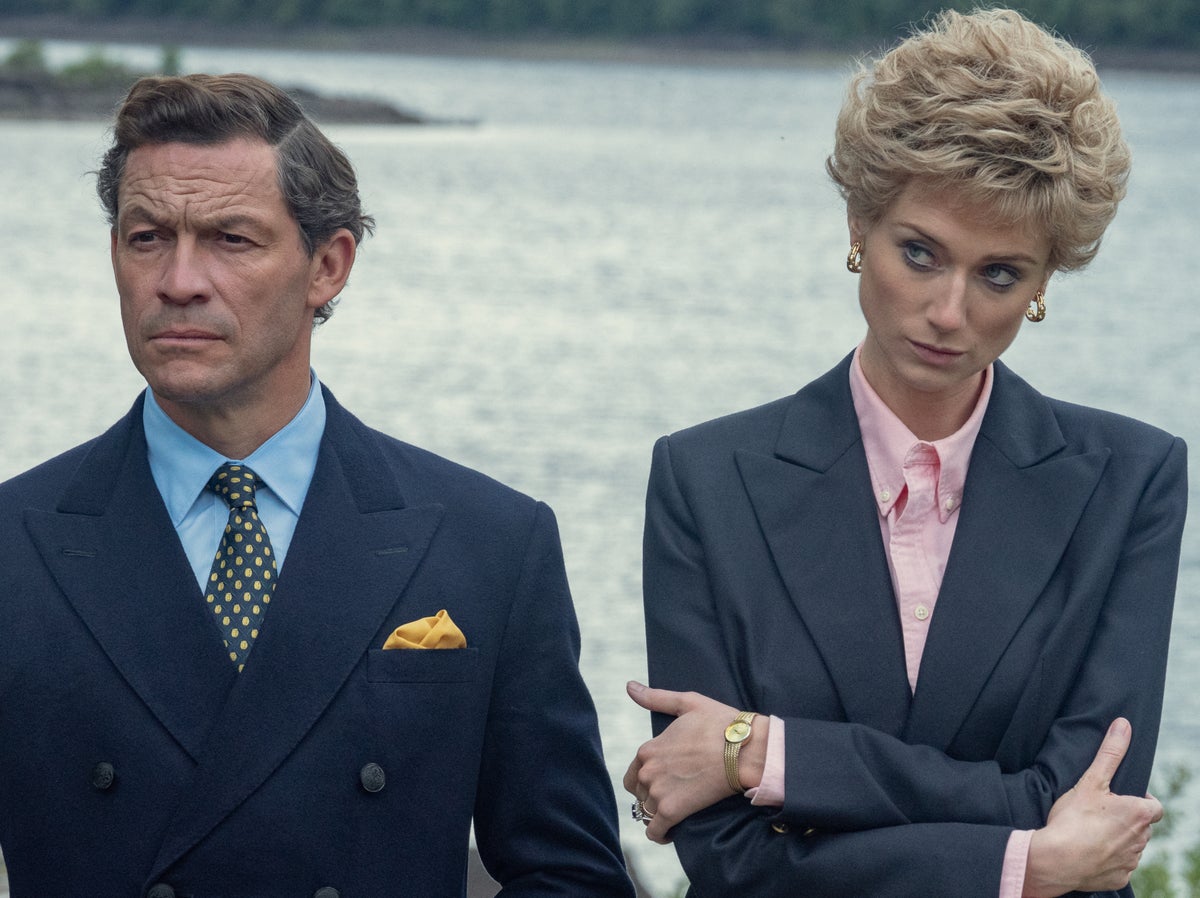
Is it possible to square loving The Crown with ambivalence about the “crown”? This has always been the fine line that Netflix’s behemoth has straddled. A fussy, at times unlikeable, protagonist, carrying the flag for institutions that, at the most charitable, represent hereditary privilege, and, at the less forgiving end of the spectrum, the atrocities of the British Empire. As mitigation, the show’s creator Peter Morgan has turned the central figure, Elizabeth II, into a prism through which to view the 20th century. From the twilight of Empire through the Cold War, by way of crises in Suez and Falklands, Aberfan and the Troubles. A noble solution, until, that is, you run out of history.
And so we find ourselves now, with the show’s fifth outing, firmly in the recent memory. John Major is prime minister (played by Jonny Lee Miller, who makes Major look like he could kick the s*** out of you). Prince Charles (Dominic West) is a jug-eared familiar, and Anne (Claudia Harrison) the animate bouffant we all know. The Queen, now played by Imelda Staunton, looks like the Queen from the coins of my childhood. “The clarity of that permanence felt so reassuring,” Philip (Jonathan Pryce) says, of his marriage. Well, if The Crown has been about exploring the backwaters of the Queen’s personal history we have finally arrived at that idea of permanence. Her enduring legacy: mother of the nation.