Get all your news in one place.
100’s of premium titles.
One app.
Start reading
International Business Times

The City That Built Wall Street Faces Its Most Radical Shift as a Socialist Mayor Takes Charge

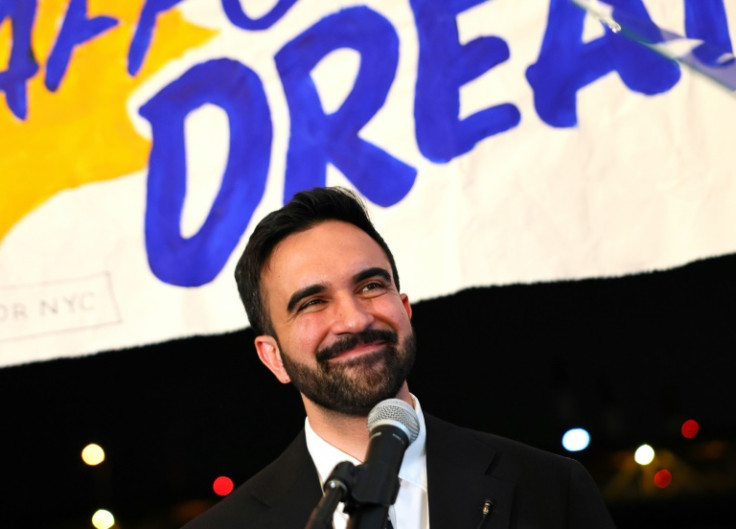
Zohran Mamdani

How did a 34-year-old democratic socialist become the mayor of the city that built Wall Street? New York, the global hub of capitalism, just handed the keys to City Hall to Zohran Mamdani, a young politician whose platform promises to reshape the most powerful financial city on Earth. It's an extraordinary experiment. Can socialism coexist within the beating heart of global finance?

I have lived and worked for over three decades in the world of finance and capital markets in New York and have seen cycles come and go, from the near-collapse of the early 1990s to the Great Financial Crisis, and the COVID shock that emptied Manhattan's streets. Yet this moment feels different. Mamdani's election is a symptom of a deeper, global frustration.
New Yorkers are angry, and many are desperate. The affordability crisis has reached a breaking point. Renters are spending half their income on housing, grocery bills have soared, and young professionals, burdened with student debt, are living in overcrowded small apartments. Mamdani tapped into that pain with political precision. He promised relief: rent freezes, free public transit, universal childcare, a $30 minimum wage, and a more humane approach to policing. His message struck a nerve that crossed boroughs and generations.

But the math behind those promises is far less romantic. Mamdani's central fiscal plan to "tax the rich" plays well at rallies, but the numbers tell a different story. In New York, the top 1% of earners contribute nearly half of all personal income tax revenue. Push that group too far, and they'll take their companies, their investments, and their employees elsewhere. Florida and Texas are already rolling out the red carpet for high earners leaving high-tax states. Once that capital leaves, it's almost impossible to bring it back.

Municipal budgets are not abstract. They pay teachers, firefighters, subway repairs, and hospitals. Dramatic tax hikes or policies that disincentivize private investment risk slower hiring, lower property values, deferred projects, and fewer philanthropic dollars. Some insist that bold redistribution and aggressive reforms are both morally urgent and politically feasible. Others argue that limitless taxes will trigger a capital flight away from New York. Both positions have merit in theory, and both fail if they don't consider the broader picture. The question is how to pay for it without hollowing out the city's revenue base.

New York has been here before: battered, bruised, and reborn. In the mid-1970s, the city teetered on the edge of bankruptcy, and only through wrenching compromises between public institutions and private markets did it survive. Those years taught the city a hard lesson. Institutions and markets matter, and once capital flees, recovery is long and painful. Municipal finances are fragile, but the resilience of citizens and infrastructure is remarkable when properly supported.

If bold experiments are pursued without credible fiscal planning, the city faces immediate risks: rising crime, falling tourism, businesses relocating, and a weakened tax base that could take decades to rebuild. Think of New York as a complex machine: remove the lubrication of capital and confidence, and the gears seize. Conversely, when private capital and public purpose align, the city hums. Jobs are created, rents stabilize, and civic institutions thrive.

The winning playbook is pragmatic partnership: target aid to the truly needy, invest in housing supply and affordability, and design revenue measures that broaden rather than chase away the base. Reforms must include measurable outcomes and replacement investments, not mere budget cuts or new taxes.

If the mayor successfully builds coalitions across business and labor, and presents a clear fiscal plan balancing compassion with competitiveness, New York will adapt once more. I am betting on resilience. New Yorkers are stubbornly durable, but resilience alone will not save us if the city's economic engine is dismantled. The real test is creating an environment where idealism can coexist with capitalism. For this experiment to work, socialism must find a way to work with capitalism to create a better New York, for all New Yorkers.

About the Author

Edward L. Shugrue III has lived in New York City for over three decades and has raised his family here. He has been an institutional investor throughout his career with a focus on fixed income and commercial real estate. Throughout this time, he has experienced the ups and downs of the city and has seen the impact of six different mayors.

Sign up to read this article
Read news from 100’s of titles, curated specifically for you.
Already a member? Sign in here
Related Stories
Top stories on inkl right now
One subscription that gives you access to news from hundreds of sites
Already a member? Sign in here
Our Picks
Fourteen days free
Download the app
One app. One membership.
100+ trusted global sources.