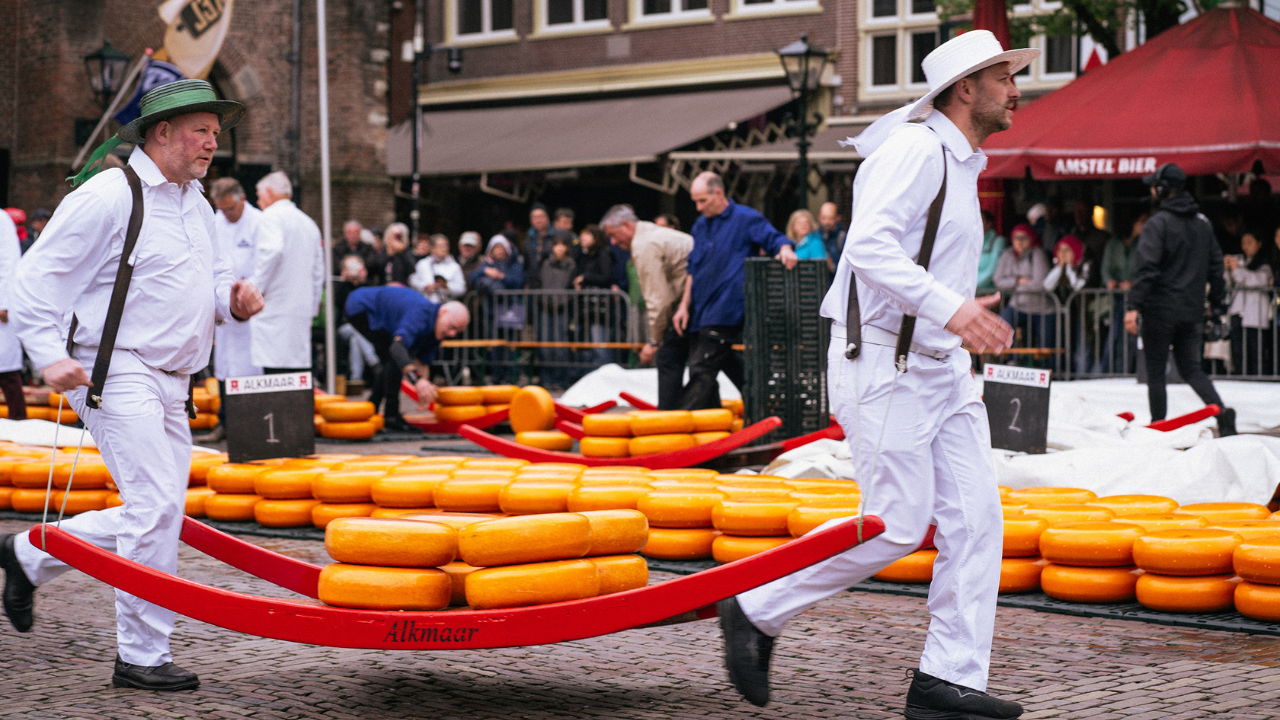
On summer Fridays in the Dutch city of Alkmaar, the air fills with the smell of aged dairy and the rhythmic shuffle of wooden stretchers across the stone square. At precisely 10 a.m., a bell rings over the historic Waagplein and the spectacle begins. Dozens of men dressed in spotless white uniforms and straw hats break into a swift, synchronised trot, balancing heavy stretchers stacked with bright yellow wheels of cheese. It appears theatrical, almost surreal. Yet what unfolds each week is not a show created for tourists but the continuation of a trading ritual that has survived for centuries.
For Alkmaar, cheese is more than food. It is identity and history. The city’s connection to the dairy trade dates back to 1365, when Alkmaar first received the right to weigh cheese in the town. Over time, farmers, merchants and guild members turned the weekly market into one of the Netherlands’ most recognisable traditions. Every Friday from April to September the market recreates the old rituals of bargaining, weighing and transporting cheese that shaped the city for more than six centuries.