Get all your news in one place.
100’s of premium titles.
One app.
Start reading
AAP
AAP
Technology
Stephanie Gardiner

The century-long battle against weeds heads to space

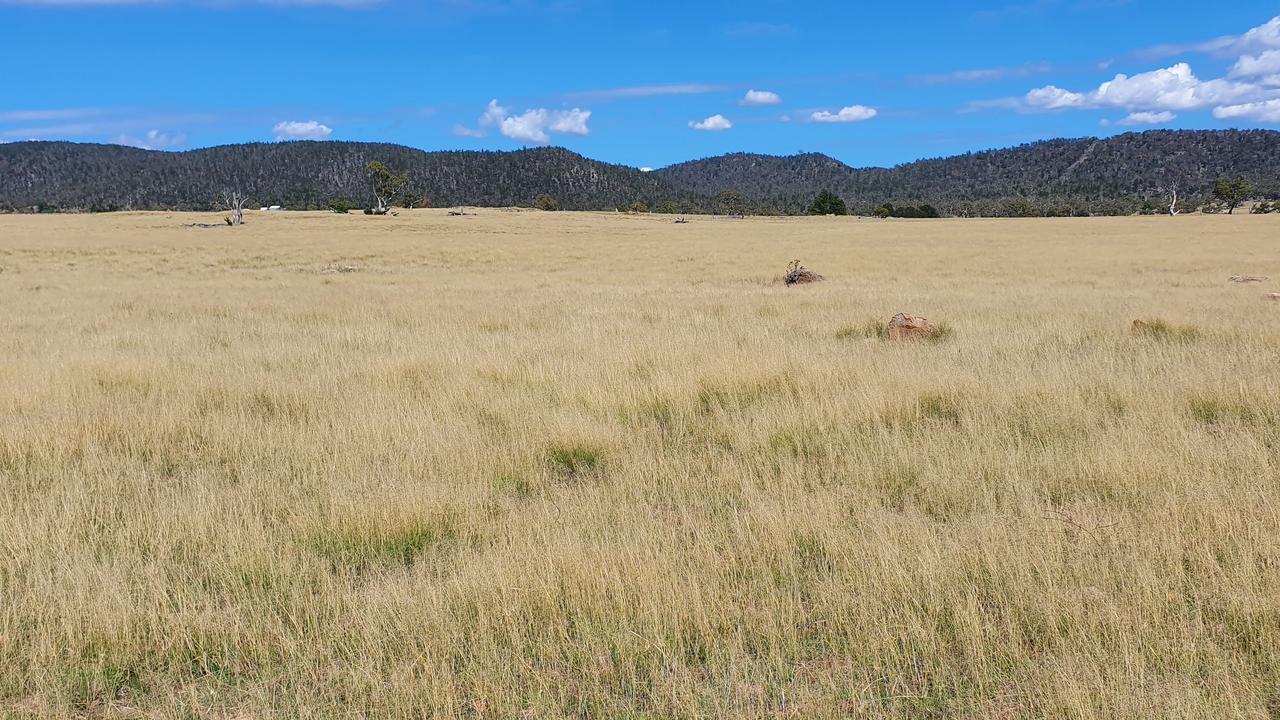
Farmers in parts of NSW have been battling the African lovegrass weed for more than a century. (Supplied/AAP PHOTOS)

On sweeping and sometimes snowy plains in prime grazing country, an environmental threat lurks in the grass.

Invasive weed African lovegrass is a "beast" farmers in the NSW Snowy Monaro region have been battling for more than a century, the council's biosecurity co-ordinator Brett Jones says.

"Lovegrass really takes over. Nothing competes with it," Mr Jones told AAP.

"People spend their lives just trying to keep on top of this stuff ... it overwhelms people."

a researcher working in paddock infested with African lovegrass
Accidentally introduced in Australia, lovegrass can quickly invade and choke native pastures. (Supplied/AAP PHOTOS)

The weed, which was accidentally introduced in Australia before 1900, challenges farmers worldwide because it has a quick seeding cycle, flourishes in both wet and dry conditions and spreads rapidly.

It can quickly invade and choke native pastures, provides limited nutrition for cattle and sheep and becomes a serious bushfire risk when it dries out.

Part of the battle is understanding the scale of the weed's invasion because "lovegrass is a grass hiding in grass", Mr Jones said.

So researchers have begun trialling the use of satellite imagery and artificial intelligence to monitor the spread of both lovegrass and another noxious weed, bitou bush.

One algorithm detected African lovegrass with 89.8 per cent accuracy and 86.1 per cent for bitou bush, a yellow-flowering coastal weed, according to the study published in the science journal Weed Research.

invasive weed bitou bush.
Satellite imagery is helping detect an invasive yellow-flowering coastal weed known as bitou bush. (Supplied/AAP PHOTOS)

Charles Darwin University spatial analyst and researcher Glen Shennan said satellites provided a greater view of the weed invasion than drones, taking photographs from 700km away.

The SkySat satellites took photos of the regions every six days and could provide a decade's worth of imagery to illustrate how the landscape had changed.

"It's an enormous amount of money that lovegrass costs Australia each year," Mr Shennan said.

"By being able to direct control mitigation efforts and, in particular, the early intervention efforts, you could really hope to claw back a significant fraction of that."

Managing all invasive plants costs Australia more than $4 billion a year, as lovegrass also develops resistance to herbicides.

Mr Shennan said while the research was in its early days, the technology held promise.

a paddock infested with the invasive weed African Lovegrass
Biosecurity co-ordinator Brett Jones says lovegrass is "getting out of control and taking over". (Supplied/AAP PHOTOS)

"Lovegrass is a particularly tenacious weed, so you have to manage your expectations a little bit," he said

"But there's a lot of benefit that could be derived economically from this work."

Mr Jones said all research into managing lovegrass was welcome but there appeared to be no silver bullet in the pipeline.

Lovegrass was best controlled on arable land where it can be successfully overrun by crops but management continued to hit farmers' hip pockets.

"What we've done for the last 50 years hasn't been working," Mr Jones said.

"It's just getting out of control and taking over the place."

Sign up to read this article
Read news from 100’s of titles, curated specifically for you.
Already a member? Sign in here
Related Stories
Top stories on inkl right now
Our Picks
Fourteen days free
Download the app
One app. One membership.
100+ trusted global sources.