Finding the best places to sell design online is no mean feat – with so many options out there, it can be hard to choose. Thankfully, whether you want to sell prints, t-shirts, books, art pieces or more, there's likely a perfect online platform to suit your needs.
Sadly, nowadays, with competition being so vast, it's typically not as simple as setting up an Etsy page and waiting for customers to flood in. It's also worth noting that while there are policies to help prevent it, plagiarism can still be rampant, even on the best design marketplaces.
There are plenty of places to sell your art online, but it can be daunting if you're worried about art theft or simply not willing to sacrifice a cut of your earnings to your platform of choice. Alternatively, you can always create your own website with the help of our guide to the best website builders for small businesses.
The best places to sell design online
01. Prodigi
- Pros: Quality prints, set your own prices
- Cons: Not suitable for handmade artwork
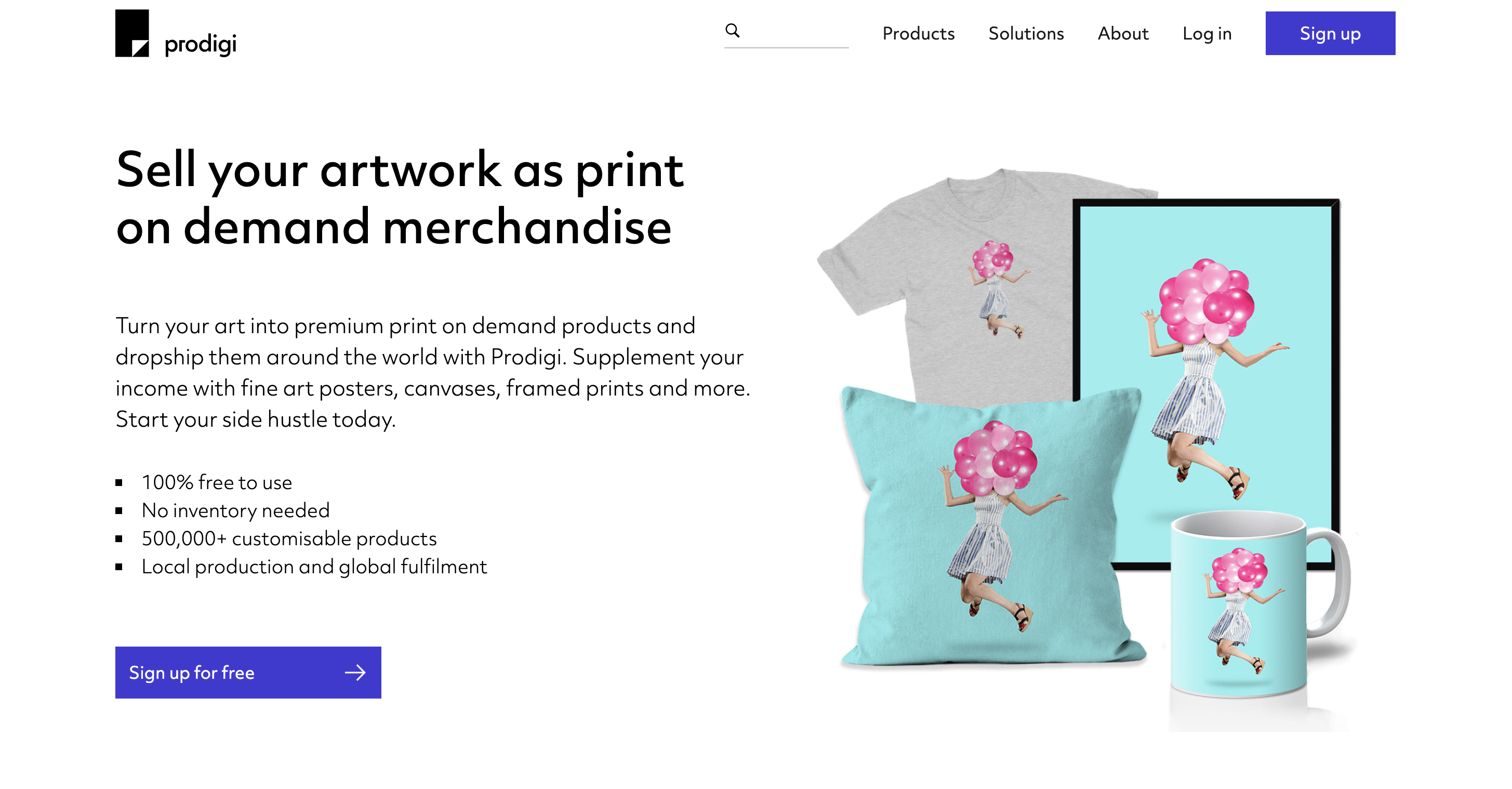
Print on demand service Prodigi is the perfect option for creatives that want flexibility and control when selling their art. With a range of prints, stickers and apparel options, Prodigi allows you to sell without the need for your own inventory. You can pick your products, set your own prices and best of all, it's free to use.
Prodigi boasts that it's the best online marketplace for print on demand fine art and illustration, focussing on quality products. As a Fine Art Trade Guild printer, it's focussed on the fine details, including 100% accurate colour reproduction on every single print. Discover more on the Prodigi blog
02. Threadless/Artist Shops
- Pros: High exposure if your design is chosen, own store with Artist Shops
- Cons: Competitive selection for Threadless; fees for Artist Shops
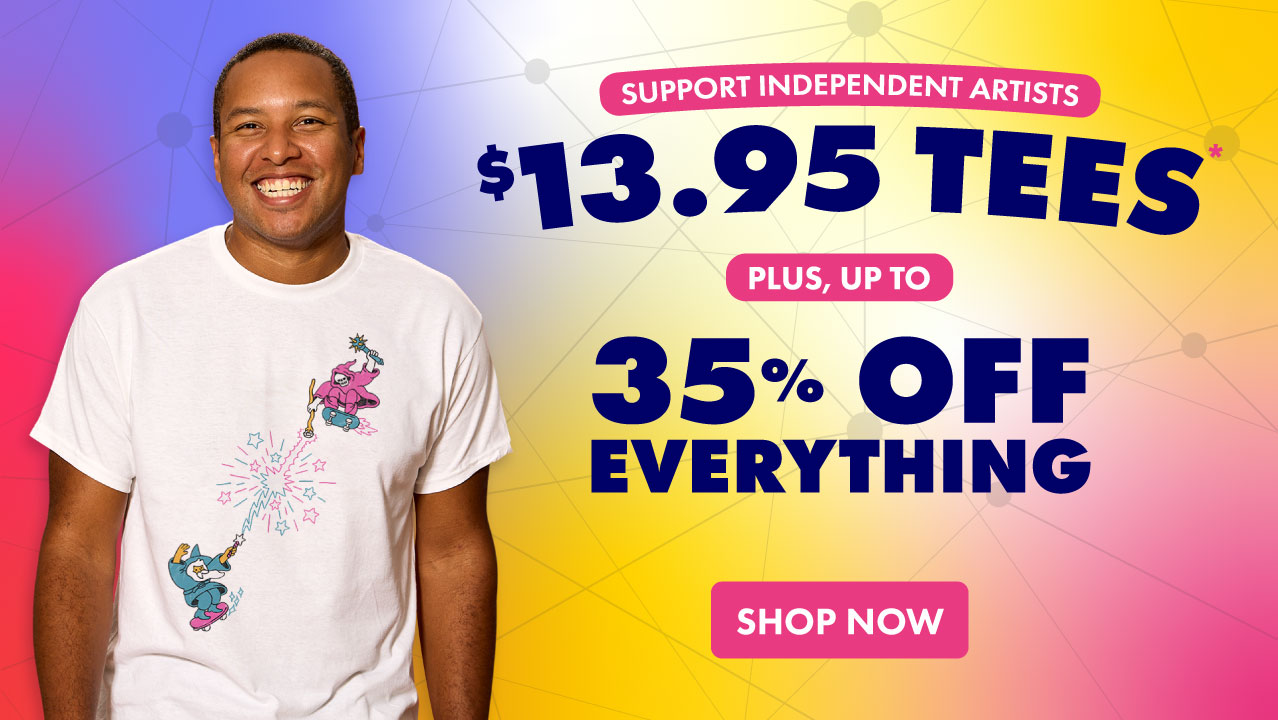
Threadless is a curated marketplace for clothing and home decor. It's best known for its T-shirts that sport cool, original illustrations. It operates as a curated marketplace, meaning it select the designs that feature on its platform. This means you can get significant exposure if your work is chosen.
If it's not, though, Threadless has a sub-brand called Artist Shops. This provides artists with a customisable storefront, plus the benefits of a hosting and checkout experience through Threadless. You can choose various products to sell your art on, and there's no minimum order size.
You can also share inspiration and get inspired with Threadless Community – a hub for artists and art lovers alike to connect and explore new ideas. With frequent community-voted design challenges to participate in, it's a great way to get your work noticed among the crowd.
03. Creative Market
- Pros: Sell range of assets; set your own prices
- Cons: High level of competition from others
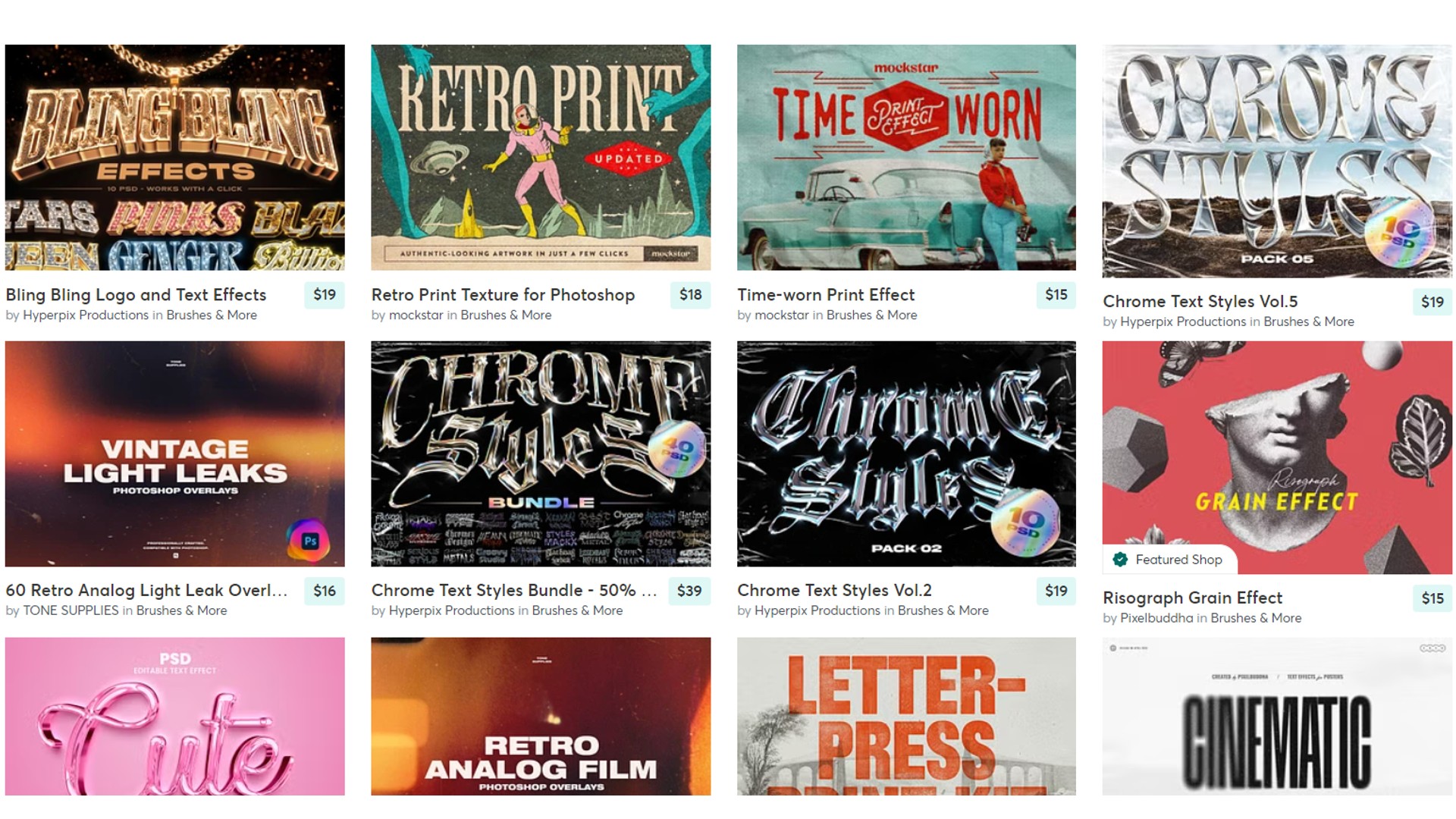
Founded in 2012, Creative Market is an online marketplace for digital assets, such as graphics, fonts, photos and 3D models. There's no exclusivity lock-in, you set your own prices, and you keep 70 per cent of each sale. In August creativemarket.com received 2.68 million visits, with the average session duration just under eight minutes. That sounds like a lot, but bear in mind there are over 4 million digital assets on the site for them to choose from.
Creative Market offers some great tools for sellers, including elite communication with your customers and a helpful support team to handle any queries. You can also track your stats to monitor which products are selling the best, allowing you to get the most out of your online marketplace.
04. TurboSquid
- Pros: Easy to set up and use; low fees compared to some competitors
- Cons: Limited control over product pricing and profit margins
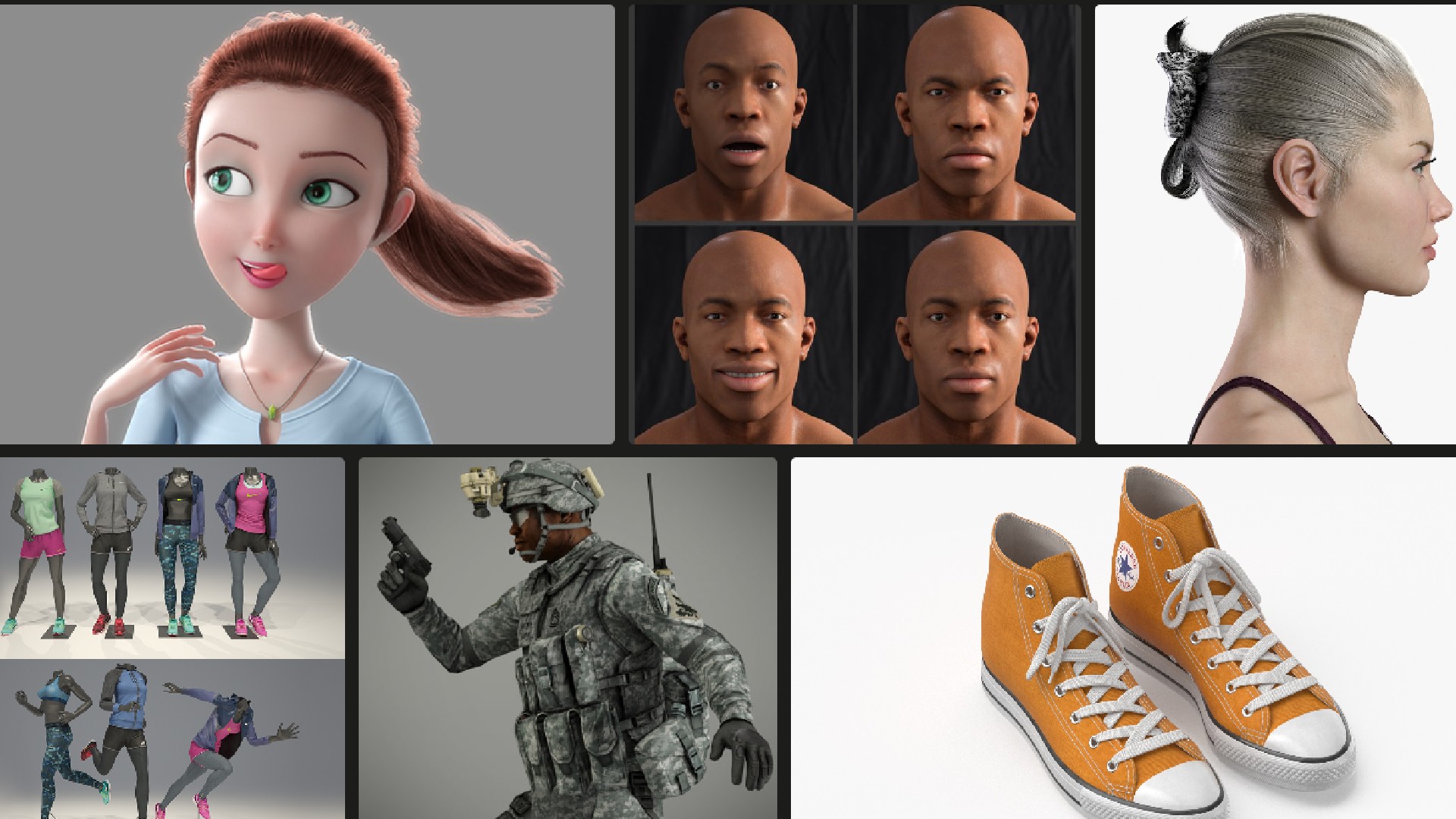
Owned by Shutterstock, TurboSquid is among the best-known places to sell 3D assets. Since 2000, the platform has been selling 3D models for a range of different industries and mediums, including filmmaking, video games and architecture.
With stock models becoming a more prevalent way of creating 3D content, there's a growing market for well-made assets – and you can get involved by selling here.
05. Design Cuts
- Pros: Huge audience of potential buyers; relatively low listing fees
- Cons: Very high competition; quality control issues
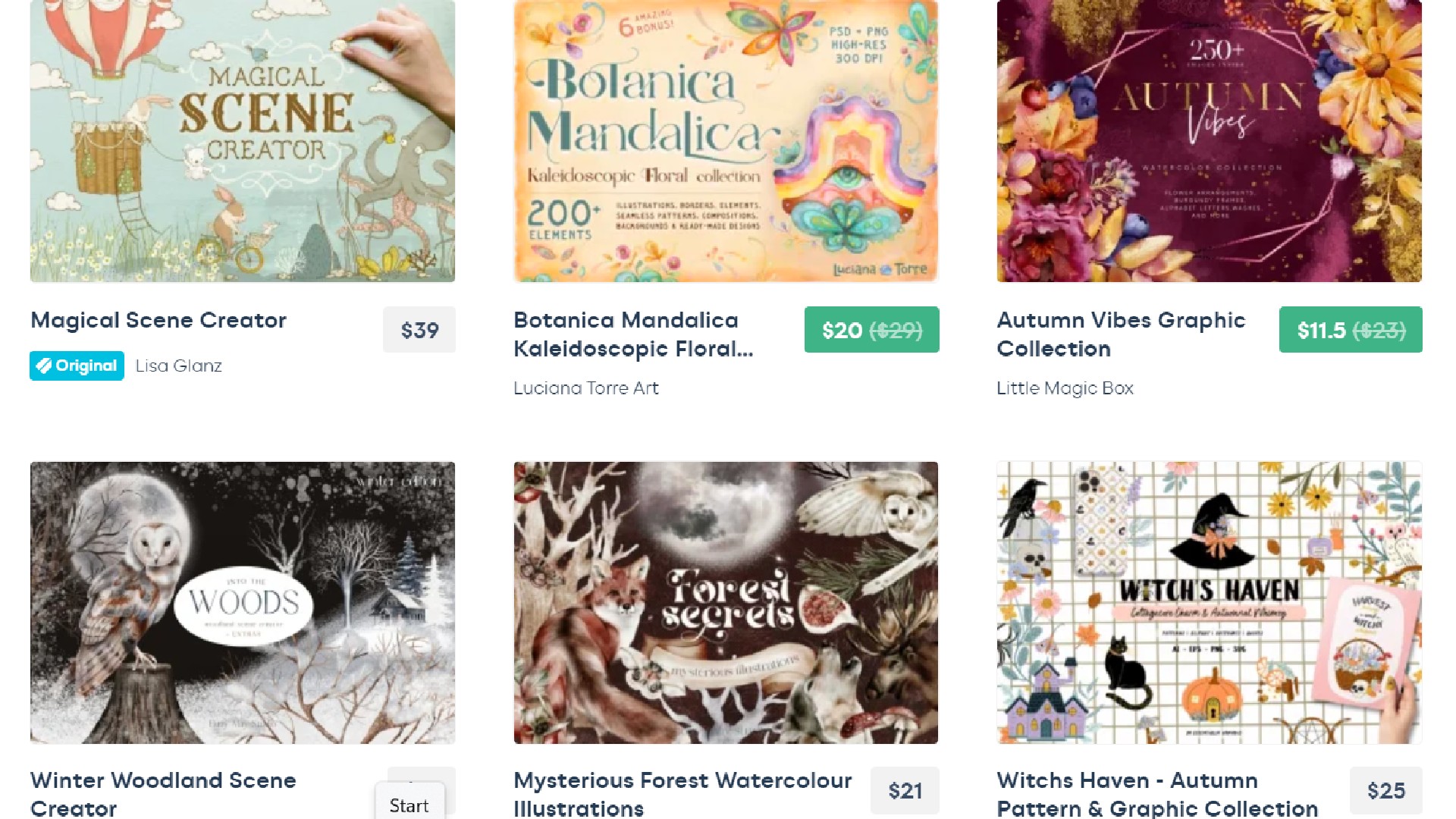
Design Cuts is a community website, founded in 2013, that offers high-quality assets to designers at affordable prices. Patterns, brushes, backgrounds, fonts, graphics and other slick assets abound. This is a curated platform, though, so it isn't open to all: find out how to get featured on this FAQ page.
06. Art Web
- Pros: No commission; free version
- Cons: Limited to artwork
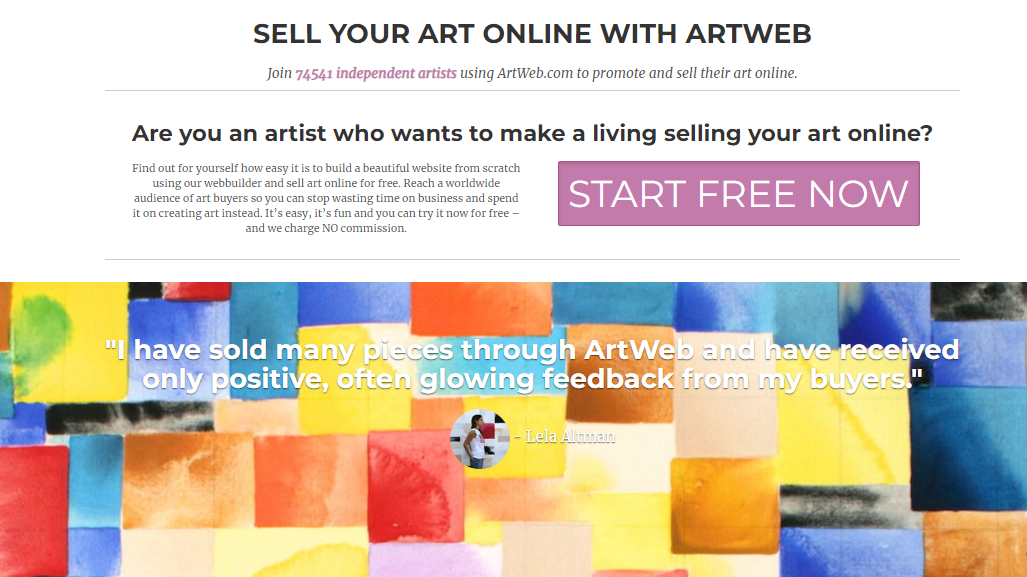
Art Web is an e-commerce site that specialises in selling artwork online to buyers around the world. A community of artists and creatives use the platform to network and share their work, as well as to make money from it. The service works on a no-commission basis. There's a free plan that gives you an online gallery with up to 15 images, while a paid-for version grants you more images and a professional-looking website.
07. Society 6
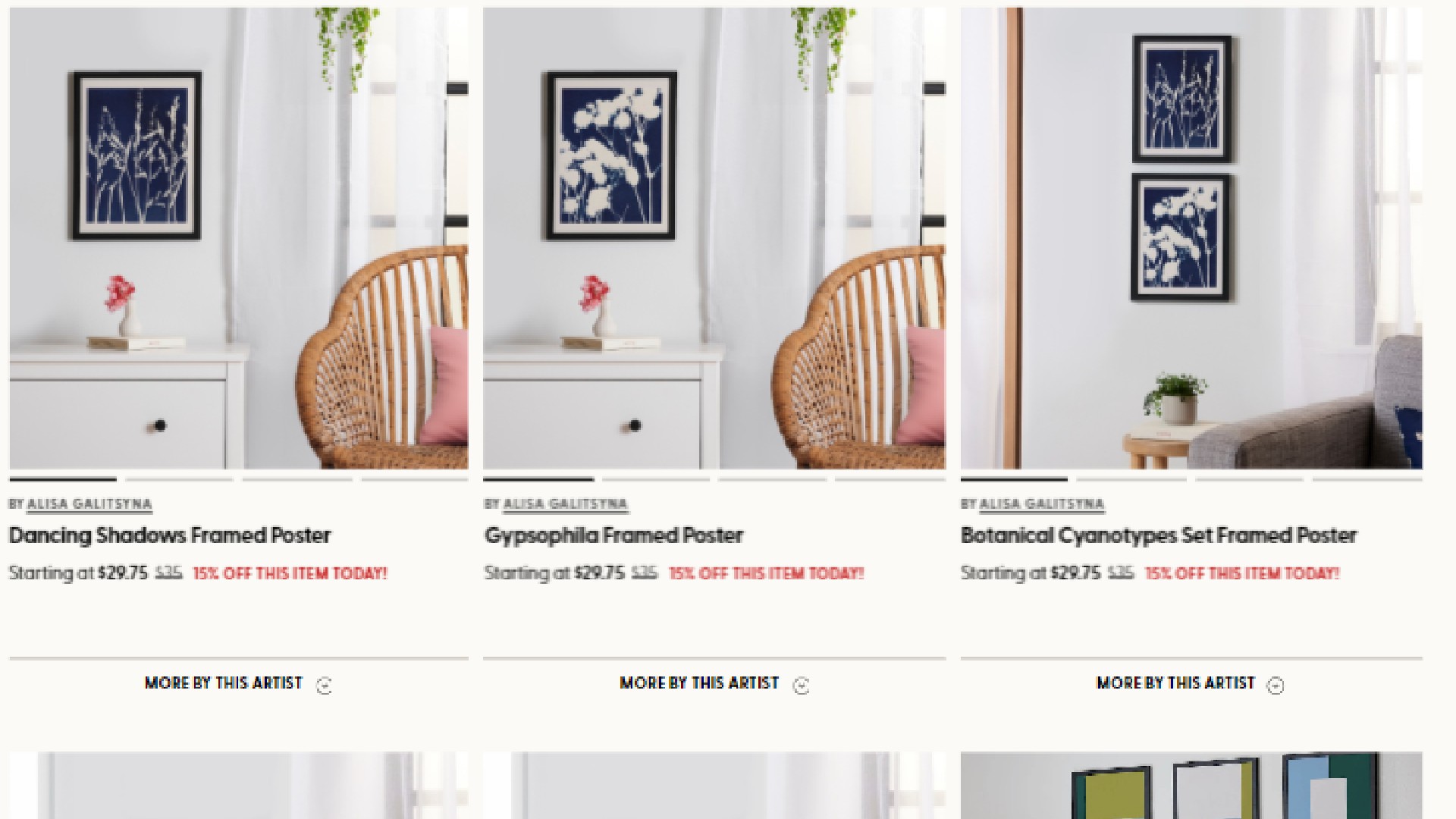
- Pros: Variety of products to sell designs on; only pay commission on sales
- Cons: Variable commission rates based on product and royalty percentage
Society 6 is an online platform where you can sell design work on various products. Focusing on "affordable art prints, iPhone cases and T-shirts", it's free to set up, and the products are produced, shipped, and managed for you. The site takes only a small percentage of what you sell, and plans range from free to $12.99 a month.
08. Etsy
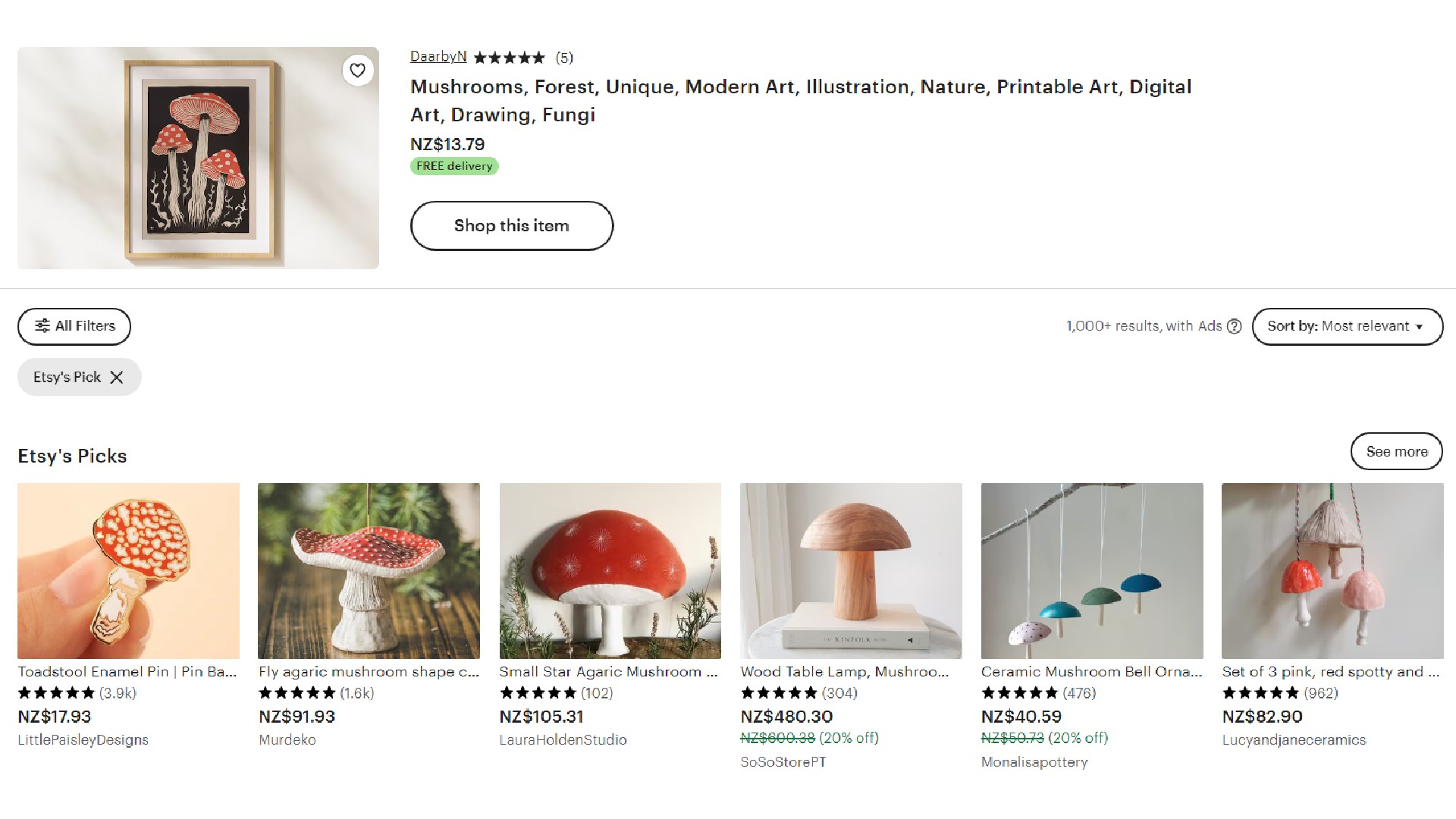
- Pros: Enormous market; well-known brand
- Cons: Enormous competiton, poor quality control
Etsy is basically the world's biggest craft fair; a chance to sell handmade goods, vintage items and art and craft products to millions of visitors. Its hugely popularity, though, comes with downsides; namely that's there's stiff competition, and quality control is almost non-existent. Listing an item for four months (or until it sells) costs $0.20 (around 13p), and commission fees sit at 5 per cent (plus tax) on each purchase.
09. Zazzle
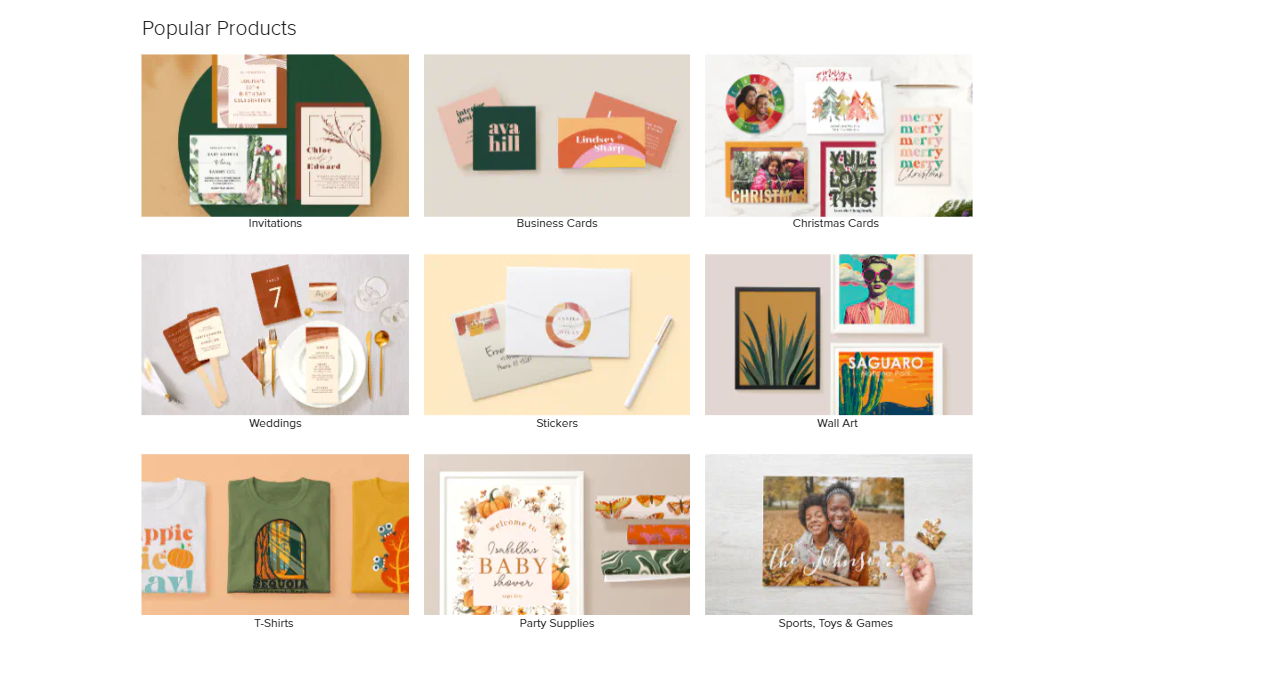
- Pros: Global marketplace; no minimum order quantity
- Cons: Variable commission rates
Zazzle lets you sell your designs on hundreds of products, including T-shirts, stamps, posters, mugs, business cards, skateboards, calendars, tote bags, hats and more. It's free to use and easy to create an online store. Zazzle only takes money if you sell; the exact commission rate varies based on the product type and your royalty percentage; the standard rate is 5 per cent.
10. INPRNT
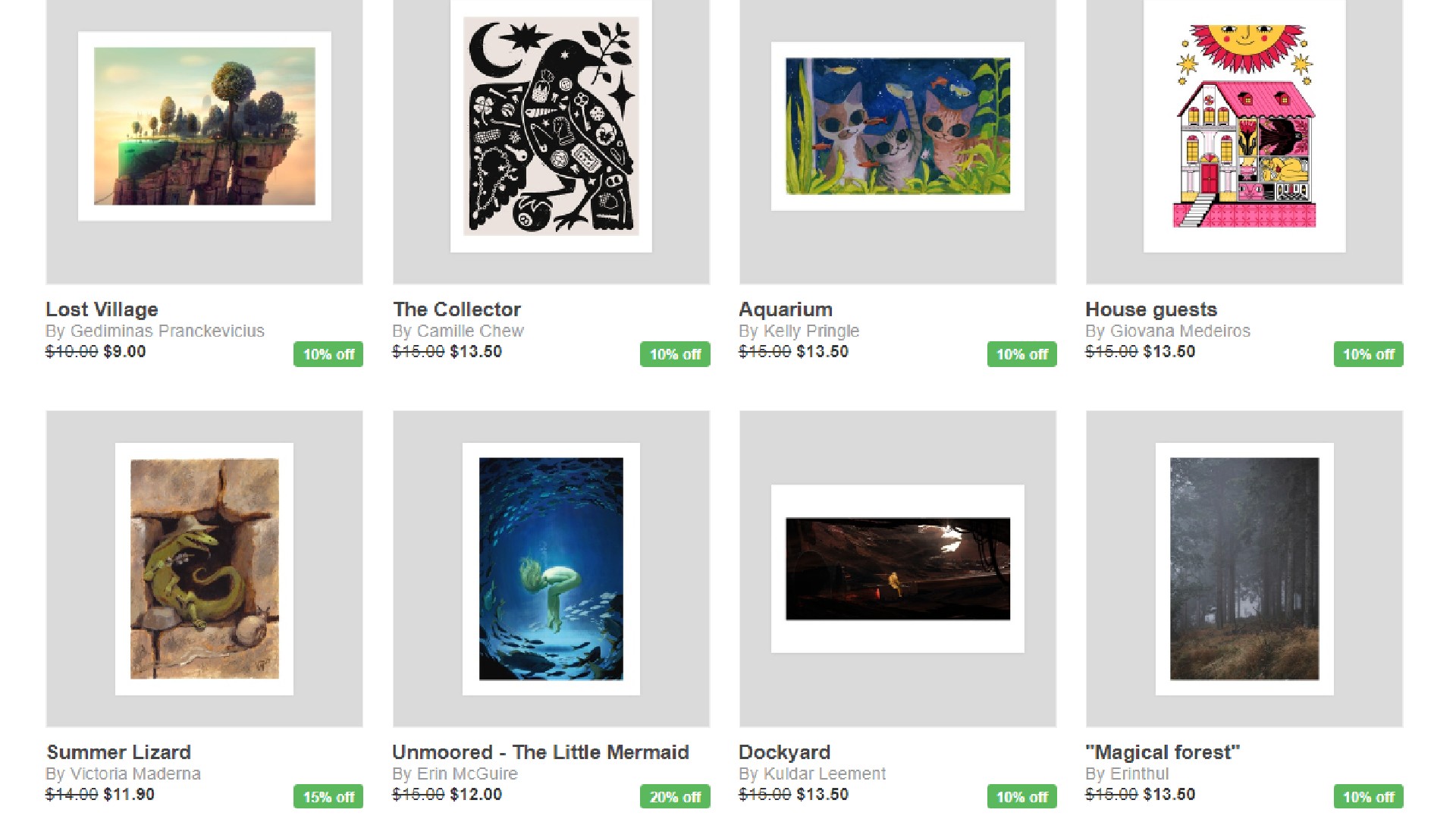
- Pros: Curated gallery; potential exposure
- Cons: Submission process and voting system is limiting
INPRNT is a moderated gallery with a submission process. First, you'll need to sign up for an INPRNT account and submit three of your best pieces for review. Your submission will then be voted on by artists who are already on the site. Once your submission has been approved, your new member's account is automatically upgraded to an artist account, and you can upload work to your gallery for sale directly through the site.
11. Design By Humans
- Pros: Large marketplace; nice community
- Cons: Lots of competiton
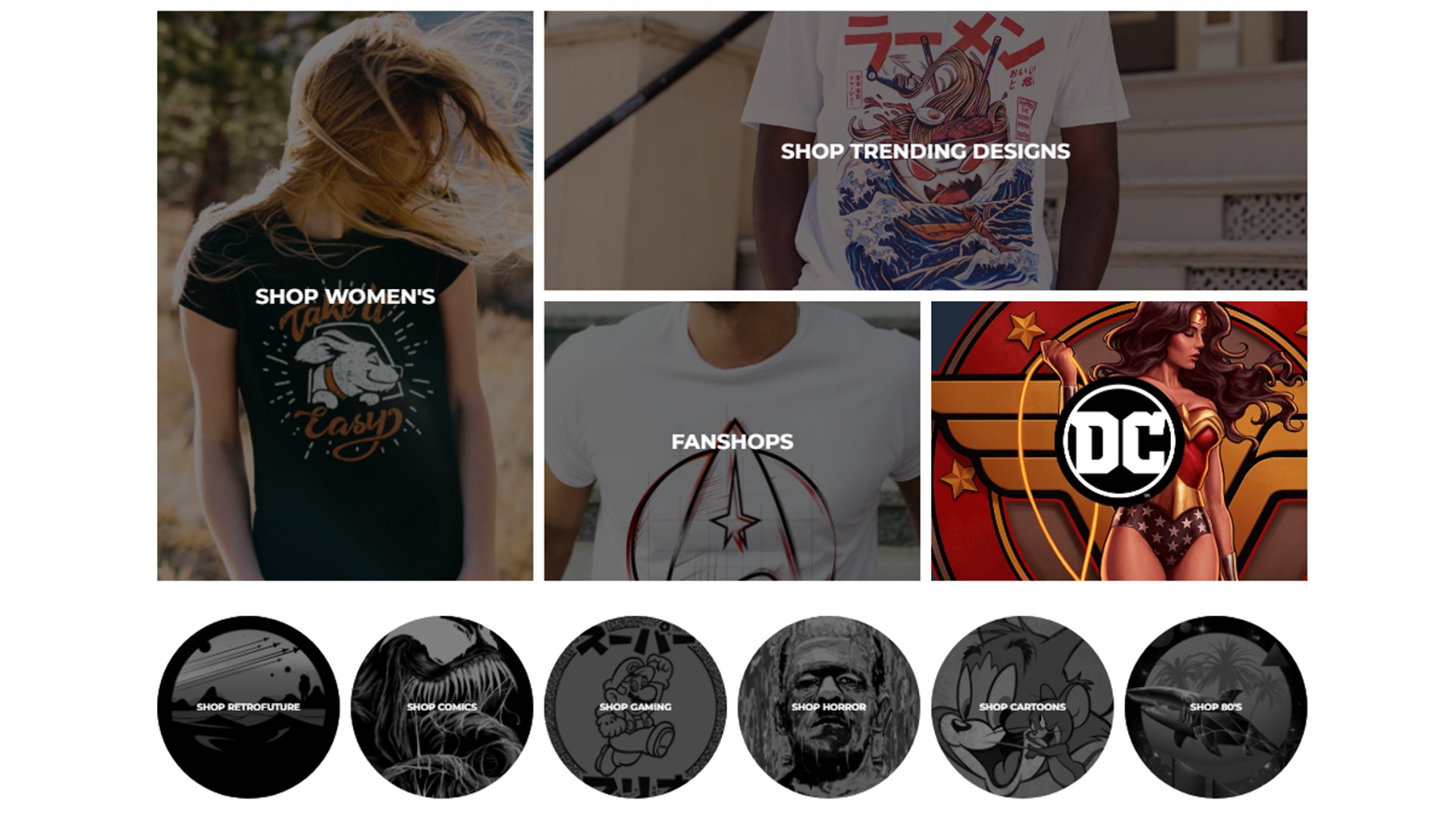
Design By Humans is an online marketplace offering T-shirts, phone cases, prints, mugs and more with designs from over 15,000 designers from all over the world. Describing itself as a community of passionate artists and customers, it allows you to upload your designs, leaving the site to handle the logistics of payments, printing, shipping orders and so on. You can even opt for a custom storefront. It's particularly good for illustrators.
12. Balthasart
- Pros: Reach new customers through SINGULART; option to commission artists
- Cons: Limited reach; monthly subscription
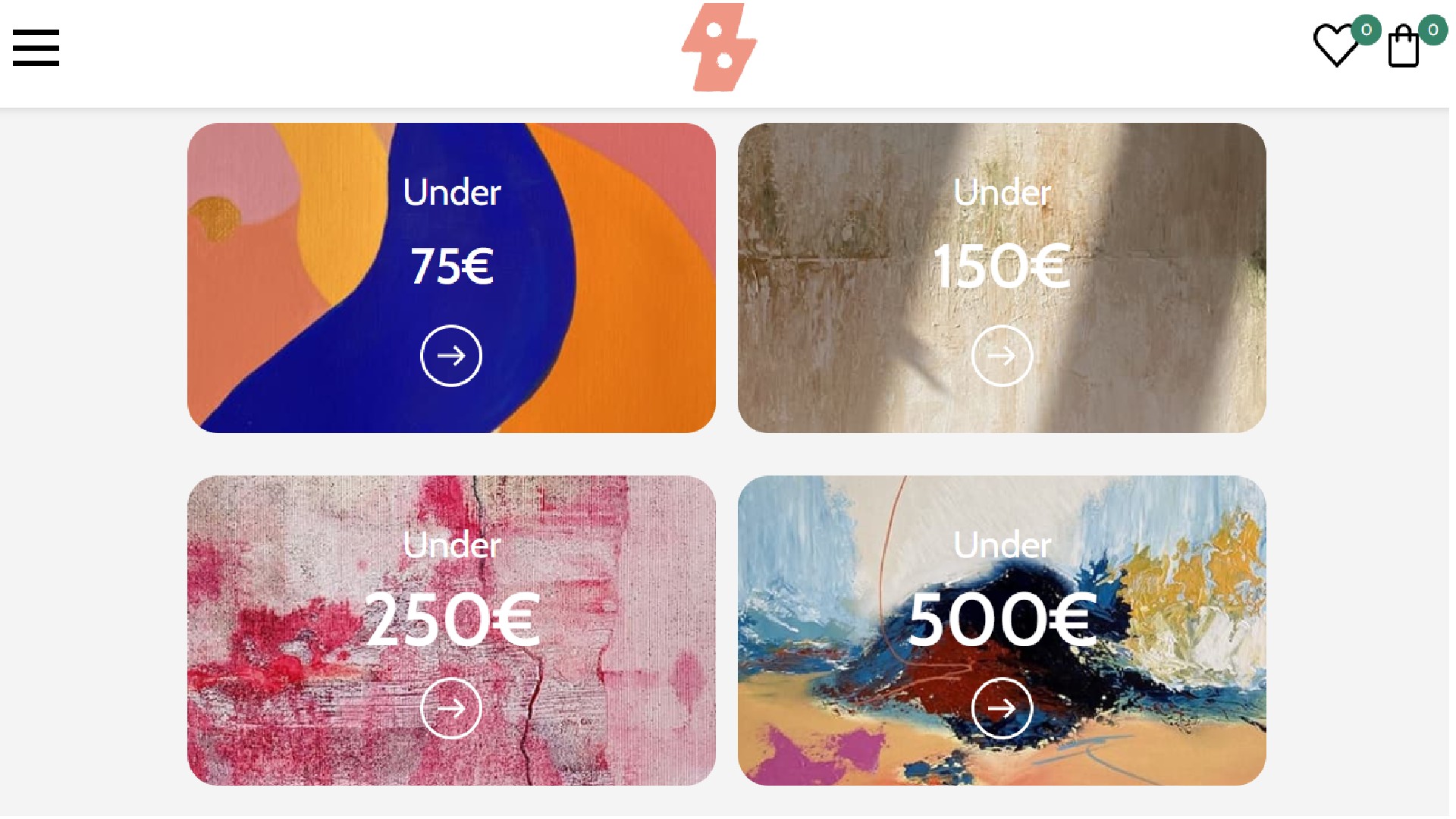
Balthasart is a relatively new art platform for original wall art. It's an offshoot of the established online art gallery SINGULART, focusing on affordable art with prices of under €1,000. Artists pay a subscription of €20 per month to list their work. For customers, packaging is free in the EU, and there's even an option to commission an artist through the site.
For more creative inspiration, check out how to make money with Cricut or learn how to improve your self-promotion with the best social media platforms for artists and designers