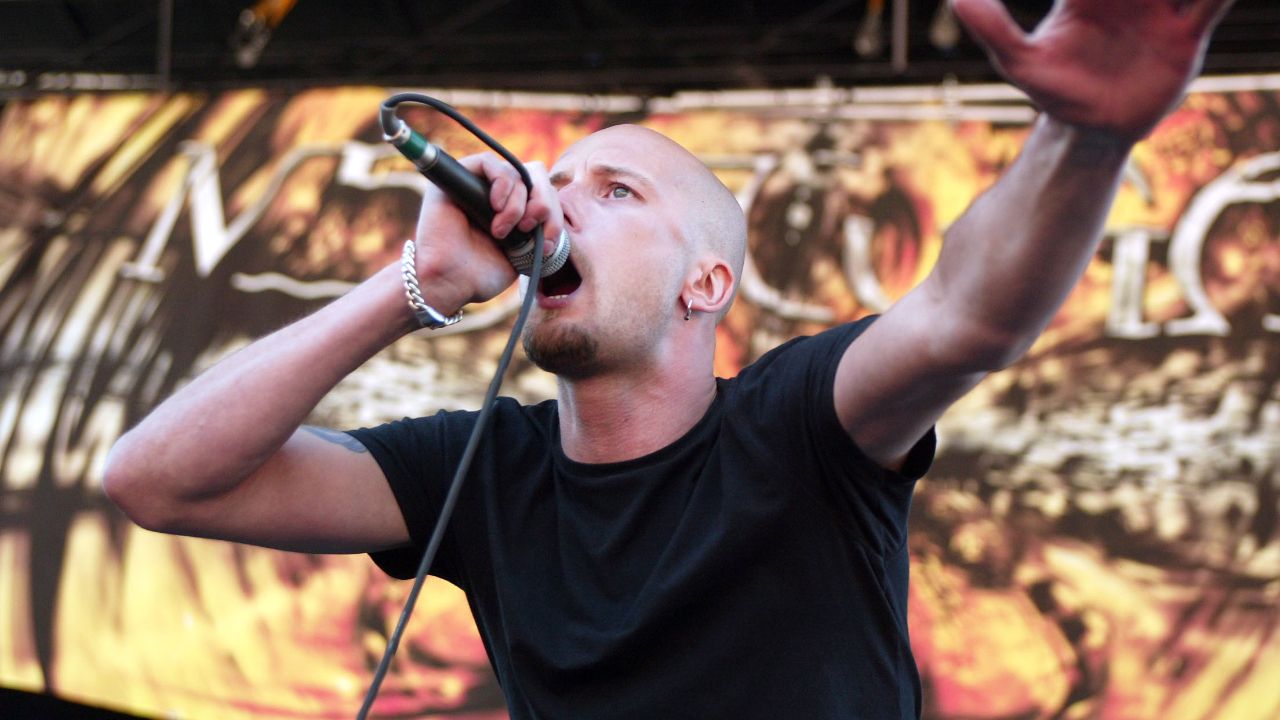
Formed in 1987 and named after the Yiddish/Hebrew word for ‘crazy’, Meshuggah hinted at a taste for the challenging and the off-the-wall from the very beginning of their existence. Spawned from the more progressive end of the thrash movement, the Swedes’ 1989 debut release, a self-titled effort also referred to as Psykisk Testbild, drew heavily on the genre while demonstrating many forward- thinking touches. Following the addition of new drummer Tomas Haake, the band’s first full-length, Contradictions Collapse, released in 1991 via Nuclear Blast, further highlighted the group’s technical and progressive ambitions while retaining a noticeable inspiration from Bay Area thrash bands such as Metallica.
It was this progressive streak that would soon come to the fore, the group evolving into a full on, polyrhythm-packing, technical and experimental metal outfit. A significant turning point came in 1992 when vocalist and guitarist Jens Kidman put down his guitar to concentrate on vocals and the band brought in a new member, Mårten Hagström, a guitarist who had played with drummer Haake for some time in an underground thrash band known as Barophobia.